

 Azzam Bilal Chamdy
 Neng Nana
 Nana Muazin
 Dwi Wanna
 Raul Delapena Setiawan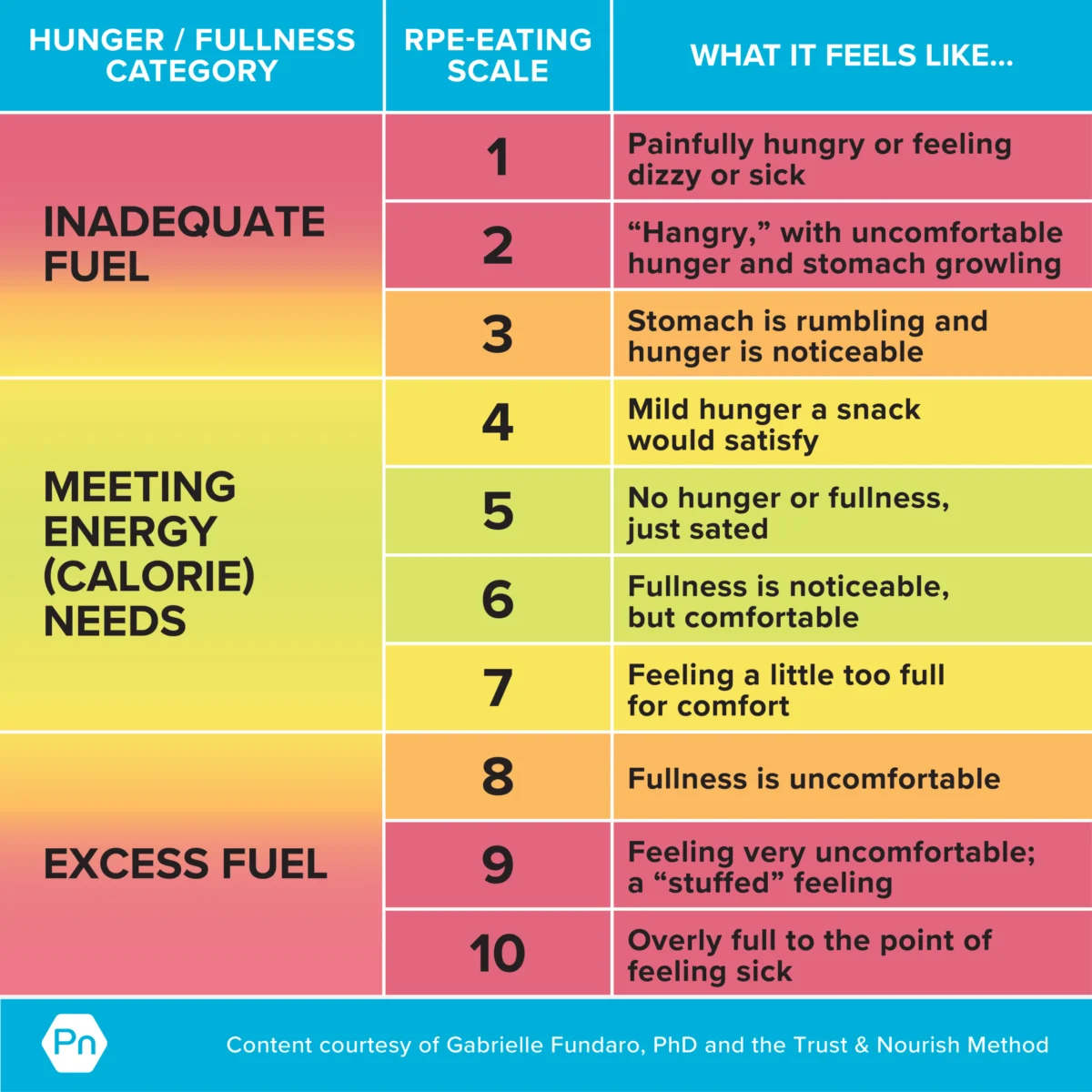
For years, Dr. Gabrielle Fundaro lived by the digital glow of a nutrition tracking app. As a professional with a PhD in Human Nutrition, a decade of coaching experience, and a track record of six powerlifting competitions, she was the archetype of the "optimized" eater. She knew exactly how many grams of protein, carbohydrates, and fats she consumed daily. Yet, despite her academic credentials and physical success, she arrived at a sobering realization: she had lost the ability to simply eat.
The obsession with "hitting her macros" had become a psychological cage. She feared that if she put down the tracker, her physique would dissolve, her muscle mass would vanish, and her credibility as a nutritionist would be compromised. Her story is not unique; it is a mirror reflecting the silent struggle of thousands of athletes and fitness enthusiasts who have traded intuition for spreadsheets.
Today, Dr. Fundaro is leading a quiet revolution in the fitness industry, advocating for a methodology known as "RPE-Eating"—a system that replaces external data with internal awareness.
The Chronology of a Nutritional Pivot
The genesis of RPE-Eating lies in the weight room. For decades, the Rate of Perceived Exertion (RPE) scale has been a staple in strength training. Instead of relying solely on a percentage of a "one-rep max," athletes use RPE to gauge their internal effort, allowing for "autoregulation." If a lifter is sleep-deprived or stressed, the scale allows them to adjust their load based on how the weight feels that day, rather than forcing a heavy set that could lead to injury.
Dr. Fundaro observed that while her training became more effective through this intuitive, RPE-based approach, her eating remained rigid. She was "autoregulating" her squats but "micromanaging" her protein shakes. The contradiction became impossible to ignore.
"It dawned on me like an apple hitting Newton," Dr. Fundaro notes. "If RPE could help me train better by listening to my body, why couldn’t it help me eat better?"
Over the past few years, she transitioned from tracking macros to utilizing the RPE-Eating scale. The result was not the catastrophe she feared. Instead, she experienced a profound sense of psychological liberation, improved digestion, and a newfound trust in her own physiological signals. She has since formalized this process, moving from a personal experiment to a coaching framework used by clients across the globe.
Understanding the RPE-Eating Framework
At its core, RPE-Eating is about reclaiming interoceptive awareness—the ability to perceive the internal state of the body. While traditional calorie and macro counting provide a false sense of security via external metrics, RPE-Eating forces the individual to engage with their own biological reality.
The scale, adapted from the original 1960s work of Gunnar Borg, operates on a 1–10 spectrum:
- 1–3 (Inadequate Fuel): Characterized by dizziness, extreme hunger, or "hangriness."
- 4–7 (Adequate Fuel): The "Goldilocks" zone. Physical hunger is addressed, energy levels are stable, and the individual feels satisfied without being overstuffed.
- 8–10 (Excess Fuel): Ranges from comfortable fullness to the physical discomfort of being "stuffed" or sick.
The goal is not to attain a "perfect" score, but to cultivate the skill of recognizing where one falls on the spectrum at any given moment.
Supporting Data and The Science of Autoregulation
Critics often dismiss RPE-Eating as "eating by feelings," arguing that humans are notoriously poor at estimating their caloric needs. However, current research into intuitive eating and metabolic flexibility suggests that "external-cue" dieting—like macro-counting—often suppresses natural hunger hormones like ghrelin and leptin over time.
By shifting the focus to interoceptive cues, individuals can begin to recalibrate these hormonal responses. Studies on autoregulation in exercise physiology have demonstrated that performance-based training (training based on how you feel) often results in superior long-term adherence and lower injury rates compared to rigid, percentage-based programs. Dr. Fundaro argues that the same logic applies to nutrition: rigid tracking creates a binary "pass/fail" mentality that is unsustainable for long-term health.

Furthermore, the "Notice and Name" technique—a pillar of this methodology—is grounded in cognitive behavioral therapy (CBT). By labeling the emotional state behind a craving (e.g., "I am eating because I am stressed by this email, not because I am hungry"), the individual creates a "cognitive wedge" between the impulse and the action.
Implications for Modern Nutrition
The transition to RPE-Eating has significant implications for how we view diet culture. For many, the "off-ramp" provided by this method is a vital intervention against disordered eating.
1. Moving Beyond "Good" and "Bad" Foods
Traditional macro-tracking often categorizes foods as "good" (macro-friendly) or "bad" (anything that doesn’t fit the daily budget). RPE-Eating removes this moral hierarchy. When satisfaction is prioritized alongside satiety, "forbidden" foods lose their power. If a slice of cake is eaten when hungry and savored until the point of satisfaction, it no longer serves as a "cheat" that triggers a binge.
2. The Shift from Performance to Sustainability
For the elite athlete, RPE-Eating is not intended to replace precision nutrition during a pre-contest phase. However, for the 95% of the population who are not preparing for a bodybuilding show, it provides a sustainable model for life. It acknowledges that social eating, travel, and stress are realities that an app cannot account for.
3. Mitigating Disordered Eating Risk
The most critical implication is the protection of mental health. For individuals with a history of yo-yo dieting or high body dissatisfaction, the requirement to log every gram of food is a known trigger for orthorexia and other disordered eating patterns. RPE-Eating provides a structured alternative that prioritizes the relationship with the self over the relationship with the scale.
Official Responses and Expert Caveats
While the fitness community has largely embraced the shift toward autoregulation, experts are quick to provide necessary caveats. Dr. Fundaro herself emphasizes that RPE-Eating is not a "magic pill" for weight loss.
"I am not anti-weight modification," she explains. "I am pro-safe weight modification."
Registered Dietitians and psychologists have noted that for those with a history of chronic dieting, the ability to sense "true" hunger has been blunted. These individuals may need to work with a professional to "re-learn" what hunger feels like before relying solely on an RPE scale. There is a consensus that while RPE-Eating is a powerful tool for autonomy, it is not a substitute for clinical intervention in cases of diagnosed eating disorders.
The Future of "Mindful Tracking"
The success of the RPE-Eating model suggests a broader shift in the health and fitness industry. We are moving away from the "data-obsessed" era toward a "competence-obsessed" era.
The ultimate goal, according to the framework, is for the user to eventually discard the scale entirely. Just as a cyclist might use a power meter to learn how to pace themselves before eventually developing a natural "feel" for their speed, the RPE-Eater uses the 1–10 scale to build the internal software required to make intuitive, healthful decisions for a lifetime.
For Dr. Fundaro, the results speak for themselves. She no longer fears the restaurant menu. She no longer worries about her protein intake during a weekend away. She has traded the anxiety of the spreadsheet for the confidence of the human body, proving that the most advanced nutritional tool we have is the one we were born with.
As the industry continues to evolve, the lesson is clear: true health is not found in the precision of a tracker, but in the ability to listen to, and trust, the signals of one’s own internal landscape.


 Nila Kartika Wati
 Iffa Jayyana
