

 Lina Irawan
 Evan Lee Salim
 Laily UPN
 Raul Delapena Setiawan
 Rifan Muazin
 Dwi Wanna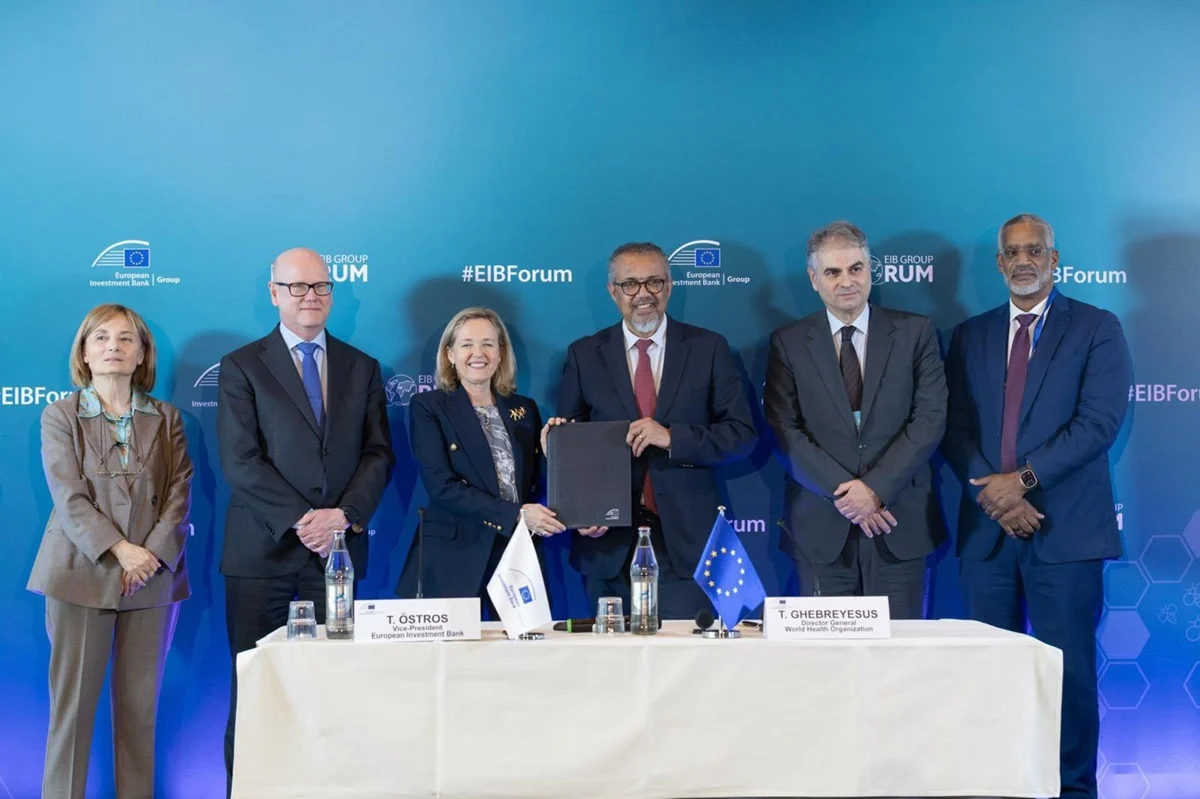
Introduction: A Strategic Lifeline for Lebanon
On March 6, 2025, a significant milestone in international humanitarian cooperation was reached at the European Investment Bank (EIB) Group Forum in Luxembourg. Dr. Tedros Adhanom Ghebreyesus, Director-General of the World Health Organization (WHO), and Thomas Östros, Vice-President of the European Investment Bank (EIB Global), formally signed an agreement pledging a €10 million grant aimed at fortifying Lebanon’s beleaguered public health sector.
This partnership arrives at a critical juncture for the Middle Eastern nation, which has been grappling with a protracted economic crisis, political instability, and the subsequent degradation of its social service infrastructure. The initiative is designed not merely as a temporary relief measure but as a structural intervention aimed at restoring essential laboratory diagnostic capabilities and securing the long-term supply of life-saving medications for tens of thousands of vulnerable citizens.
Main Facts: The Scope of the Intervention
The €10 million grant is earmarked for two primary pillars of intervention, both of which are essential for maintaining the integrity of Lebanon’s national health system:
- Re-establishment of the Central Public Health Laboratory (CPHL): The CPHL serves as the backbone of Lebanon’s disease surveillance and diagnostic network. Due to years of neglect and lack of funding, its operational capacity has been severely diminished. The grant will facilitate the procurement of modern diagnostic equipment, the refurbishment of facilities, and the implementation of robust quality-assurance protocols.
- Targeted Pharmaceutical Support: Beyond infrastructure, the human cost of the crisis is immediate. The initiative will prioritize the procurement and distribution of essential medicines for over 50,000 patients suffering from chronic conditions, specifically targeting diabetes, cardiovascular diseases, and various forms of cancer.
By addressing both the systemic diagnostic capacity and the immediate supply chain for chronic illness, the WHO and EIB Global are working to prevent a total collapse of public health service delivery in a country where out-of-pocket healthcare costs have become prohibitively expensive for the average citizen.
Chronology: The Road to the Luxembourg Agreement
The path to the March 2025 agreement was paved by years of monitoring and escalating concern from international observers regarding the status of Lebanon’s health sector.
- 2019–2022: The Onset of the "Poly-Crisis": The Lebanese Lira plummeted in value, leading to hyperinflation. As the currency collapsed, the ability of the Ministry of Public Health to import medical supplies vanished. Pharmacies saw mass shortages, and the national laboratory system began to fail under the weight of budget cuts.
- 2023: Needs Assessment: Throughout 2023, the WHO, in collaboration with the Lebanese government, conducted a series of comprehensive assessments. These reports highlighted that chronic disease patients were the most "at-risk" demographic, as their reliance on continuous medication made them the first to suffer when supply chains were disrupted.
- 2024: Negotiating the Partnership: The EIB Global, recognizing the need for an investment that transcended traditional aid, began formal discussions with the WHO. The objective was to create a sustainable mechanism that could operate within the current Lebanese economic framework without being sidelined by inflationary pressures.
- March 6, 2025: The Signing Ceremony: At the EIB Group Forum, the collaboration was finalized. The agreement represents a pivot from "emergency response" to "systemic restoration," signaling to the international community that stabilization is a prerequisite for long-term development.
Supporting Data: The Magnitude of the Challenge
To understand the necessity of this €10 million injection, one must look at the data characterizing the current Lebanese health landscape.
The Chronic Disease Burden
Lebanon faces a double burden of disease. While it deals with the challenges of communicable disease surveillance, the non-communicable disease (NCD) rate is significantly higher than regional averages.
- Cardiovascular Disease: Responsible for nearly 40% of all mortality in the country.
- Diabetes Prevalence: Approximately 15% of the adult population in Lebanon is living with Type 2 diabetes. Without insulin and secondary treatment, these patients face immediate life-threatening complications.
- Cancer Care: The lack of access to chemotherapy and diagnostic screening has led to a spike in late-stage cancer presentations, significantly lowering survival rates.
The Economic Context
The devaluation of the Lebanese currency has rendered imported medication—which constitutes the vast majority of the country’s drug supply—unaffordable. With the national health insurance fund struggling to meet claims, the "safety net" has effectively disappeared for the middle and lower-income classes. This €10 million initiative serves as a bridge, ensuring that the 50,000 most critical patients do not fall through the cracks during the ongoing fiscal recovery efforts.
Official Responses: The Rationale Behind the Grant
Dr. Tedros Adhanom Ghebreyesus (WHO)
During the signing ceremony, Dr. Tedros emphasized the concept of "health as a right, not a luxury." He noted that the WHO’s role is to ensure that even in times of severe state fragility, the foundational elements of public health—specifically, a working national laboratory—remain intact. "A nation without a functional laboratory is a nation blind to its own health threats," Dr. Tedros remarked. He further stated that this partnership is a testament to the fact that international organizations must evolve their funding models to support institutional resilience in the face of economic volatility.
Thomas Östros (EIB Global)
Representing the EIB, Vice-President Thomas Östros highlighted the strategic importance of this investment. He argued that the EIB Global’s involvement is not just a humanitarian gesture, but a stabilization effort. By bolstering health infrastructure, the EIB is mitigating the risks of broader social unrest caused by medical insecurity. "Investing in health is the most fundamental investment in a nation’s human capital," Östros said. "We are committed to helping Lebanon rebuild its capacity to protect its most vulnerable citizens, ensuring that the burden of chronic disease does not become a permanent barrier to the country’s recovery."
Implications: A New Model for International Aid
The collaboration between the WHO and the EIB Global sets a precedent for how global institutions might approach health security in the future.
1. The Shift to "Institutional Sustainability"
Rather than focusing solely on temporary aid, such as food or short-term medical supplies, this project focuses on the Central Public Health Laboratory. By fixing the laboratory, the WHO and EIB are enabling the Lebanese government to once again perform independent testing, surveillance, and quality control. This empowers local institutions, reducing the long-term reliance on foreign aid.
2. De-risking Humanitarian Investment
One of the major challenges in Lebanon has been the difficulty of transferring funds and ensuring that aid reaches the intended targets without being siphoned off by corruption or economic mismanagement. By working through the WHO, the EIB Global utilizes an established, audited mechanism that ensures the €10 million is directly converted into life-saving medical supplies and infrastructure. This model of "channeled efficacy" is likely to be replicated in other regions experiencing similar crises.
3. Public Health as a Pillar of Security
The project reinforces the idea that public health is an essential pillar of national security. When a population cannot access care for diabetes or cardiovascular disease, the socio-economic impact on families is profound, often forcing them into poverty. By sustaining the health of 50,000 individuals, this initiative indirectly protects the livelihoods of their families, thereby contributing to the overall stability of the Lebanese state.
Conclusion: Looking Ahead
The €10 million grant is a significant, yet initial, step toward the full recovery of Lebanon’s public health system. While the funds are substantial, the road ahead remains long. The success of this initiative will be measured by the speed with which the Central Public Health Laboratory becomes operational and the consistency of the supply chain for the 50,000 patients identified as the primary beneficiaries.
As the WHO and EIB Global begin the implementation phase, the international community will be watching closely. This partnership serves as a beacon of hope—a reminder that when global expertise and financial resources are aligned with the specific needs of a nation in crisis, it is possible to maintain the standard of human dignity and public health. For the people of Lebanon, this represents a vital lifeline, ensuring that the management of chronic disease remains a manageable reality rather than an insurmountable struggle.
The agreement reached in Luxembourg is more than a transaction; it is a commitment to the enduring value of human life and a clear message that the global community remains steadfast in its support for the resilient, yet embattled, citizens of Lebanon.



 Ammar Sabilarrohman
