

 Dwi Wanna
 Nana Wu
 Muslim
 Reynand Wu
 Ammar Sabilarrohman
By Investigative Desk
October 13, 2026
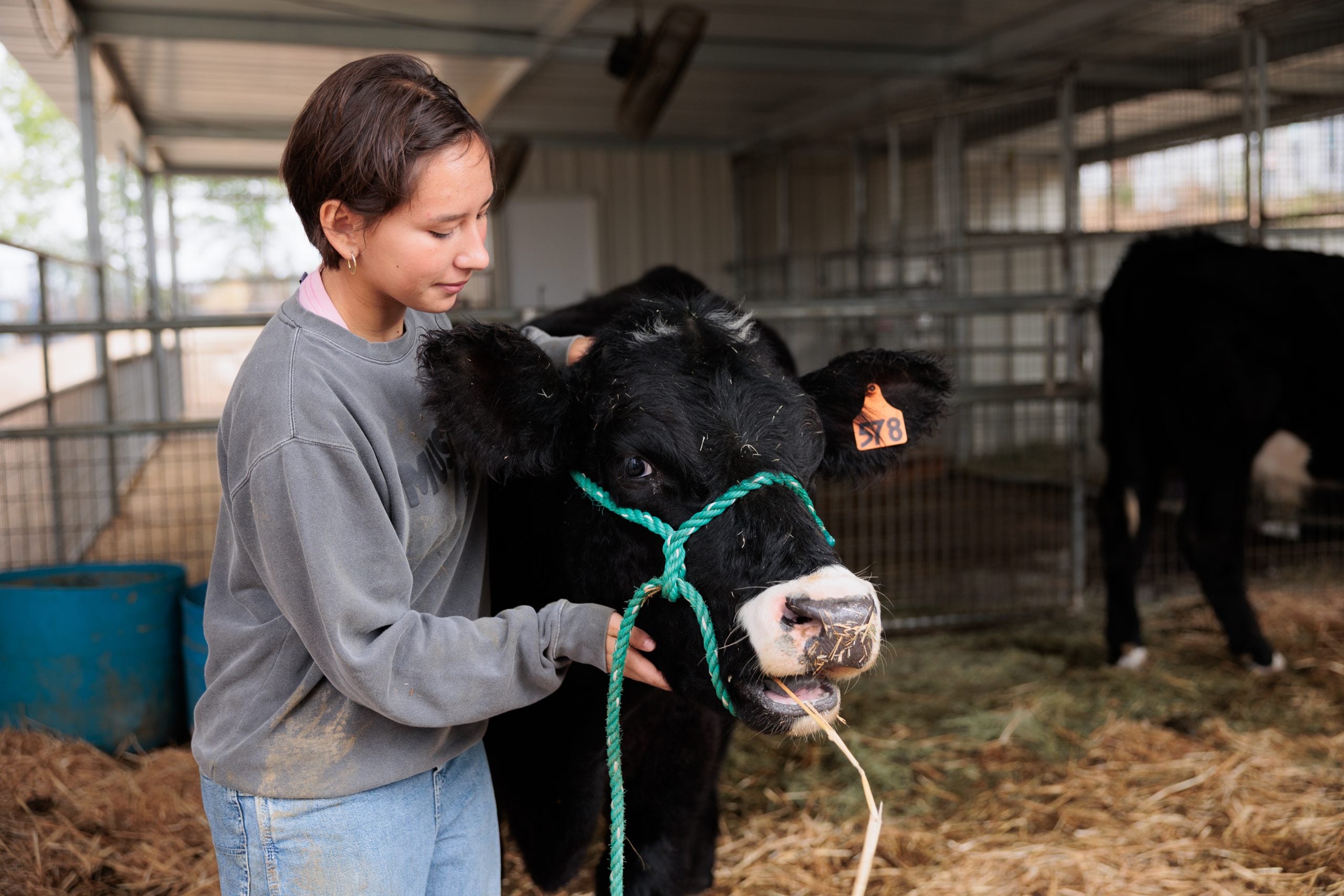
In a quiet barn in Acton, California, a one-year-old calf named Pepper is finally experiencing the simple, unburdened joys of childhood. He spends his days frolicking in open pastures, grazing on fresh hay, and nuzzling those who visit him. To the casual observer, Pepper is just a healthy, happy calf. But his very existence is a testament to the transformative power of empathy, marking the conclusion of a harrowing journey from a school-based agricultural program to the safety of Farm Sanctuary.
Pepper’s story is not merely a tale of animal rescue; it is a profound commentary on the intersection of youth, institutionalized agriculture, and the growing national conversation regarding the ethics of how we treat sentient beings.
The Institutional Context: FFA and the "Market Animal" Paradigm
Pepper was raised in a Temecula, California, school as part of the Future Farmers of America (FFA). Like 4-H and similar youth agriculture initiatives, these programs are designed to provide students with "hands-on" experience in the animal agriculture industry. The curriculum typically involves pairing a student with a farm animal—often a calf, lamb, or pig—which the student is responsible for raising, grooming, and training for exhibition.
The ultimate objective of these programs is often the auction block. Once the project cycle concludes, these animals are sold to the food industry for slaughter. For many students, this represents their first direct involvement in the food supply chain. However, the pedagogical design of these programs frequently clashes with the innate human tendency toward empathy.
For young people like Carmen, the student who ultimately saved Pepper, the emotional bond formed with the animal often transcends the program’s intended "commodity" framework. When the time comes to send their animal companion to slaughter, many students face a profound moral crisis.
A Chronology of Compassion: The Rescue of Pepper
The rescue of Pepper was not a spontaneous act, but the result of a calculated effort by a student and her mother to challenge a predetermined fate.
- Early 2026: Pepper is introduced to the FFA program in Temecula, where he is paired with Carmen. Over the following months, the two develop a close, trusting relationship.
- Summer 2026: As the school program undergoes internal changes, Carmen realizes that Pepper’s time in the program is nearing an end. Recognizing that his next destination would be an auction house, she begins to advocate for an alternative path.
- August 2026: Carmen and her mother, Maria, contact Farm Sanctuary. They express a desperate desire to secure a future for Pepper, as well as for his brother, Salt, who was raised alongside him by another student.
- Early September 2026: Farm Sanctuary staff intervene, attempting to negotiate the release of both calves. While the sanctuary successfully secures Pepper’s future, efforts to save Salt prove unsuccessful due to the rigid nature of the agricultural contracts involved.
- Mid-September 2026: Pepper arrives at the Farm Sanctuary in Acton, California. He is introduced to his new life, free from the constraints of production, and is reunited with his rescuers for a poignant first visit in his new home.
The High Cost of Institutionalized Agriculture
While Pepper’s rescue is a triumph, it highlights the systemic barriers facing students who wish to opt out of the slaughter pipeline. The case of Salt, Pepper’s brother, serves as a sobering reminder of the reality for most animals involved in these school programs. Despite the heartfelt efforts of advocates and concerned families, the legal and financial frameworks governing these animals often prioritize the "product" over the individual.
Critics of school agriculture programs argue that they normalize the commodification of living beings. By teaching students to view animals as items to be auctioned and consumed, these programs may inadvertently suppress the natural empathy that children typically feel toward animals.
"Most kids see animals and intuitively understand they should not be harmed," says a spokesperson for Farm Sanctuary. "The problem arises when institutions formalize a system that asks them to betray that intuition. We are teaching children that farm animals have value only because of what they can produce, rather than because of who they are."
Implications for Humane Education
The case of Pepper has catalyzed a broader discussion about the necessity of humane education. Farm Sanctuary has long advocated for a shift toward curricula that emphasize ethics, environmental stewardship, and compassion.
The Three-Pronged Approach
Farm Sanctuary’s approach to humane education focuses on three key pillars:
- Direct Care: Providing lifelong sanctuary to rescued animals like Pepper.
- Educational Outreach: Partnering with schools to provide alternatives to traditional agricultural projects.
- Advocacy: Working with policymakers to reform the way farm animals are treated in educational and commercial settings.
The organization offers free curricula to educators, providing modules that allow students to learn about animal behavior and biology without the need for animal exploitation. These programs are designed to empower students to think critically about the food system and to understand the impact of their choices on the environment and animal welfare.
Official Responses and Calls to Action
The response from the public to Pepper’s story has been overwhelmingly supportive, with many echoing the call for more humane alternatives in schools. Educators and parents interested in transitioning away from traditional animal-based agriculture programs are encouraged to reach out to Farm Sanctuary for resources.
For parents who are uncomfortable with the practices in their children’s schools, the organization recommends the following steps:
- Initiate Dialogue: Contact teachers and administrators to express concerns about the ethical implications of animal agriculture programs.
- Request Alternatives: Propose the adoption of Farm Sanctuary’s humane education programs, which focus on leadership, ecology, and animal advocacy.
- Support Policy Change: Advocate for school board policies that prioritize non-exploitative, hands-on learning experiences.
Looking Forward: Pepper’s New Life
Today, Pepper resides at Farm Sanctuary, where he receives individualized veterinary care, high-quality nutrition, and the enrichment necessary for his cognitive and social well-being. He is no longer a student project or a line item on an auction manifest; he is a resident with a name, a personality, and a future.
"Sanctuary is a lifelong promise," the organization stated in a recent press release. "Pepper will have the chance to grow up, to form bonds, and to live a life defined by his own needs, not by human utility."
As for his rescuers, Carmen and Maria, their journey with Pepper is far from over. Plans are underway for them to visit the sanctuary again, ensuring that the bond formed in a classroom in Temecula continues to flourish in the open air of the California hills.
Pepper’s survival is a small victory in a vast and complex system, but for those who believe in a food system rooted in compassion rather than cruelty, he represents a beacon of hope. Every day he spends in the sanctuary is a reminder that when students are given the choice between complicity and compassion, many will choose the latter. The challenge now remains for the educational system to provide them with the resources to do so more easily.
To support the care of Pepper and other residents at Farm Sanctuary, or to learn more about their humane education initiatives, visit farmsanctuary.org.

 Sagoh
Sagoh
 Lina Hope
