

 Ammar Sabilarrohman
 Dwi Wanna
 Nana Wu
 Neng Nana
 Nana
Nana Azzam Bilal Chamdy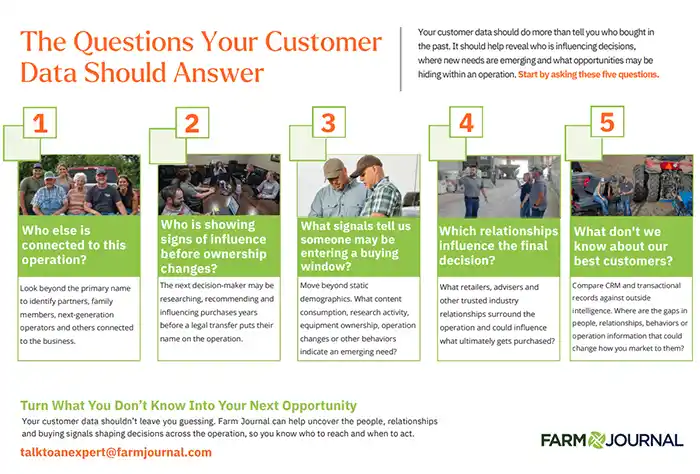
The Paradigm Shift: Why Traditional Metrics No Longer Suffice
In the high-stakes world of modern agribusiness, the rules of engagement have fundamentally changed. For decades, agricultural marketers relied on a predictable playbook: purchase advertising inventory, achieve broad reach across industry trade journals and digital platforms, and report on surface-level vanity metrics—clicks, impressions, and engagement rates. However, as we move deeper into the mid-2020s, that model is facing a systemic collapse.
Today’s agricultural marketers are being confronted with a trifecta of challenges that have rendered traditional performance indicators obsolete. Budgets are under intense scrutiny as corporate finance teams demand granular proof of ROI; the meteoric rise of generative AI is disrupting campaign execution; and the shifting landscape of data privacy has crippled the third-party cookie infrastructure that many legacy marketing teams relied upon to track the "farmer’s journey."
The result is a new, unforgiving reality. Digital performance can no longer be judged by reach and impressions alone. Success in the modern agricultural market now hinges on the quality, integrity, and actionable nature of the signals behind every marketing decision.
Chronology of the Shift: From Broad Reach to Precision Intent
To understand how we arrived at this pivotal moment, one must look at the evolution of agricultural marketing over the last decade.
2014–2018: The Era of Digital Expansion
During this period, the industry underwent a "digitization phase." Ag-tech firms and legacy chemical giants shifted large portions of their spend from print and broadcast to digital display and social media. The focus was on "digital transformation," where the primary goal was simply to be present in the digital spaces where growers were beginning to spend more time.
2019–2022: The Data Gold Rush
As precision agriculture technologies matured, marketers began chasing big data. CRM integration became the gold standard. However, this period was characterized by a reliance on third-party tracking pixels. Marketers tracked growers across the open web, assuming that a click on a banner ad equated to a future equipment purchase or seed procurement.
2023–Present: The Signal Crisis
The current era is defined by signal degradation. With Apple’s privacy updates (App Tracking Transparency), the impending sunset of third-party cookies, and the volatility of the global commodities market, the "old" data is no longer reliable. Simultaneously, AI tools have flooded the market with synthetic content, making it harder than ever to distinguish between meaningful audience engagement and automated noise.
Supporting Data: The Case for a Data-Driven Overhaul
The need for a strategic pivot is backed by shifting economic indicators in the agricultural sector. Recent industry reports suggest that while overall marketing spend in agriculture is expected to grow by 4% annually through 2027, the allocation of those funds is shifting drastically.
- Shrinking Attribution Windows: Industry studies indicate that the average time from first digital touchpoint to purchase decision in ag-tech has compressed by 15% due to the immediate need for ROI-focused farming practices.
- The Trust Gap: According to recent surveys of North American farmers, 68% of producers now report that they are "skeptical" of digital advertisements that do not provide specific, farm-level outcome data.
- Marketing Efficiency Ratios (MER): Leading agribusinesses are moving away from Cost-Per-Click (CPC) metrics. Instead, they are tracking MER—a holistic measure of total marketing spend divided by total revenue—which has become the primary metric for finance departments to evaluate marketing effectiveness.
This data underscores a sobering reality: marketers who cannot map their digital activity to tangible, verifiable outcomes are seeing their budgets slashed in favor of sales-enablement initiatives.
Official Responses: Voices from the Industry
Industry leaders are vocal about the necessity of this transition. "We are no longer selling products; we are selling solutions to complex agronomic problems," says Sarah Jenkins, a digital strategy lead for a global seed conglomerate. "When a farmer interacts with our digital content, we need to know if that interaction is rooted in a genuine, localized agronomic pain point. If we don’t have that signal, we are just adding to the noise."
Conversely, financial officers in the sector are pushing for greater transparency. "The era of ‘brand awareness’ as a catch-all for marketing spend is effectively over," notes David Thorne, a CFO at a mid-sized agricultural machinery manufacturer. "I need to see a direct line from a digital campaign to a regional lead conversion. If the marketing team cannot prove that their spend is reducing our Customer Acquisition Cost (CAC) or increasing our Customer Lifetime Value (CLV), the budget will be reallocated to direct sales incentives."
Implications: The New Marketing Imperative
The shift toward "signal-based" marketing has profound implications for how teams must operate in the coming years.
1. The Death of the "Spray and Pray" Strategy
The reliance on broad-reach programmatic display advertising is fading. Marketers are instead pivoting toward "First-Party Data" strategies. By creating proprietary hubs, gated agronomic insights, and loyalty-based digital ecosystems, brands can gather their own data directly from the farmer, bypassing the unreliable third-party ecosystem.
2. AI as a Strategic Asset, Not Just a Content Engine
While AI is often cited as a way to generate more content, the successful marketers are using AI for predictive analytics. By feeding CRM data into machine learning models, companies are beginning to predict which farmers are in the market for specific products before the farmer has even begun their research phase.
3. The Re-emergence of Human-Centric Content
As AI-generated content floods the web, the "signal" of authentic, human-verified agronomic advice has become premium content. Farmers are gravitating toward brands that offer deep-dive, science-backed content that addresses specific regional challenges. This is not about marketing; it is about education.
4. Integration of Sales and Marketing
The traditional silo between the marketing department and the sales team is dissolving. Marketing is becoming a subset of sales enablement. When a digital campaign is launched, it is no longer measured by "likes," but by the readiness of the sales team to follow up on the high-intent signals generated by that campaign.
Conclusion: The Path Forward
The changing agriculture market demands a new breed of marketer: one who is as comfortable with data architecture and predictive modeling as they are with brand narrative and creative strategy. The "Digital Impact" of the future will not be measured by how many people saw an advertisement, but by how effectively a brand can demonstrate its value through accurate, timely, and relevant signals that resonate with the farmer’s bottom line.
The transition will not be easy. It requires a fundamental rethinking of technology stacks, team structures, and, perhaps most importantly, the definition of success itself. But for those firms that successfully bridge the gap between digital performance and economic reality, the opportunity to capture market share in an increasingly volatile global landscape is immense.
The signal is clear: in the new agriculture market, impact is not just an outcome; it is the currency of survival. Those who adapt to this reality by prioritizing data integrity and outcome-based metrics will lead the industry into the next generation of agricultural productivity. Those who remain tethered to the vanity metrics of the past will find themselves increasingly disconnected from the very farmers they aim to serve.


 Basiran
 Asep Darmawan
