 Dwi Wanna
 Nana Wu
 Muslim
 Reynand Wu
 Ammar Sabilarrohman
 Lina Hope
In the heart of Wuhan’s rapidly evolving Optics Valley, a transformative architectural intervention is redefining the relationship between high-density urban living and municipal infrastructure. The China Resources Wuhan Optics Valley Runjing Park Commercial Renewal project, helmed by the collaborative efforts of Dachuan Design and WTD Weitu Design, stands as a landmark example of "clustered embedding." Completed in 2025, the project serves as a sophisticated response to the inherent friction between expansive residential development and the sprawling, often neglected, spaces beneath urban transit arteries.
Main Facts: A Paradigm of Adaptive Reuse
The project represents a fundamental shift in how Chinese urban centers approach the "dead space" found beneath bridge structures and elevated roadways. Historically, these areas have been treated as visual barriers or logistical voids. The Runjing Park initiative challenges this convention by treating the space as a connective tissue rather than a byproduct of infrastructure.
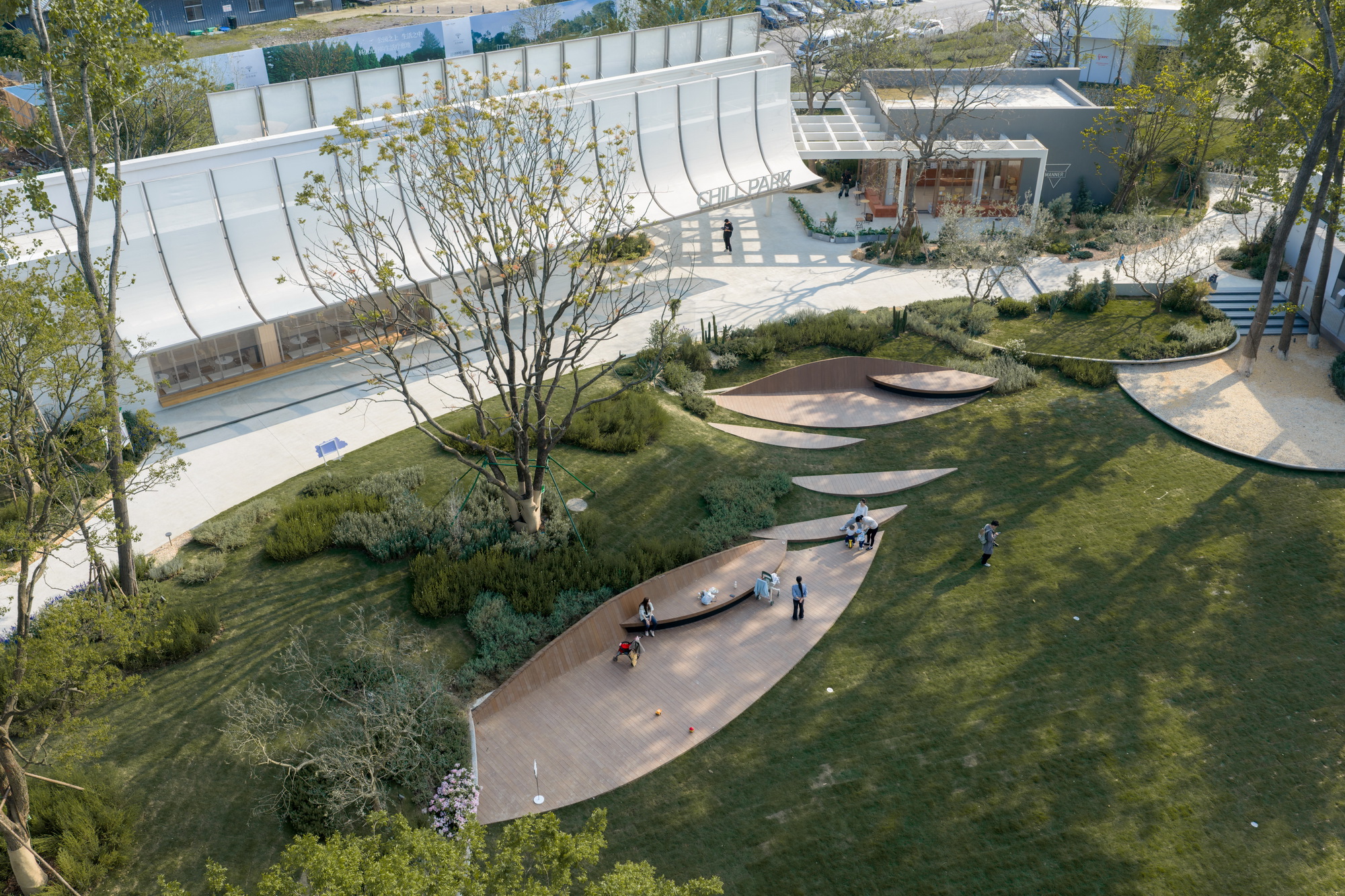
- Location: Heye Mountain, Optics Valley, Wuhan, China.
- Design Collaborators: Dachuan Design + WTD Weitu Design.
- Core Philosophy: "Clustered Embedding"—an approach that merges community needs, municipal infrastructure, and commercial operations.
- Primary Objective: To transform the under-bridge space from a neglected urban corridor into a functional, public-facing commercial and social hub.
- Key Strategies: Multi-stakeholder integration, functional organization over formal composition, and the democratization of residential boundaries.
Chronology of Development
The revitalization of the Heye Mountain site was not an overnight success but a carefully orchestrated multi-year endeavor that aligned with Wuhan’s broader "Green and Open" urban planning mandate.
- 2023: Conceptualization and Site Analysis. The design teams identified the Heye Mountain site as a critical node where the high-density residential fabric of the Optics Valley met the physical constraints of the elevated bridge infrastructure.
- Early 2024: Stakeholder Alignment. A major hurdle in the project’s inception was navigating the bureaucratic intersection of municipal transport authorities and private commercial developers. Extensive negotiations led to a "co-evolved" management model where stakeholders agreed to share the space, effectively blurring the lines between private profit and public utility.
- Late 2024: Construction and Structural Integration. The construction phase focused on minimizing the "heavy" footprint of traditional architecture. Lightweight, modular components were utilized to accommodate the specific load-bearing and clearance requirements of the bridge above.
- June 2025: Project Completion. The site officially opened to the public, marking a transition from a construction zone to a vibrant, multifunctional park and retail space.
Supporting Data: The Mechanics of "Clustered Embedding"
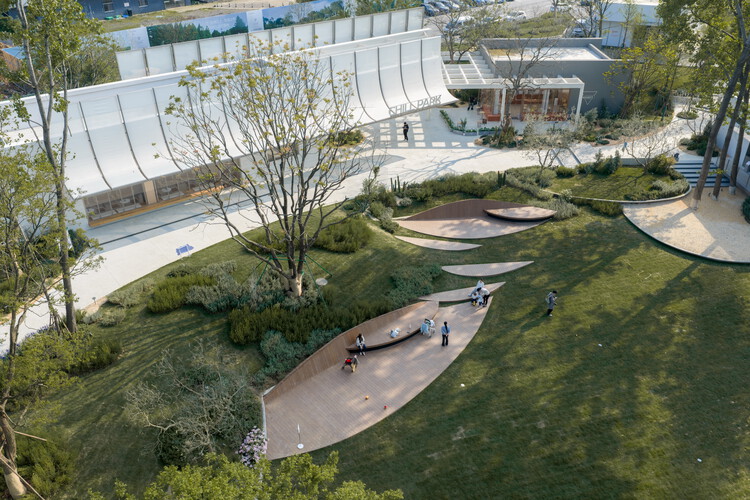
The success of the Runjing Park project is rooted in its technical execution. Unlike traditional commercial developments that prioritize enclosed, monolithic structures, this project utilizes a series of dispersed, small-scale volumes that respond to the environment.
Architectural Response to Constraints
The architects implemented a "functional organization" strategy. By avoiding a singular "formal composition," the design team ensured that the placement of every pavilion, corner, and walkway was dictated by the existing site conditions—specifically, the shadows cast by the elevated roads, the proximity to neighboring woodlots, and the pedestrian flow from the surrounding communities.
Sustainability and Publicness
The project actively rejects the trend of "material accumulation" and "excessive luxury." Instead, it prioritizes "practical publicness." This is evidenced by:
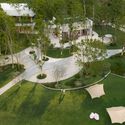
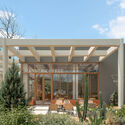
- Transparency: The use of glass and porous facades allows the interior commercial spaces to merge visually with the surrounding gardens.
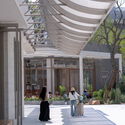
- Compact Modularity: By using smaller, lightweight buildings, the designers maintained the integrity of the bridge structure while creating a dense, navigable environment that encourages pedestrian engagement.
- Boundary Dissolution: The project effectively "opens up" residential boundaries, allowing residents of nearby blocks to access high-quality green space and amenities that were previously inaccessible or unsafe.
Official Perspectives: The Vision Behind the Design
While official project statements from Dachuan Design and WTD Weitu Design emphasize the technical challenges, the underlying intent is clearly social. The firms have articulated that the project is an attempt to "re-humanize" the infrastructure of the Optics Valley.
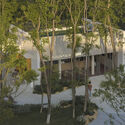
In discussions surrounding the project’s unveiling, representatives noted that modern urban design often fails to account for the "in-between" spaces. By placing commercial activities—cafes, small retail, and community workshops—directly under the bridge, the project has successfully replaced the "dead" energy of a highway overpass with the vibrant, noisy, and active energy of a local park. This "functional organization" ensures that the architecture serves the people rather than the bridge serving the cars alone.
Implications for Future Urban Renewal
The Wuhan Heye Mountain project offers a blueprint for other high-density cities across the globe. As urban populations continue to swell, the availability of land decreases, forcing developers to look toward unconventional sites.
1. The Death of the "Single-Use" Zone
The most significant implication is the shift away from single-use zones. The Runjing Park model proves that municipal infrastructure (bridges) can be dual-purposed as a roof for public amenities. This reduces the pressure on ground-level land, allowing for more green space and fewer concrete sprawl projects.
2. Stakeholder Integration as a Design Tool
The project underscores that the greatest barriers to urban renewal are often not architectural, but administrative. By creating a framework where municipal infrastructure authorities and private developers work toward a unified goal, the project demonstrates that "blurred boundaries" are essential for sustainable urban growth.
3. Residential Value Reorientation
Perhaps the most profound impact is the reorientation of "residential value." In many rapidly growing cities, property value is tied to exclusive, gated luxury. The Runjing Park model suggests a counter-narrative: that property value is enhanced when residents are integrated into a larger, open, and public-facing ecosystem. By inviting the city into the residential zone, the project has arguably made the Optics Valley more desirable, more walkable, and more resilient.
Conclusion: A New Standard for Infrastructure
The China Resources Wuhan Optics Valley Runjing Park Commercial Renewal project is more than just a successful commercial development; it is an experiment in urban empathy. It demonstrates that with the right design philosophy, the physical infrastructure of a city—the roads, the bridges, and the concrete—can be transformed into a source of community cohesion.
As the project enters its second year of operation in 2026, it stands as a testament to the fact that the future of the city does not lie in building higher or more expansively, but in building more intelligently within the spaces we already occupy. For Wuhan, a city known for its complex industrial and transport history, this project provides a path forward, proving that even the most daunting urban challenges can be turned into opportunities for public, social, and commercial growth. The "clustered embedding" approach is not just a technique; it is a philosophy that will likely influence urban planning across China for the next decade.