

 Raul Delapena Setiawan

 Ammar Sabilarrohman
 Lina Irawan
 Suro Senen
 Layla Zulfa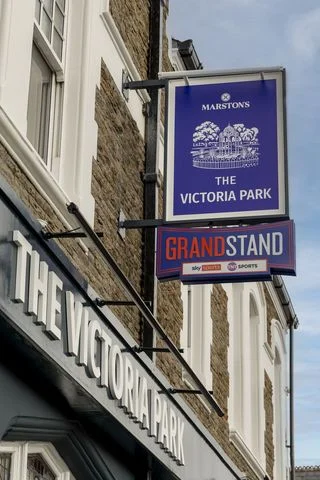
WOLVERHAMPTON, UK – Marston’s PLC, one of the UK’s leading independent pub operators, has announced a bullish trading update for the 2026 financial year, signaling a definitive turnaround for the heritage brand. Driven by a high-octane "Grandstand" format conversion program and rigorous cost discipline, the group expects to report underlying profits before tax that exceed the highest end of current market expectations.
In a statement released to the London Stock Exchange, the operator of over 1,300 pubs confirmed that its strategic pivot—initiated three years ago—is yielding exponential returns. With profits now tripling the levels seen in 2023 and leverage halved, the board has signaled its intention to begin returning surplus cash to shareholders, marking a new chapter of fiscal maturity and operational dominance in the British hospitality sector.
1. Main Facts: A Landmark Year for the Wolverhampton Giant
The headline figures from Marston’s FY2026 trading update for the 52 weeks ending 26 September 2026 paint a picture of a company that has successfully navigated the post-inflationary landscape to emerge leaner and more profitable.
Breaking the Profit Ceiling
Market analysts had previously set a "top-end" expectation for Marston’s underlying profit before tax (PBT) at £83.2 million. However, the company’s latest guidance suggests the final figure will land comfortably above this threshold. This represents a staggering trajectory when compared to the FY2023 baseline of £25.6 million (restated to account for the exit from the Carlsberg Marston’s Brewing Company business).
The Engine of Growth: "Grandstand"
The cornerstone of this success is the "Grandstand" pub format. Marston’s reported that this specific model—designed to capitalize on the "experience economy" and premium sports viewing—is delivering a Return on Invested Capital (ROIC) exceeding 30%. Furthermore, pubs converted to this format in 2026 saw an immediate sales uplift of approximately 30% compared to their pre-investment performance.
Shareholder Returns and Debt Reduction
For the first time in several cycles, Marston’s is moving from a defensive posture to an offensive one regarding its balance sheet. Net debt leverage has been slashed to 4.2x EBITDA (excluding IFRS 16 lease liabilities), down from approximately 8.4x in 2023. This strengthened position has emboldened the board to plan a share buyback program, set to be finalized alongside the preliminary results.
2. Chronology: The Three-Year Turnaround (2023–2026)
To understand the magnitude of the 2026 results, one must look at the chronological evolution of Marston’s strategy over the last 36 months.
2023: The Year of Realignment
In 2023, Marston’s faced a crossroads. The UK hospitality sector was reeling from high energy costs, labor shortages, and dampened consumer confidence. The company made the pivotal decision to focus on its "back to basics" pub operations, moving away from its legacy as a major brewer. The restated profit of £25.6 million reflected a business in transition, heavily burdened by debt and a portfolio that required modernization.
2024–2025: Operational Refinement and the "Grandstand" Pilot
During the 2024 and 2025 financial years, under the leadership of Justin Platt, the company began testing new formats. The "Grandstand" concept was birthed during this period, focusing on high-quality food, optimized beverage menus, and a tech-integrated sports experience. Simultaneously, the group began a rigorous "cost control" regime, aimed at expanding margins through supply chain efficiencies and labor scheduling technology.
2026: Scaling and Performance
The current financial year (FY2026) represents the "scaling phase." Marston’s completed 60 format conversions this year alone. While the broader UK market faced sluggish retail growth, Marston’s benefited from a summer of major sporting events, most notably an "excellent" World Cup performance that drove footfall during the crucial fourth quarter. This momentum helped bridge the gap from a slow start to the year (where like-for-like sales were down 1.2%) to a flat-to-positive finish in Q4.
3. Supporting Data: Analyzing the Financial Architecture
The success of Marston’s in 2026 is not merely a result of "good luck" with the weather or sports; it is built on a foundation of granular data and margin expansion.
Margin Expansion: The 100 Basis Point Jump
One of the most significant metrics in the update is the 100-basis-point (1%) increase in the underlying EBITDA margin. In the low-margin world of hospitality, a 1% shift is monumental. Marston’s attributes this to:
- The Pub Operating Model: A move toward more autonomous, yet digitally supported, pub management.
- Menu Engineering: Rationalizing food offerings to reduce waste and maximize the use of high-margin ingredients.
- Energy Procurement: Strategic hedging and the implementation of energy-saving technologies across the 1,300-pub estate.
Like-for-Like (LFL) Sales Dynamics
While the full-year LFL sales figure of -1.2% might initially appear concerning, the trend line is what has excited investors.
- Q1-Q2: Impacted by cost-of-living pressures and unfavorable weather.
- Q3: Improvement driven by the introduction of new summer menus and the initial rollout of the 60 conversions.
- Q4: "Broadly flat" performance, which, in the context of the 2026 economic climate, represents a significant outperformance of the wider pub sector.
Capital Allocation and the 2027 Pipeline
Marston’s is doubling down on its winners. Having seen the 30% ROI from the 2026 conversions, the company has committed to accelerating the program:
- FY2026: 60 conversions completed.
- FY2027: At least 100 conversions planned, with a primary focus on the Grandstand format.
This shift suggests that by the end of 2027, a significant portion of the 1,300-pub estate will be operating under high-growth, high-margin formats.
4. Official Responses: Leadership and Market Sentiment
The executive team at Marston’s has expressed a sense of "cautious triumph," emphasizing that the work of the last three years has created a sustainable platform for future growth.
The CEO’s Perspective
Justin Platt, Chief Executive of Marston’s, commented:
"We have delivered a third consecutive year of significant profit growth, margin improvements, and strong recurring free cash flow. Our differentiated pub formats continue to drive excellent returns, and our guest satisfaction scores show that we continue to delight our customers—a credit to our talented, hard-working teams."
Platt further elaborated on the future outlook:
"With clear strategic priorities and our new format conversion programme expanding to at least 100 pubs next year, we enter the new year well set to drive our next phase of growth. Our focus remains on creating ‘pubs for everyone’ while ensuring our capital is deployed where it generates the highest possible return for our shareholders."
Market Reaction
City analysts have reacted positively to the update. Several brokerage firms have already signaled an "upward revision" of their price targets for Marston’s stock. The consensus among analysts is that Marston’s has successfully solved the "leverage puzzle" that has plagued the UK pub sector since the pandemic. By reducing debt to 4.2x EBITDA, the company has transitioned from a "distressed" category to a "growth and income" category.
5. Implications: What This Means for the UK Pub Industry
The Marston’s update serves as a bellwether for the wider UK hospitality industry, offering several key takeaways for competitors, investors, and consumers.
The Death of the "Generic" Pub
The success of the Grandstand format suggests that the era of the "generic" local pub may be ending. Consumers in 2026 are increasingly discerning; they are willing to spend, but they demand a specific "experience"—be it premium sports viewing, high-quality gastro-dining, or a unique social atmosphere. Marston’s strategy of "format conversion" is a direct response to this shift in consumer psychology.
Consolidation and Portfolio Management
Marston’s mention of "managing its property portfolio" as a profit driver implies a more active approach to real estate. Industry experts suggest this involves selling off "bottom-tier" assets that no longer fit the high-growth formats and reinvesting those proceeds into the 100-pub conversion pipeline for 2027. This "quality over quantity" approach is likely to be mimicked by other national chains like Mitchells & Butlers and Greene King.
The Return of the Buyback
The move toward share buybacks is a significant signal of confidence. For years, the pub sector was characterized by "capital preservation." Marston’s shift toward "capital return" suggests that the industry’s leaders believe the worst of the inflationary and debt-servicing crises are over. It sets a precedent that could lead to a re-rating of pub stocks across the London Stock Exchange.
Resilience in the Face of Macro Volatility
Despite a -1.2% LFL sales figure for the year, the tripling of profits proves that a business can thrive through margin management and strategic investment even when top-line growth is modest. This "efficiency-first" model provides a blueprint for how hospitality businesses can survive in an environment where consumer discretionary spending remains under pressure.
Conclusion
As Marston’s prepares to release its full preliminary results, the 2026 trading update stands as a testament to the power of strategic focus. By shedding its brewing arm, aggressively tackling debt, and innovating with the "Grandstand" format, the company has transformed itself from a struggling legacy operator into a high-performing engine of the UK service economy. With 100 more conversions on the horizon for 2027, the "Grandstand" era of Marston’s is only just beginning.



 Pevita Pearce
