

 Dwi Wanna
 Nana Wu
 Muslim
 Reynand Wu
 Ammar Sabilarrohman
 Layla Zulfa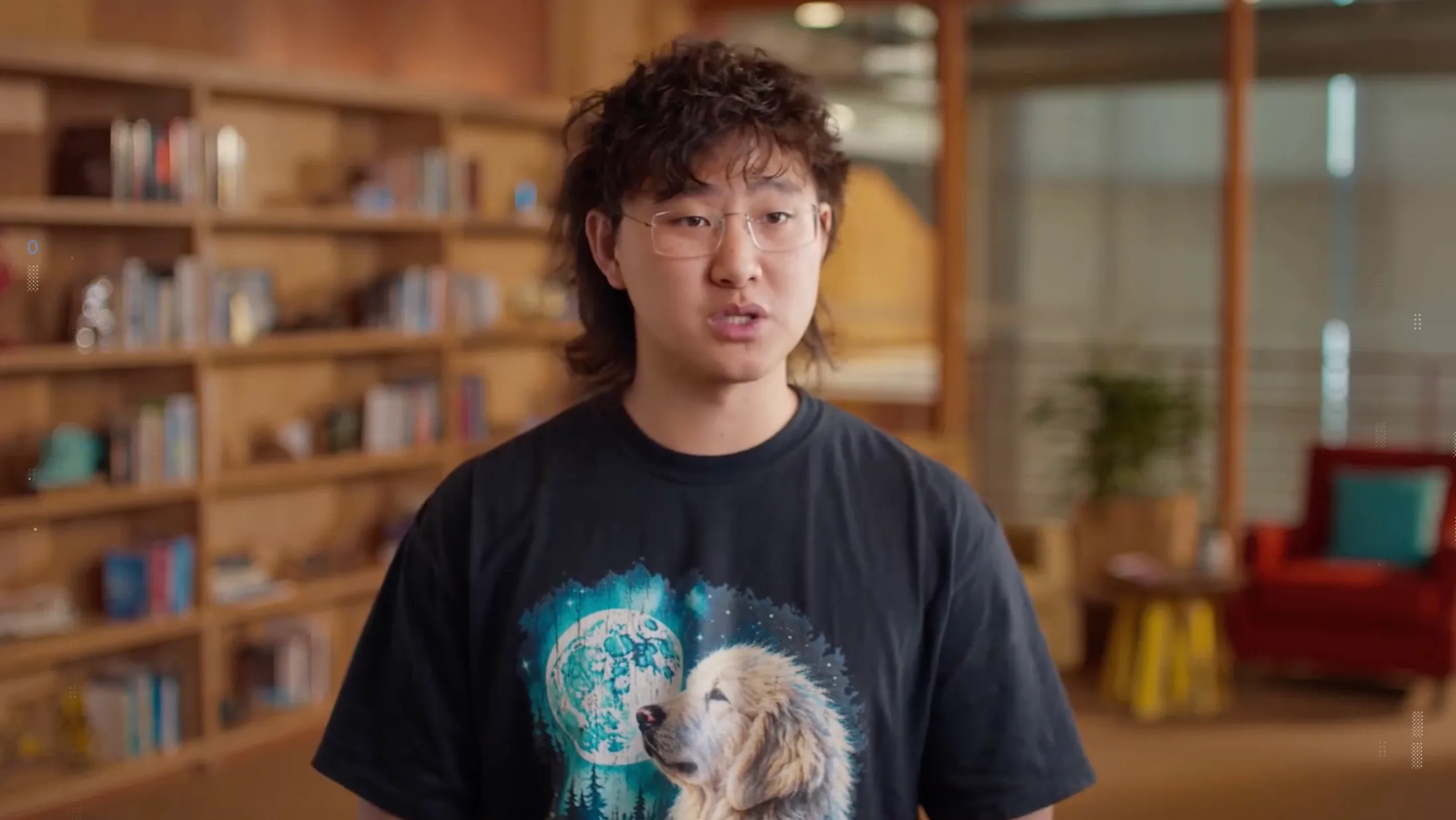
In a pivotal move that signals a maturation of its AI division, Meta’s Superintelligence Lab unveiled a pair of sophisticated new models on Monday: Muse Wonder and Muse Wonder Full. Representing the company’s first definitive foray into the "frontier model" category, these releases suggest that Meta is no longer content with merely refining lightweight, efficient agents. Instead, the company is positioning itself to challenge the dominance of industry titans like OpenAI and Anthropic in the high-stakes arena of complex reasoning and long-term memory.
The introduction of the Wonder series marks a structural evolution for the company, following a year of intense internal reorganization under the guidance of Scale AI founder Alexandr Wang. As Meta pivots toward these high-compute, high-capability models, the industry is watching closely to see if the social media giant can successfully bridge the gap between social-scale consumer tools and enterprise-grade intelligence.
The Core Facts: A New Tier of Performance
The Muse Wonder and Muse Wonder Full models are designed to move beyond the constraints of the company’s previous iteration, Muse Spark. While Spark was lauded for its low latency and efficiency—ideal for rapid, on-device interactions—the Wonder series is built for heavy lifting.
Meta’s internal testing, documented in the accompanying model card, indicates that the new models achieve benchmark scores competitive with industry leaders such as Fable 5.1 and GPT-6 Astra. The performance jump is particularly pronounced in coding, mathematical reasoning, and logical synthesis tasks.
Tiered Accessibility
The models are being rolled out with a distinct segmentation strategy:
- Muse Wonder: Available via the Meta Model API, this model is priced at $4 per million input tokens and $20 per million output tokens. This places it firmly in the premium pricing bracket, comparable to high-end alternatives like GPT-6 Sol or Opus 5.5.
- Muse Wonder Full: The most capable version of the duo, Wonder Full, will not be served via public API. Instead, it is being reserved exclusively for "Muse Code" subscribers.
Both models will serve as the engine for the overarching Muse agent, Meta’s unified AI interface, which aims to provide users with a cohesive, long-term personal assistant.
A Chronology of Meta’s AI Evolution
The path to Monday’s announcement has been anything but linear. Meta’s trajectory in the AI space has been characterized by a transition from research-heavy exploration to a product-first, scaling-focused philosophy.
The Reorganization (August 2025)
The current strategy can be traced back to August of last year, when Meta initiated a radical restructuring of its AI efforts. Bringing in Alexandr Wang to oversee operations served as a catalyst for shifting away from the experimental, fragmented projects that defined Meta’s earlier work. The goal was clear: consolidate compute resources and human capital toward the goal of creating a "frontier" model capable of matching the best in the world.
The "Spark" Era (Late 2025 – Early 2026)
Following the restructuring, the company focused on building a reputation for speed. The Muse Spark release demonstrated that Meta could dominate the lightweight, real-time segment. By prioritizing latency, the company kept users engaged with the Muse agent without requiring the massive overhead of a frontier-class model.
The Prometheus Breakthrough (2026)
Central to this week’s launch is the infrastructure behind it. The models were trained at the Prometheus data center in central Ohio, which officially came online earlier this year. As one of the world’s highest-capacity data centers, Prometheus is the physical manifestation of Meta’s "scaling ladder." Without the sheer compute throughput offered by this facility, the training of the Wonder models would have been logistically impossible.
Supporting Data: The Case for "Active Memory"
Perhaps the most significant technical differentiator for the Wonder series is the concept of "active memory." Unlike traditional LLMs, which essentially "forget" a user’s context once a session ends, the Muse Wonder models are optimized for long-term retention.
The MemoryBench Benchmark
To quantify this capability, Meta utilized the MemoryBench benchmark (detailed in arxiv.org/abs/2510.17281). MemoryBench poses a unique challenge to AI models: it tests the ability to construct, store, and synthesize information over extended timelines—days, weeks, or even months.
Meta’s test results claim that Muse Wonder currently outperforms Fable, Opus, and Astra on this specific metric. This is a critical development, as the "holy grail" of personal AI is the ability to act as an assistant that truly understands a user’s history, preferences, and ongoing projects. By solving for persistent memory, Meta is attempting to transform the AI from a transactional tool into a contextual companion.
Official Responses and Strategic Vision
Meta’s leadership has been vocal about the role these models play in their broader vision for "personal superintelligence." In a video released alongside the announcement, Research Scientist Kavya Kopparapu emphasized the human-centric design of the models.
"We put a tremendous amount of effort into making sure your model can remember what’s important to you over days, weeks, months, and beyond," Kopparapu said. This sentiment underscores a departure from the "oracle" style of AI—where the model provides a static answer—toward a "collaborator" style, where the model maintains a narrative of the user’s life and work.
In a blog post, the company described the Wonder series as a "major leap toward personal superintelligence," explicitly noting that this is merely the next rung on their scaling ladder. The messaging suggests that while Muse Wonder is their first frontier model, it is far from their last.
Implications: The Industry Landscape
The release of Muse Wonder has immediate implications for the competitive dynamics of the AI industry.
1. A Challenge to the "Big Two"
By reaching parity with Fable 5.1 and GPT-6 Astra, Meta has effectively neutralized the "performance gap" that previously allowed OpenAI and Anthropic to dominate the enterprise and developer markets. Developers who were previously locked into OpenAI’s ecosystem now have a viable, high-performance alternative that integrates directly into the Meta stack.
2. The Rise of the Subscription-Gated Model
The decision to restrict "Wonder Full" to Muse Code subscribers is a bold move. It signals a shift in business models: Meta is betting that the most sophisticated AI capabilities will be used as a "hook" to drive high-value, recurring subscription revenue, rather than relying solely on API usage fees. This could set a precedent for other AI labs to gate their most powerful models behind proprietary ecosystems.
3. Data Privacy and Persistent Memory
The emphasis on "active memory" brings with it significant implications for privacy. If a model is designed to remember a user’s life over months, the security of that data becomes paramount. While Meta has touted the effectiveness of their memory construction, they will likely face increased scrutiny regarding how this persistent data is stored, encrypted, and utilized for future training cycles.
4. Infrastructure Dominance
The reliance on the Prometheus data center highlights that the "AI Arms Race" is increasingly becoming a race of raw, localized, and massive physical infrastructure. Companies that can manage their own data centers at the scale of Prometheus will have a distinct advantage over those relying on third-party cloud providers, as they can optimize the hardware-software stack to a degree others cannot.
Conclusion
The release of Muse Wonder is a turning point for Meta. By combining the infrastructure of the Prometheus data center with a research focus on persistent memory, the company has successfully moved from the periphery of AI research to the very center of the frontier.
Whether the market will embrace the specific tiered pricing model—and whether users will trust an AI with the level of "active memory" Meta is promising—remains to be seen. However, one thing is clear: the era of the ephemeral, transactional chatbot is coming to a close. We are entering the age of the persistent digital assistant, and Meta has just made its strongest play yet to define what that future looks like.
As a reminder, some links within this article may earn a commission for the publisher, supporting our continued independent coverage of the evolving technology landscape.


 Laily UPN
 Pevita Pearce
