

 Ali Ikhwan

 Iffa Jayyana

 Muslim

 Nana

 Dwi Wanna
 Nana Muazin
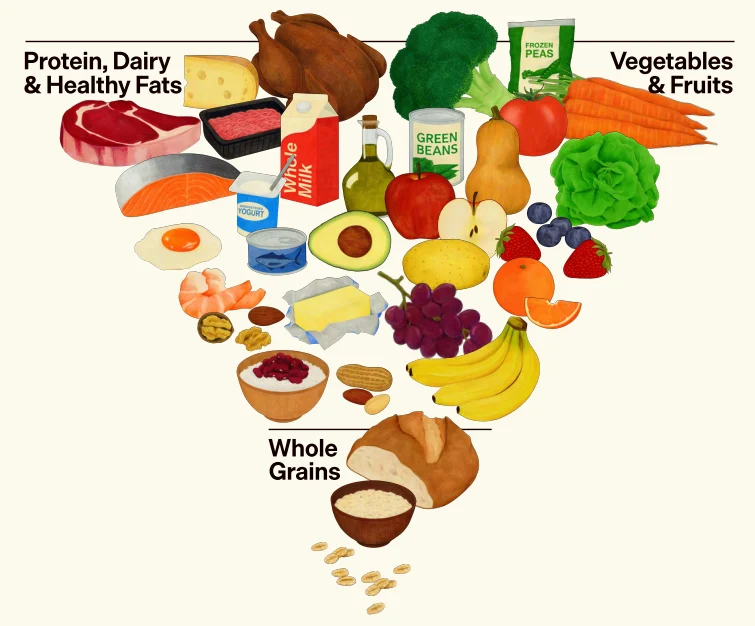
The release of the 2025–2030 Dietary Guidelines for Americans (DGAs) was met with high anticipation this week, as health professionals, policymakers, and the public looked for clear, science-backed direction in an era of rising diet-related chronic disease. Framed by the pithy, consumer-friendly tagline "eat real food," the document arrives with a modernized, interactive digital presence. However, beneath the polished interface, the guidelines have sparked significant debate among nutrition experts, who point to a jarring disconnect between the text’s written advice and its central visual aid: a new, inverted "Food Pyramid."
While the guidelines make strides in addressing the prevalence of ultra-processed foods, they simultaneously introduce a set of contradictions regarding saturated fats and protein quality. For many observers, these inconsistencies—compounded by a controversial development process—threaten to undermine the very goal of the guidelines: providing a clear, actionable map for optimal health.
The Evolution of Federal Nutrition Policy
The Dietary Guidelines for Americans serve as the bedrock for federal nutrition programs, including school lunches, WIC, and the Supplemental Nutrition Assistance Program (SNAP). They are designed to be the definitive source of nutritional wisdom for the U.S. population.
Historically, these guidelines are updated every five years following a rigorous, two-year review by an independent Dietary Guidelines Advisory Committee (DGAC). This committee of experts typically synthesizes the latest nutrition science, free from industry or political influence. However, the 2025–2030 cycle deviated from this precedent. After the initial committee submitted its comprehensive Scientific Report, the current administration rejected the findings, opting instead for a supplemental scientific analysis conducted by a group of individuals selected via a federal contracting process.
This pivot has drawn sharp criticism from within the scientific community. Critics have flagged the lack of transparency in the methodology used by the new panel and noted that several reviewers have disclosed financial ties to the beef and dairy industries. These industry connections, observers argue, may explain the prominent visual placement of steak, butter, and full-fat dairy in the newly released "New Food Pyramid."
Decoding the "New Food Pyramid"
The most striking element of the 2025–2030 guidelines is the return of a pyramid-style graphic, though this iteration is inverted. While the bottom of the pyramid features vegetables and fruits, the upper tiers grant significant visual real estate to animal products.
This creates a "mixed messaging" problem. While the written text of the guidelines maintains the longstanding scientific consensus that saturated fat should be limited to 10% of total daily calories, the graphic encourages a diet that, if followed literally, would make staying under that limit nearly impossible.
For a standard 2,000-calorie diet, the 10% limit equates to approximately 22 grams of saturated fat. If a consumer follows the DGAs’ recommendation of three daily servings of dairy and chooses full-fat versions—such as one cup of whole milk (5g), 3/4 cup of full-fat Greek yogurt (6g), and one ounce of cheddar cheese (6g)—they have already reached 17 grams of saturated fat. Should that individual use a tablespoon of butter (7g) or beef tallow (6g) for cooking, they have exceeded their daily saturated fat budget before consuming a single bite of meat or other protein sources.
Dr. Frank Hu, chair of the Department of Nutrition at the Harvard T.H. Chan School of Public Health, warns that these contradictions are not merely academic. "The mixed messages surrounding saturated-fat-rich foods such as red meat, butter, and beef tallow may lead to confusion and potentially higher intake of saturated fat, resulting in increased LDL cholesterol and cardiovascular risk," Dr. Hu stated.
Key Shifts: Sugar, Processing, and Protein
Despite the controversy surrounding the pyramid, the 2025–2030 edition does include several positive, evidence-based shifts in nutrition philosophy.
Taking Aim at "Highly Processed" Foods
This edition marks the first time the DGAs have explicitly targeted a broad category of "highly processed" foods. While the definition of processing is a spectrum, the guidance is clear: consumers should avoid sugar-sweetened beverages, ready-to-eat meals, and packaged snacks high in salt and sugar. By emphasizing "real food," the guidelines advocate for a shift toward whole, fiber-rich grains and away from the refined, white-flour-based carbohydrates that have become staples of the American diet.
A Hard Line on Added Sugars
The new guidelines take a notably stricter stance on sweeteners. The document explicitly states that "no amount of added sugars or non-nutritive sweeteners is recommended or considered part of a healthy or nutritious diet." Furthermore, the guidelines now recommend that children avoid all added sugars until the age of 10, a significant increase from the previous threshold of age 2. While the intention is clear, experts note that the document lacks actionable strategies for how families can implement these changes in a food environment saturated with cheap, added sugars.
The Protein Conundrum
The guidelines have also raised the recommended protein intake to 1.2–1.6 grams per kilogram of body weight—an increase of 50–100% compared to previous minimum intake levels. While protein is essential for muscle maintenance and metabolic health, Dr. Hu warns against the "protein hype."
"Substantially raising overall protein intake without distinguishing between different protein sources may have unintended long-term health implications," says Dr. Hu. The guidelines largely ignore the "protein package"—the reality that when we eat protein, we are also consuming the fats, fibers, and sodium that come with it. By failing to distinguish between the health benefits of plant-based proteins or fish versus processed red meats, the guidelines miss a vital opportunity to guide the public toward better health outcomes.
Environmental and Socioeconomic Blind Spots
A notable, ongoing omission in the Dietary Guidelines for Americans is the consideration of environmental and socioeconomic sustainability. Food systems are a primary driver of climate change, and conversely, the ability of individuals to access "real food" is heavily dictated by their socioeconomic status and cultural environment.
By ignoring the "plate-to-planet" connection, the DGAs fail to address the systemic challenges that prevent many Americans from following healthy dietary patterns. Critics argue that until the guidelines integrate the realities of food deserts, economic inequality, and environmental impact, they will remain disconnected from the lived experiences of millions of Americans.
Implications for Public Health
The 2025–2030 Dietary Guidelines for Americans arrive at a time when the U.S. is facing a crisis of diet-related chronic conditions, including obesity, type 2 diabetes, and heart disease. History suggests that simply publishing a set of guidelines is insufficient; recent data from the CDC indicates that the majority of Americans do not adhere to current dietary advice.
The reliance on a confusing, potentially misleading graphic—combined with a process that lacked the traditional rigor and transparency of previous cycles—leaves the public in a precarious position. When official government guidance conflicts with established medical science, the result is often paralysis or, worse, the adoption of habits that exacerbate health risks.
For those navigating these new recommendations, nutrition experts emphasize the need for caution. "If you find yourself confused by some of the conflicting messaging, we recommend checking out resources like the Healthy Eating Plate," suggests the Harvard T.H. Chan School of Public Health, "or consulting a registered dietitian who can provide personalized guidance based on your specific health needs rather than generalized, potentially biased, federal policy."
Ultimately, the 2025–2030 guidelines demonstrate that while the government has recognized the necessity of moving away from ultra-processed, sugar-laden diets, it has yet to fully reconcile its policy goals with the independent science of nutrition. Whether this edition will influence a healthier American diet or simply add to the existing noise remains to be seen. In the absence of clarity from the top, the responsibility of discerning "real food" from marketing-driven advice continues to fall on the individual consumer.



 Evan Lee Salim

