
 Suro Senen
 Nila Kartika Wati
 Asro
Asro Layla Zulfa
 Evan Lee Salim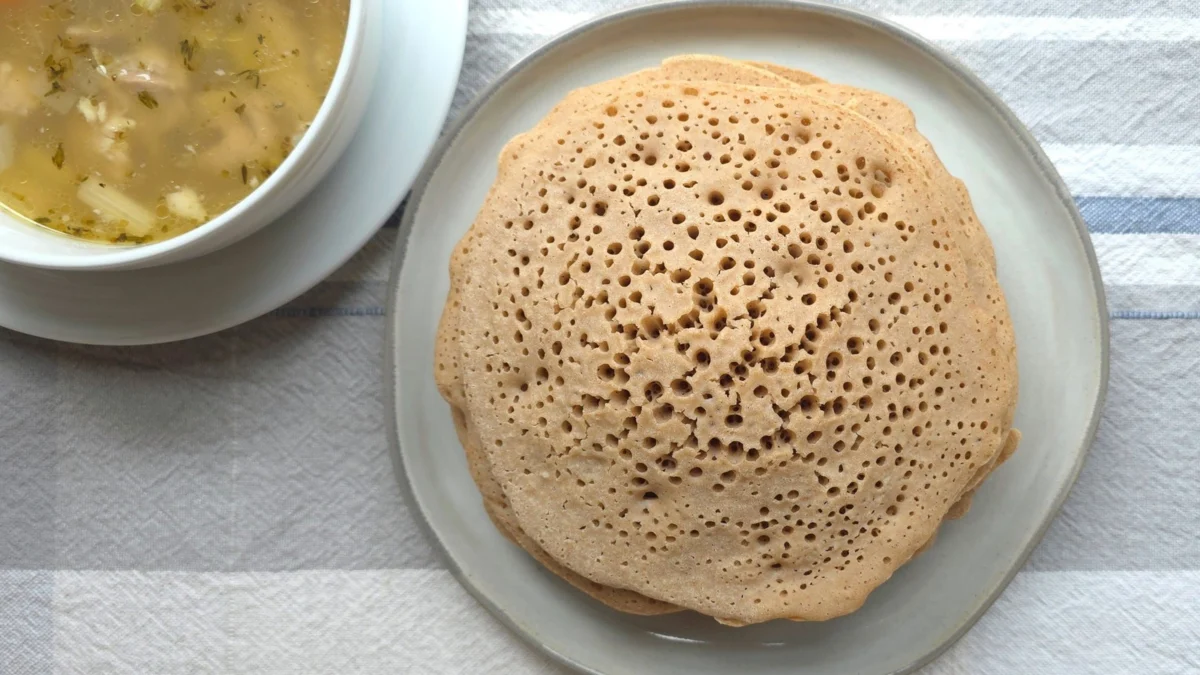
In the heart of the Canadian Maritimes, extending into the northern reaches of Maine and the rural corners of Quebec, there exists a humble flatbread that acts as both a cultural anchor and a culinary marvel. Known as ployes (pronounced to rhyme with "boys"), these thin, bubbly, buckwheat-based pancakes are a cornerstone of Acadian and Brayon identity. Far more than mere sustenance, the ploye is a testament to the resilience of a displaced people, serving as a versatile canvas for both sweet and savory traditions.
The Anatomy of a Ploye: Technical Excellence in Simplicity
At first glance, a ploye might be mistaken for a standard crepe or a crumpet, yet it possesses a distinct structural integrity that sets it apart. The hallmark of a perfect ploye is its unique, porous surface. As the batter—a precise blend of buckwheat flour, wheat flour, baking powder, salt, and water—hits a searing-hot, well-seasoned cast-iron pan, it undergoes a rapid transformation.
The steam generated from the heat forces its way to the surface, creating a signature landscape of "eyes." These small, uniform bubbles are not merely aesthetic; they are functional reservoirs. Whether one is drizzling rich maple syrup, thick molasses, or melted butter, these eyes hold the liquid in place, ensuring every bite is saturated with flavor.
Unlike a pancake, which requires a flip, the ploye is a single-sided wonder. It is cooked until the top is dry and the bottom is golden, a process that requires a delicate touch and a batter consistency mirroring that of heavy cream. This method results in a texture that is simultaneously tender and robust, making it the perfect vessel for dipping into hearty soups, stews, or the traditional Acadian chicken fricot.
Historical Chronology: From France to the Maritimes and Beyond
The history of the ploye is inextricably linked to the broader, often turbulent history of the Acadian people. To understand the dish is to understand the geography of the North American French diaspora.
The Colonial Foundation
Acadia was established in the 17th century as a colony of New France, spanning parts of present-day Nova Scotia, New Brunswick, and Prince Edward Island. Here, settlers adapted European agricultural techniques to the harsh North American climate. Buckwheat, a hardy crop capable of thriving in the acidic soils of the region, became a staple, providing a reliable source of flour that could sustain families through long, unforgiving winters.
The Great Expulsion (1755–1764)
The cultural trajectory of the Acadian people was irrevocably altered by the French and Indian War. The British forces, fearing a French uprising, initiated the "Great Expulsion," a systematic deportation of the Acadian population. Thousands were forcibly removed from their homes, scattering them across the British Atlantic colonies, France, and eventually the Caribbean.

The Cajun Connection
The odyssey of the Acadians did not end with their expulsion. In 1758, many who had been sent to France were recruited by the Spanish government to settle in Louisiana. Over time, the term "Acadian" underwent a linguistic shift in the humid climate of the South, evolving into "Cajun." While the culinary traditions of Louisiana shifted toward rice and corn-based dishes, the northern branch of the diaspora—the Acadians who remained in the Maritimes and those who migrated to the Saint John Valley in Maine—clung to their buckwheat roots. The ploye remains the most enduring edible artifact of this northern resilience.
Supporting Data: The Science of the Ingredients
The flavor profile of the ploye is dictated by the quality of its primary ingredient: buckwheat. Specifically, the Acadian tradition favors the silverhull variety of buckwheat. Unlike common dark buckwheat, which can be aggressively earthy and bitter, the silverhull variety offers a refined, nutty, and slightly grassy undertone.
For the modern home cook looking to replicate the authentic experience, the choice of flour is paramount. Milling fresh buckwheat groats—such as the silverhull variety—provides a level of freshness that commercial flour often lacks. When combined with a high-extraction, hard red winter wheat flour, the result is a perfect balance of tenderness and structure. The winter wheat provides the necessary gluten for elasticity, while the germ content adds a richness that complements the nuttiness of the buckwheat.
This marriage of grains is a reflection of historical necessity; wheat was often scarce in the early colonial days, requiring a creative mix to ensure a satisfying meal that could be prepared quickly and in large quantities.
Cultural Implications: A Sustenance for the Working Class
The ploye was never intended to be a gourmet luxury; it was the food of the worker. Its simplicity allowed it to be prepared in minutes, providing a caloric foundation for those working in the timber mills of Maine or the fishing ports of New Brunswick.
In contemporary culinary circles, the ploye has seen a resurgence as a "heritage food." As global interest in traditional, sustainable, and minimally processed grains grows, the ploye has transcended its regional borders. It is now celebrated for being naturally healthy, free from the heavy fats associated with many other flatbreads, and entirely adaptable to modern dietary preferences.
Savory vs. Sweet: The Dual Nature
The versatility of the ploye is best demonstrated by its place at the table throughout the day:

- The Sweet Start: In the morning, it is often buttered while piping hot and topped with a drizzle of local maple syrup or brown sugar.
- The Savory Staple: At dinner, it serves as a side for cretons (a traditional French-Canadian pork spread) or is rolled tightly to serve as a "spoon" for dipping into thick, aromatic stews. The use of traditional herbs—such as savory, or in its absence, a blend of marjoram and thyme—elevates the accompanying fricot to a sophisticated level of comfort food.
Official Responses and Culinary Preservation
Cultural organizations throughout the Saint John Valley and Maritime Canada have taken an active role in preserving the technique of ploye-making. These groups argue that the ploye is more than a recipe; it is a "living heritage."
Workshops, festivals, and community cook-offs have become vital in passing the craft down to younger generations. Culinary historians have noted that the "eye" formation is a skill that cannot be taught through text alone; it requires an intuitive understanding of the heat-to-batter ratio. This focus on "tacit knowledge"—knowledge that is learned through experience rather than instruction—has made the ploye a subject of interest for food anthropologists who study how community identity is reinforced through the act of shared preparation.
Future Outlook: The Global Potential of the Ploye
As we look toward the future, the ploye stands as a prime candidate for wider adoption in the "slow food" movement. It checks every box for the modern consumer: it is locally sourced, allergen-friendly (when using gluten-free buckwheat-only variations), and remarkably quick to produce.
The implication for the future is clear: by preserving the traditional methods of the Acadian and Brayon communities, we are not just saving a recipe; we are maintaining a link to a historical epoch that shaped the cultural fabric of North America. Whether one is enjoying a simple buttered ploye on a brisk autumn morning or dipping one into a complex chicken fricot, they are participating in a tradition that has survived expulsion, displacement, and the rapid pace of industrialization.
The ploye, with its humble eyes and nutty heart, remains a small but powerful piece of history, waiting to be cooked, shared, and savored. Through the simple act of heating a cast-iron pan and pouring a ladle of batter, the legacy of Acadia continues, one bubble at a time.