Azzam Bilal Chamdy
 Neng Nana
 Nana Muazin
 Dwi Wanna
 Raul Delapena Setiawan
 Basiran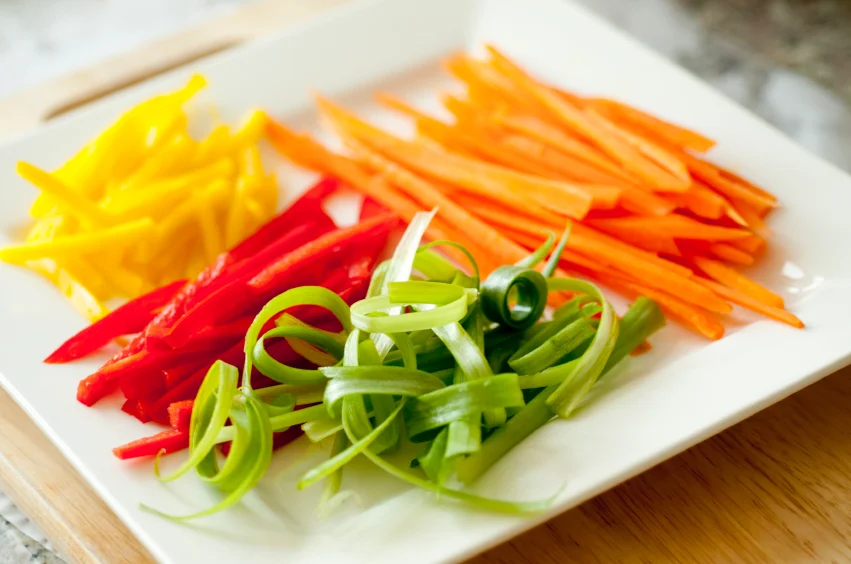
For the home cook, a kitchen knife is often viewed merely as a utilitarian tool—something to bridge the gap between a raw ingredient and a cooked meal. However, in the professional culinary world, the knife is an extension of the chef’s own hand. The mastery of knife skills is the single most important differentiator between a novice who merely "heats and eats" and a culinarian who understands the science and artistry of food preparation.
Beyond simple efficiency, precision cutting dictates the texture, cooking time, and flavor distribution of a dish. Whether it is the uniform caramelization of a diced onion or the delicate infusion of a chiffonade herb, these techniques are the bedrock upon which all professional cooking is built. This article explores the essential skills required to elevate your culinary practice, the history behind these methods, and why precision remains the ultimate hallmark of a chef.
The Foundation: Why Knife Skills Matter
The difference between mincing, dicing, and chopping is not merely semantic; it is structural. Improperly cut vegetables cook unevenly, leading to a dish where some pieces are mushy while others remain raw. Professional chefs spend years in culinary school perfecting the rhythmic "rocking" motion and finger placement required to maintain consistency.
Consistency is the goal. When every piece of an ingredient is cut to the same size, it reaches the desired temperature at the same time, ensuring that the flavor profile remains balanced throughout the dish.
Mincing: The Art of Disintegration
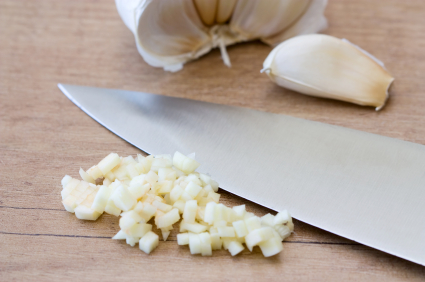
Mincing is the finest cut a chef can perform. The objective is to break an ingredient down into tiny, near-uniform particles that will dissolve into a sauce or blend seamlessly into a marinade. Garlic, ginger, and shallots are the most common candidates for this technique.
To execute a perfect mince, one must first utilize a sharp, thin-bladed knife. By cutting the garlic into thin strips from root to stem, and then rotating those strips 90 degrees to cross-cut them, the chef achieves a granular texture that releases essential oils and juices without bruising the ingredient.
Chopping vs. Dicing: The Spectrum of Size
While the terms are often used interchangeably, there is a distinct hierarchy in the culinary world. Chopping generally refers to a rougher, more rustic cut. It is an ideal technique for mirepoix—the base of onions, carrots, and celery used in stocks and soups. Using a heavy chef’s knife or a cleaver, the cook utilizes the weight of the tool to process larger volumes of ingredients quickly.
Dicing, by contrast, is a disciplined subcategory of chopping. It requires the creation of uniform cubes. Whether performing a brunoise (a fine dice) or a macédoine (a large dice), the key is the geometry of the ingredient. For those seeking professional-grade results, a knife with a Granton edge—which features scalloped indentations along the blade—is an invaluable asset, as it prevents thin, diced pieces from sticking to the metal during the cutting process.
Safety First: The "Claw Hand" Protocol
No discussion of professional knife skills is complete without emphasizing safety. The most common injury in a kitchen occurs when a cook loses focus on the hand holding the food. The "claw hand" technique is the industry standard for injury prevention.
By curling the fingertips of the guiding hand inward toward the palm, the cook creates a flat surface for the side of the knife blade to rest against. This keeps the fingertips tucked safely away from the sharp edge, allowing the cook to guide the knife with the knuckles. This simple adjustment changes the relationship between the cook and the blade, turning a high-risk activity into a safe, rhythmic operation.
Julienning: Precision and Symmetry
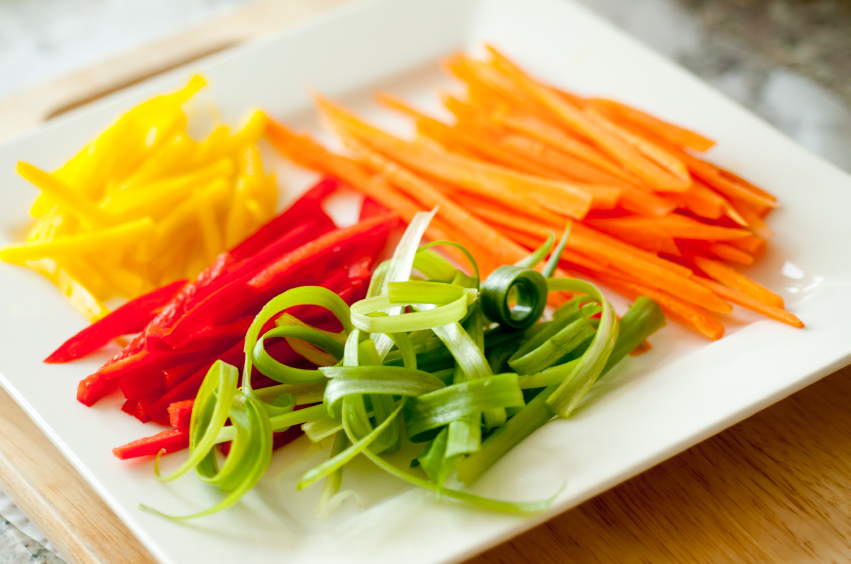
The julienne is a foundational French technique that creates long, thin strips—often referred to as "matchsticks." This method is as much about aesthetics as it is about texture. It is a staple in high-end salad preparation and stir-fry dishes where rapid, even cooking is essential.
The Methodology of the Julienne
To perform a true julienne, the cook must first square off the vegetable by removing the rounded sides, creating a rectangular block. This block provides a stable base. Using the chef’s knife with a fluid, rocking motion rather than a hacking stroke, the cook slices the block into thin, uniform planks. These planks are then stacked and sliced again into matchstick-sized strips.
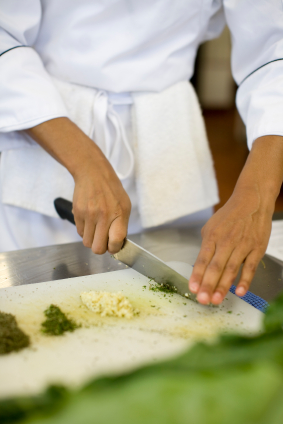
The secret to a perfect julienne lies in the grip. The middle, ring, and pinkie fingers should grasp the handle, while the forefinger rests firmly on the side of the blade. The thumb provides counter-pressure on the opposite side. This "pinch grip" provides maximum control, allowing the knife to move as a seamless extension of the arm.
Chiffonade: The Elegance of Herbs
The term chiffonade, derived from the French word for "made of rags," is a specialized technique used for leafy greens and herbs like basil, mint, and spinach. It is a delicate process that prevents the oxidation and bruising that occur when herbs are torn or handled roughly.
By stacking fresh leaves, rolling them into a tight cylinder—resembling a green cigar—and using an incredibly sharp blade to perform thin, perpendicular slices, the chef produces ribbons of herbs. Because the knife is sharp, the cell walls of the herb remain intact, keeping the flavor bright and fresh rather than muddy or bitter.
Chronology of Culinary Technique
The evolution of these skills parallels the history of professional kitchens. In the late 19th century, Auguste Escoffier codified these techniques, bringing structure to what had previously been disorganized kitchen habits.
- 1890s – The Escoffier Era: Standardized cuts (julienne, brunoise, batonnet) become mandatory in French kitchens to ensure consistent output.
- 1950s – The Rise of Home Technology: The introduction of the food processor threatened to make knife skills obsolete for the home cook.
- 2000s – The "Artisan" Resurgence: As the farm-to-table movement gained momentum, professional chefs shifted back to manual knife work to respect the integrity of fresh, local produce.
- 2020s – Modern Culinary Education: Online resources and global culinary access have made professional techniques accessible to the general public, elevating the standard of home cooking worldwide.
Official Responses and Culinary Standards
The American Heart Association and various culinary institutes frequently cite knife skills as a cornerstone of healthy eating. When ingredients are cut to the correct size, they cook faster, requiring less oil and less time over high heat, which preserves the nutritional density of vegetables.
Furthermore, professional chefs often argue that the act of "mindful cutting" improves the cook’s connection to the food. A spokesperson from the Culinary Institute of America notes: "We don’t just teach students how to cut; we teach them how to observe the vegetable. The knife is the diagnostic tool. If you can feel the resistance of the blade, you understand the ripeness and the quality of your produce."
The Implications of Mastery
Why should a home cook invest hours into practicing these repetitive motions? The implications are three-fold:
- Efficiency: A skilled chef can prep an entire week’s worth of vegetables in a fraction of the time it takes a novice, reducing kitchen fatigue.
- Safety: Mastery eliminates the frantic, uneven hacking that leads to slips and cuts. A rhythmic, controlled motion is inherently safer.
- Quality: Culinary science dictates that surface area matters. Proper knife skills maximize flavor extraction. When you chiffonade basil, you release oils at the moment of consumption. When you dice an onion uniformly, you achieve a sweetness that rough-chopped, jagged pieces cannot replicate.
Conclusion: The Path Forward
Learning these skills is a lifelong journey. Even the most seasoned executive chefs continue to refine their technique, focusing on the angle of the blade, the pressure of the cut, and the ergonomics of their station.
As you begin your own journey into these techniques, remember that speed is the enemy of quality. Start slowly. Focus on the uniformity of your cuts, the safety of your grip, and the sharpness of your tools. By moving away from the "chopping block" mentality and embracing the precision of the professional, you will not only become a more efficient cook—you will become a better one. The next time you pick up a chef’s knife, view it not as a chore, but as an opportunity to transform simple ingredients into a professional-grade experience.


 Evan Lee Salim