

 Azzam Bilal Chamdy
 Neng Nana
 Nana Muazin
 Dwi Wanna
 Raul Delapena Setiawan
 Iffa Jayyana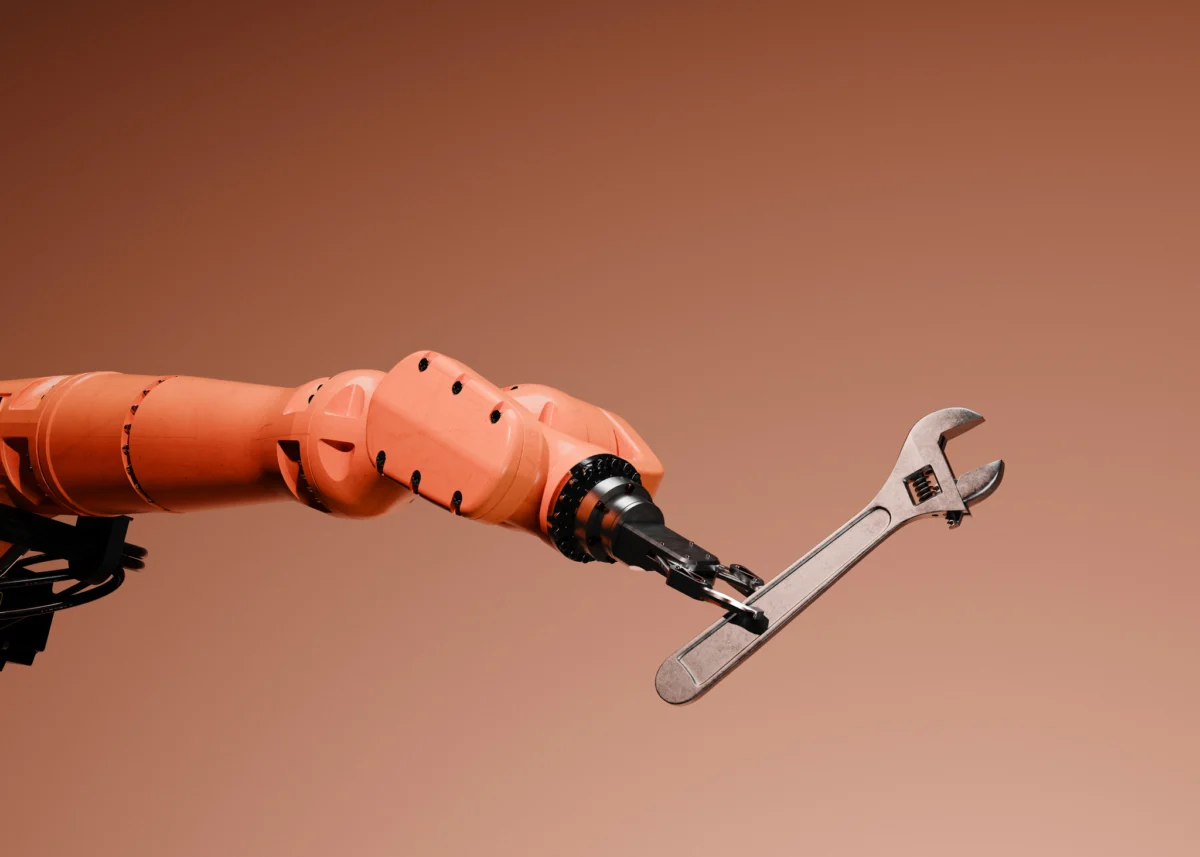
In the rapidly evolving landscape of artificial intelligence, the focus has shifted from the digital realm of Large Language Models (LLMs) to the physical world of robotics. On October 7, 2026, Mecka AI, a two-year-old startup specializing in the collection and analysis of human motion data, officially announced the closure of a $60 million Series B funding round. The investment, led by venture capital titan Sequoia, includes strategic participation from industry heavyweights such as Nvidia and Microsoft’s venture arm, M12.
This infusion of capital cements Mecka AI’s position as a critical infrastructure provider in the burgeoning robotics industry. With a valuation reaching the $500 million mark, the company is betting that the key to unlocking functional humanoid robots lies not in better hardware, but in the quality of the human data used to train them.
The Mission: Bridging the Gap Between Human and Machine
Founded in 2024, Mecka AI identified a fundamental bottleneck in the robotics industry: robots can be built, but they cannot yet "understand" how to navigate the messy, unstructured nature of human environments.
While LLMs were fed on the vast, digitized text of the internet, robots require something far more complex: high-fidelity, multimodal data representing physical actions. Mecka AI is effectively acting as the "Scale AI for robotics." By incentivizing individuals to record themselves performing mundane tasks—ranging from the precision required to brew a cup of coffee to the mechanical troubleshooting involved in automotive repair—the company is building a massive repository of "embodied intelligence."
Participants in the Mecka data ecosystem utilize specialized body sensors and smartphone-based capture technology to log their movements. This data is then cleaned, labeled, and structured into training sets that allow robotic systems to map human gestures onto mechanical actuators, enabling them to mimic human dexterity with increasing accuracy.
Chronology: A Meteoric Rise
The trajectory of Mecka AI is emblematic of the "gold rush" currently defining the AI-robotics sector.
- 2024: Mecka AI is founded, entering a competitive market of startups focused on synthetic and real-world data training.
- Early 2026: The company begins scaling its data-collection infrastructure, establishing a network of human contributors.
- September 2026: TechCrunch reports that Mecka AI is in advanced discussions for a Series B round, eyeing a $500 million valuation.
- October 7, 2026: The $60 million Series B funding is officially confirmed, signaling a vote of confidence from major institutional players like Sequoia, Nvidia, and M12.
The speed at which Mecka has moved from a nascent startup to a half-billion-dollar entity mirrors the broader industry trend of aggressive, high-stakes investment in companies that solve the "data scarcity" problem for embodied AI.
The Competitive Landscape and Market Dynamics
Mecka AI does not exist in a vacuum. As robots transition from static factory floors to dynamic homes and workplaces, the race to provide "robot training data" has become one of the most lucrative sub-sectors in tech.
Mecka finds itself in a fierce competition with companies like XDOF, another high-flying startup that, just three months after emerging from stealth, was reportedly in talks for a Series B round at a staggering $1.2 billion valuation. This valuation discrepancy highlights the volatility and immense growth expectations investors are attaching to companies that can effectively map human behavior.

Furthermore, the lines between data-labeling platforms and robotics specialists are blurring. Established players that made their names in the LLM era—such as Scale AI and Micro1—are aggressively pivoting or expanding their offerings to include robotics. Scale AI’s ongoing partnership efforts (and the recent complexities within their relationship with Meta) illustrate that even the most dominant data companies are finding it difficult to maintain a monopoly on the data pipelines needed for the next generation of AI.
Supporting Data: Why Motion Capture Matters
The urgency behind these investments is driven by a simple technological truth: neural networks are only as capable as the data they consume.
In robotics, traditional programming—hard-coding every joint movement and torque limit—is insufficient for the real world. To operate in a house, a robot must understand the nuance of gripping a fragile glass versus a heavy wrench.
- Data Density: Unlike text, motion data requires high-frequency sampling across multiple sensors, creating massive data storage and processing needs.
- Generalization: The goal is for robots to learn "generalized" behaviors. By training on thousands of hours of different humans performing the same task, Mecka AI’s algorithms can identify the commonalities in movement, allowing a robot to perform a task it hasn’t specifically been programmed for, but has "learned" through observation.
- The Valuation Gap: The disparity in valuations—ranging from $500 million for Mecka to $1.2 billion for XDOF—suggests that investors are still testing which data-collection methodology is the most scalable. Is it better to capture movement from highly trained professionals or crowdsourced everyday users? The market is currently betting on both.
Implications for the Future of Automation
The successful funding of Mecka AI carries profound implications for the labor market and the future of domestic and industrial automation.
For the Robotics Industry
The immediate beneficiary is the humanoid robot sector. Companies like Tesla (Optimus), Figure, and Boston Dynamics require massive datasets to make their platforms useful in non-factory environments. Mecka AI provides the "lessons" that these robots need to graduate from controlled labs to the messy reality of human homes and offices.
For the Labor Market
Critics and analysts are closely watching the "data-labeling" economy. While platforms like Mecka create a new form of "gig work"—where individuals are paid to perform tasks for AI training—it raises questions about the long-term sustainability of such labor. Will this remain a human-in-the-loop requirement, or will Mecka’s data eventually allow robots to learn from each other (synthetic data), effectively rendering the human data-collectors obsolete?
Regulatory and Ethical Considerations
As robots become more adept at performing human tasks, the data used to train them becomes a point of contention. Privacy concerns regarding the collection of high-fidelity motion data—which could theoretically identify an individual by their unique gait or physical habits—remain an under-discussed aspect of this business model. Investors are currently prioritizing speed and scale, but as these companies grow, they will likely face increased scrutiny from regulators regarding data privacy, security, and the ownership of human behavior data.
Conclusion: A Turning Point
The $60 million injection into Mecka AI is not merely a financial milestone for one startup; it is a signal that the "Embodied AI" era has officially arrived. By treating human behavior as a data commodity, Mecka AI is helping to build the blueprint for the next century of automation.
As Nvidia, Microsoft, and Sequoia pour capital into this space, they are betting that the robots of 2030 will not be programmed with code, but with the collective, digitized experience of the human race. Whether this will lead to a seamless integration of robots into our daily lives or a new set of societal challenges remains to be seen. However, one thing is certain: the race to teach machines how to move like us has only just begun.


 Laily UPN
 Rifan Muazin
