

 Azzam Bilal Chamdy
 Neng Nana
 Nana Muazin
 Dwi Wanna
 Raul Delapena Setiawan
 Rifan Muazin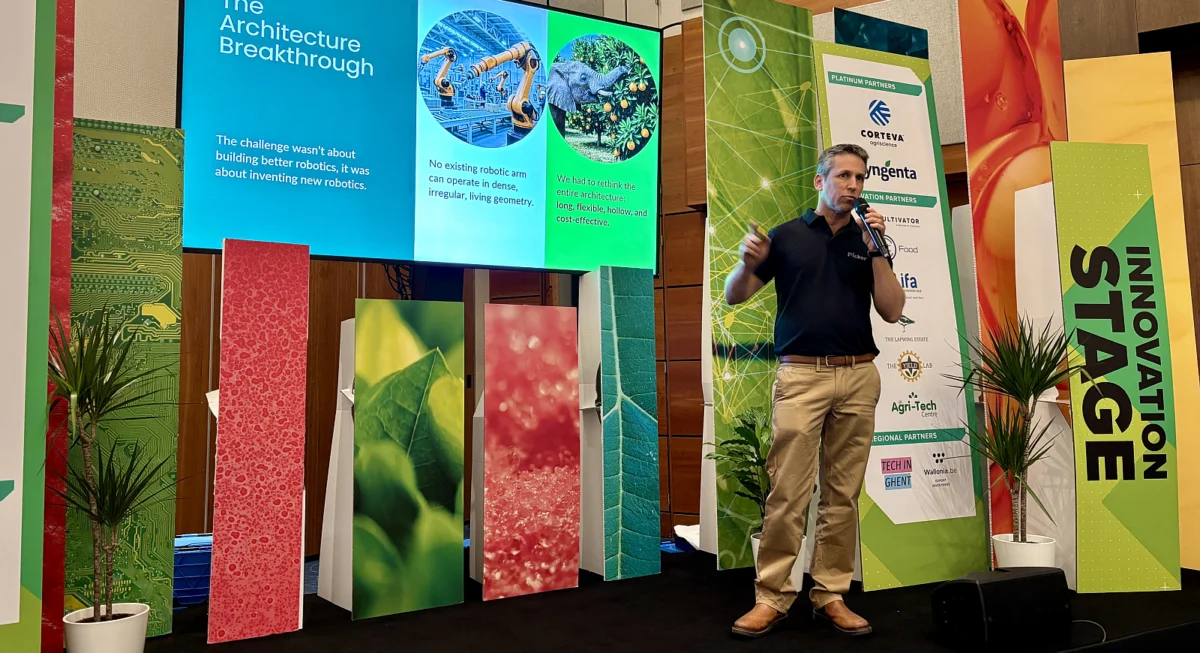
In the high-stakes world of agricultural technology, the "Holy Grail" has long been the autonomous fruit harvester. For years, engineers have attempted to replicate the human hand, building complex, rigid robotic arms designed to identify, grasp, and delicately place fruit into containers. Yet, as the industry has matured, many of these "pick-and-place" systems have been sidelined by high costs, mechanical complexity, and a fundamental inability to navigate the chaotic architecture of a living orchard.
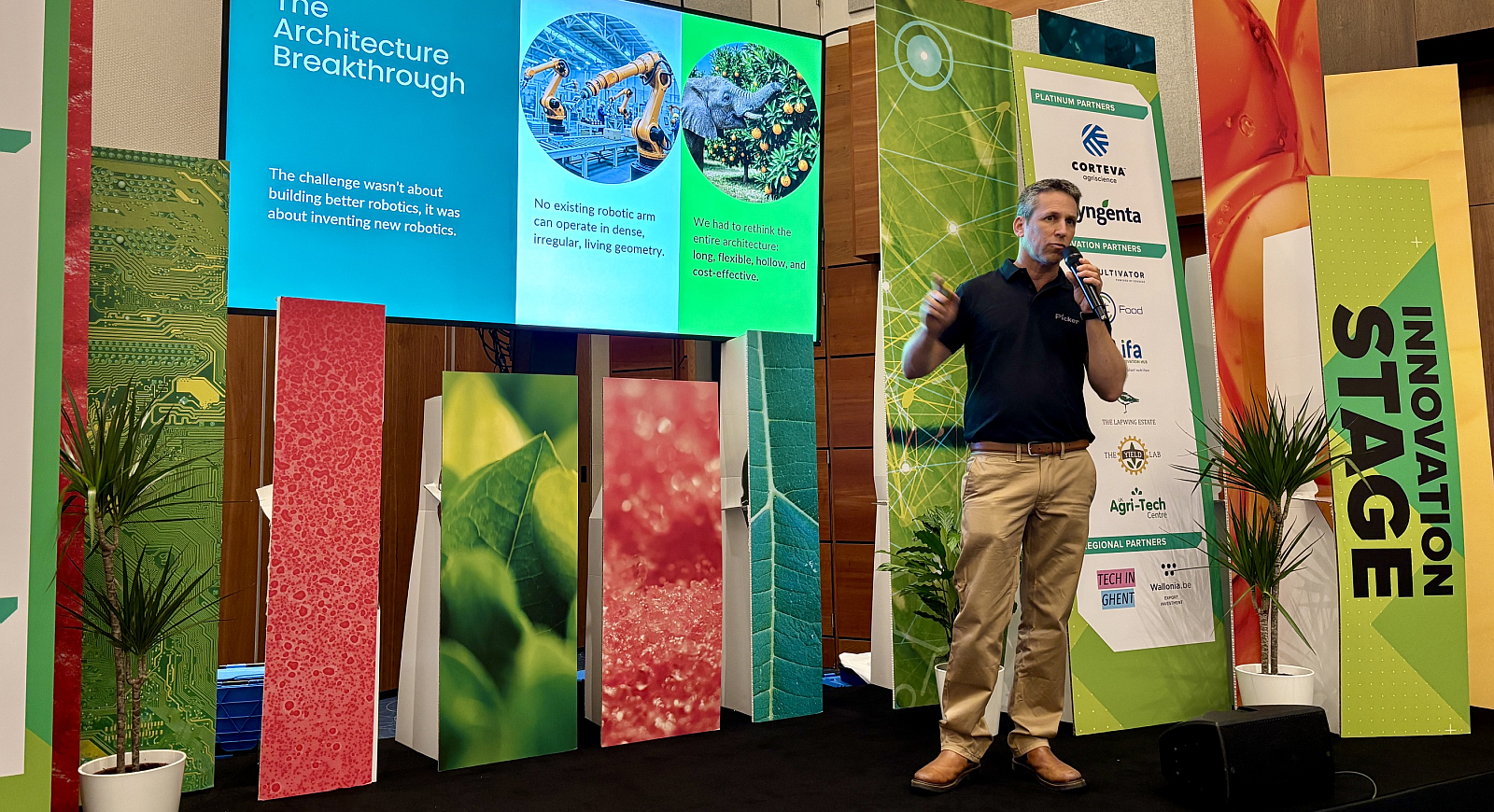
Enter Picker AgRobotics, an Israeli startup that is eschewing the rigid-arm orthodoxy in favor of a biomimetic approach: the elephant trunk. By utilizing long, hollow, and remarkably flexible robotic arms that "snake" through foliage, the company claims it has finally cracked the economic and technical code for large-scale autonomous harvesting.
The Problem with "Pick and Place"
The traditional approach to robotic harvesting is burdened by a logistical bottleneck. Most current systems operate on a singular, time-consuming cycle: an arm enters the canopy, identifies a piece of fruit, uses a specialized gripper to seize it, retracts to a conveyor belt, and deposits the fruit before returning to the tree.
"All of the companies we’ve seen, they pick and place," explains Yossi Rosenblum, cofounder and CEO of Picker AgRobotics. "They go all the way into a tree, pick one fruit, then go all the way back and place it on a conveyor. That is a very expensive machine and not very efficient. We thought we have to do this another way."
This cycle creates a high latency period that limits the speed of the harvest. Furthermore, these systems often require farmers to fundamentally alter their orchard architecture—pruning trees into specific "trellis" patterns or high-density rows to accommodate the limited reach of stiff, bulky robotic hardware.
The "Snip-N-Roll" Innovation
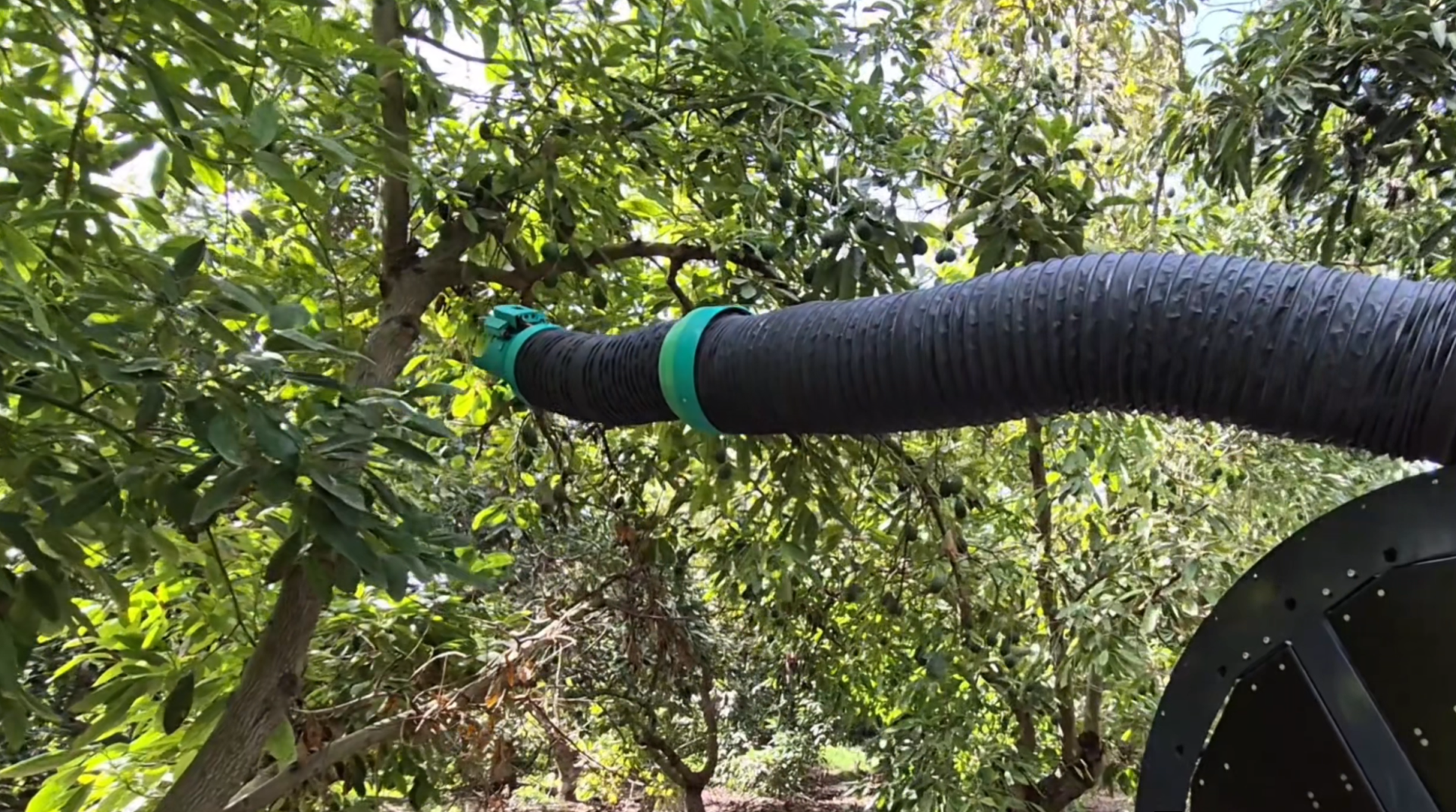
Picker AgRobotics has opted for a radically different mechanism. Rather than mimicking the human hand’s gripping motion, the company has developed a hollow, flexible tube that acts as both a surgical instrument and a delivery chute.
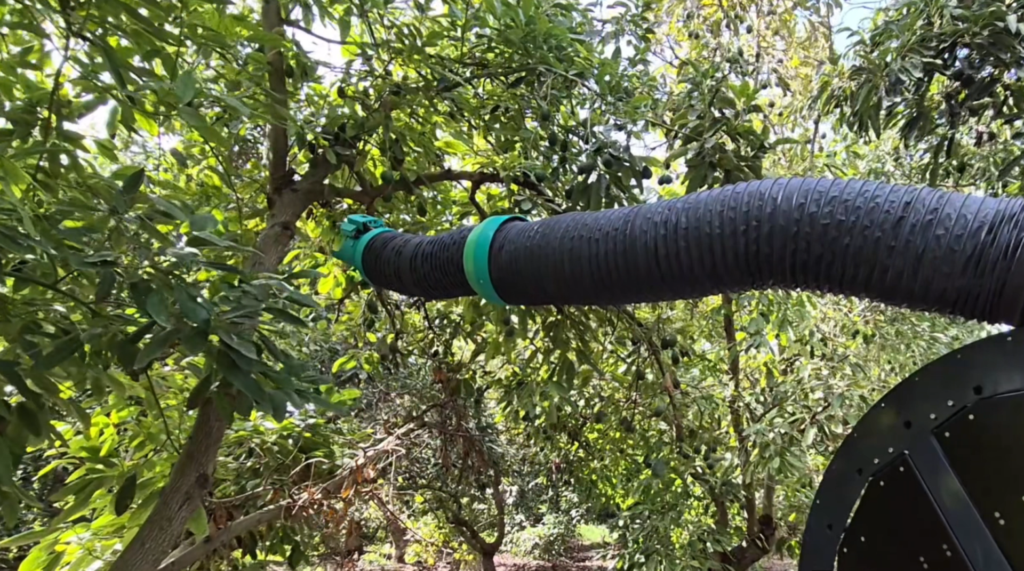
"There’s no gripper," says Rosenblum. "We just approach the fruit, cut the stem, and let the fruit roll through the hollow arm."
This "Snip-N-Roll" method effectively eliminates the need for the arm to retract after every single pick. By funneling the fruit directly from the stem through the center of the arm into a collection bin, the robot maintains a continuous harvesting flow. Because the arm is flexible and slender, it can navigate around branches that would otherwise block a rigid machine, reaching deep into the canopy where the majority of fruit often hides.
Chronology of a Startup: From Concept to Orchard
Founded in February 2025, Picker AgRobotics has moved with a velocity that has surprised industry observers. In less than two years, the team has transitioned from conceptual design to field-tested prototypes.
- Q1 2025: The company is incorporated in Israel, focusing on the core engineering of the flexible, hollow-arm mechanism.
- Late 2025 – 2026: The company iterates rapidly, producing four successive generations of the hardware. Each prototype incorporates lessons learned from real-world testing in local orchards near the company’s Israeli headquarters.
- October 2026: Rosenblum presents the technology at the World Agri-Tech Innovation Summit in London, signaling the company’s readiness to move beyond the R&D phase.
- January 2027 (Planned): Picker AgRobotics will launch its first customer-facing pilots, deploying units in Israel, followed by expansions into California and Spain.
Data-Driven Farming: Ending the "Blind Harvest"
Beyond the mechanical innovation, Picker AgRobotics is integrating advanced AI-powered computer vision. This allows the system to do more than just pick fruit—it collects granular data on every single item harvested.
"So far, you’ve been picking blind," notes Rosenblum. "You have no idea what fruit is coming from which tree, which tree has a problem, maybe there’s a deficiency. You have no idea."
By processing real-time video feeds, the robot makes autonomous decisions based on ripeness, size, and quality. When a fruit is picked, the system records its metadata and maps it to the specific tree it originated from. This transforms the harvest from a simple labor task into a precision-ag intelligence operation. Farmers can now identify underperforming trees, manage fertilizer needs with surgical accuracy, and predict yields with unprecedented precision.
Economic Implications: Making Robotics Affordable
For a technology to be adopted by the agricultural sector, it must offer immediate ROI. Rosenblum is keenly aware that farmers are risk-averse; they cannot afford to bet their livelihoods on unproven, capital-intensive equipment.
"You have got to save the farmer money," says Rosenblum. "You can come with great promises or great future benefits, but the farmer needs to save money from day one."
The economics are centered on replacing the high cost of human manual labor. In the U.S. Central Valley, for example, the cost to harvest citrus sits at approximately $25 per 900lb bin. Picker AgRobotics aims to lower that cost to $20 per bin immediately, with a trajectory toward 50% cost reductions as the technology scales.
The hardware itself is designed to be lean. By utilizing light industrial materials and focusing costs on software and high-efficiency motors rather than heavy mechanical chassis, the company avoids the "gold-plated" engineering trap.
To manage the financial barrier to entry, the company is adopting a flexible business model. They are starting with a leasing program, which allows growers to integrate the technology into their operations with minimal upfront capital risk. As trust grows and the fleet expands, the company expects to transition to a hybrid model where large operations may purchase the units while still benefiting from ongoing software updates and service support.
Navigating the Market: The "Avocado-First" Strategy
The choice of target fruit is a calculated strategic move. Picker AgRobotics chose avocados as their primary testing ground—a crop that is notoriously difficult to harvest due to the height of the trees, the irregular density of the canopy, and the visual similarity between green fruit and green leaves.
"If you can do avocados, you can pretty much do everything," Rosenblum explains.
By solving for the "hardest" fruit first, the team believes they can pivot easily to oranges, lemons, pears, and apples. Moreover, they are targeting segments where there is currently no viable robotic solution. While existing rigid-arm systems struggle to reach more than 30% of the fruit in a complex tree, Picker’s flexible arms are designed to achieve a target capture rate of 95%.
The Future of Agricultural Labor
The labor crisis in agriculture is not a temporary dip; it is a long-term structural shift characterized by aging populations in rural areas and rising wages. As Picker AgRobotics prepares to scale its six-unit pilot fleet, it finds itself at the intersection of a massive global need.
By decoupling the harvester from the tractor—allowing one operator to manage multiple units—and ensuring that the system does not require expensive orchard replanting, Picker AgRobotics is positioning itself as a "plug-and-play" solution for the modern grower.
As the industry looks toward 2027, the success of the Picker project will likely serve as a litmus test for the viability of "soft" or "flexible" robotics in the field. If the company’s elephant-trunk approach continues to outperform rigid alternatives, it may well signal the end of the manual harvesting era, ushering in a new age of precision, intelligence, and efficiency in the world’s orchards.
For now, the focus remains on the upcoming January pilots. If the results match the technical promise, the "Snip-N-Roll" could soon become the standard-bearer for how the world’s food is gathered, one piece of fruit at a time.


 Laily UPN

