Azzam Bilal Chamdy
 Neng Nana
 Nana Muazin
 Dwi Wanna
 Raul Delapena Setiawan
 Jia Lissa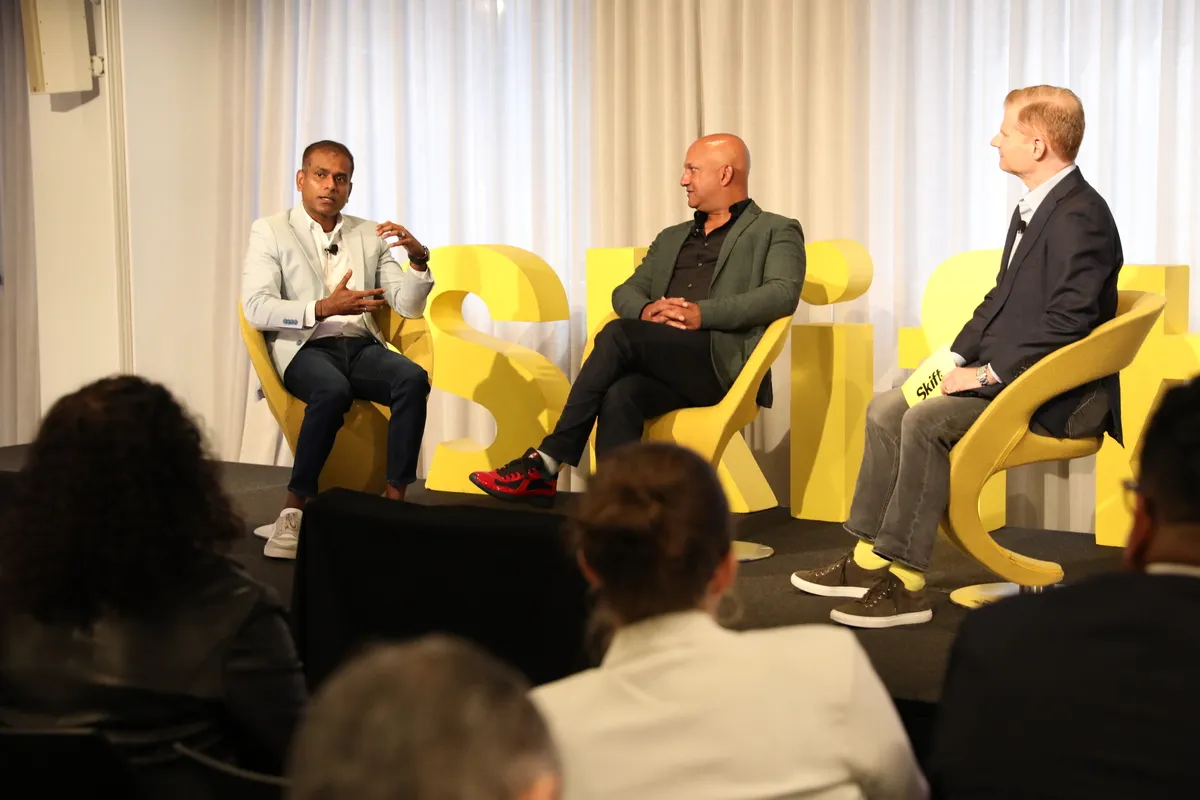
The economics of travel distribution are undergoing a seismic shift. For decades, the industry has operated on a relatively predictable tension between direct booking channels and Online Travel Agencies (OTAs). However, as artificial intelligence moves from a novelty to an operational necessity, the battleground has expanded. The fundamental question for travel executives today is no longer just about commissions versus direct costs; it is about who will control the "transactional sequence" in an era of autonomous agents.
The Cost of Intermediation: A New Calculus
The financial discrepancy between direct bookings and third-party distribution has long been a source of friction, but recent data from industry giants Accor and H World provides a sobering reality check for those relying heavily on intermediaries.
According to internal estimates cited by both hotel groups during their recent strategic partnership announcement, the cost of securing a direct booking hovers between 4% and 5% of total revenue. In stark contrast, OTA commissions typically range from 10% to 15%. This 5% to 11% spread is not merely a line-item variance; it is the difference between profitability and stagnation.
When Accor and H World announced their plan to link their combined 19,000-hotel inventory this summer, the move was widely interpreted as a defensive play against the rising costs of intermediation. By creating a unified, massive footprint, these operators are effectively building a direct-booking powerhouse designed to bypass the traditional commission-heavy model. This consolidation of inventory is not just about scale; it is about reclaiming the margin that has been siphoned off by middlemen for the better part of two decades.
The AI Agent Paradigm Shift
While the cost of traditional distribution is well-documented, a new, more complex variable has entered the equation: the AI agent. These autonomous digital assistants are beginning to act as the primary interface between the traveler and the travel supplier.
The transition is subtle but profound. An AI agent does more than just surface a room or a flight; it assumes the role of the concierge, the booking agent, and the payment processor. Crucially, the agent must settle the payment and credit the traveler’s loyalty account. Whoever controls this sequence—the "AI orchestration layer"—essentially sets the economics for every company further down the chain.
If an AI agent is trained by a specific platform, that platform inherently gains the power to prioritize inventory based on its own financial incentives, loyalty program partnerships, or data-sharing agreements. Travel suppliers that fail to integrate directly into these AI workflows risk being "black-boxed," relegated to the bottom of an algorithm’s recommendations where the cost of acquisition could rise significantly.
Chronology of the Commerce Consolidation
The trajectory toward this "stack consolidation" has been accelerating over the past 24 months:
- Q3 2025: Travel suppliers began aggressive investment in proprietary AI models, moving away from relying on generic, third-party search tools.
- Q1 2026: Large-scale mergers and inventory-sharing alliances (like the Accor/H World initiative) signaled that individual brands were too small to compete with the data-harvesting capabilities of major tech platforms.
- Summer 2026: The industry saw the first wave of "Agent-to-Agent" booking protocols, where AI systems began communicating directly with hotel property management systems (PMS) to bypass legacy distribution pipes.
- November 2026: The focus turns to the Skift Commerce Summit, marking a pivotal moment where leaders gather to address the reality of a consolidated, tech-heavy commercial stack.
Supporting Data: The Margin Squeeze
To understand why the industry is pivoting toward this new commerce model, one must look at the margin erosion occurring across the sector.
| Channel Type | Cost as % of Revenue | Control over Customer Data |
|---|---|---|
| Direct (Web/App) | 4% – 5% | High |
| OTA (Standard) | 10% – 15% | Low |
| AI Agent (Platform-led) | TBD (Emerging) | Variable |
The "Variable" designation for AI Agents is what keeps CFOs up at night. While early AI implementations were seen as a way to reduce customer service labor costs, the long-term risk is the loss of direct customer relationships. If an AI agent sits between the traveler and the airline, the airline loses the ability to upsell, cross-sell, and nurture the brand experience—the very things that drive long-term loyalty.
Official Responses and Strategic Perspectives
Industry leaders have been vocal about the need for a more sustainable commerce model. During the lead-up to the upcoming Skift Commerce Summit, various stakeholders have highlighted the "vendor vs. operator" divide.
"We are moving into an era where the stack is not just a technical choice; it is a capital commitment," says one industry strategist familiar with the summit’s planning. "If you are an airline or a hotel group, you are currently deciding which AI platforms to bake into your infrastructure. Once those integrations are set, switching costs will be astronomical. You are essentially choosing your long-term partners in a world where those partners might also be your competitors."
The insistence on keeping the Skift Commerce Summit "operator-heavy" is a direct response to this anxiety. By limiting the influence of GDS (Global Distribution System) and payment vendors, the organizers are attempting to foster a high-level dialogue among those who own the underlying product. The message is clear: the technology providers have had their turn; now the operators must decide how to govern the flow of commerce.
Implications for the Next Budget Cycle
As companies prepare for the next fiscal year, the "commerce bet" has shifted from marketing spend to infrastructure investment.
1. The Death of Legacy Distribution?
Not quite, but the legacy stack is becoming a utility rather than a strategic asset. The real value is shifting to the integration layer where AI agents interact with inventory. Suppliers that can provide clean, API-accessible data will find themselves in a much stronger negotiating position than those relying on clunky, fragmented legacy systems.
2. The Loyalty Loyalty Crisis
Loyalty accounts are the currency of travel. When an AI agent handles the booking, it must correctly credit the traveler’s loyalty account. If an intermediary platform can insert itself into this process, they potentially gain the ability to aggregate data across multiple brands, effectively becoming a "meta-loyalty" layer that owns the traveler’s profile. Suppliers must prioritize direct integration to prevent this data leakage.
3. Capital Allocation Shifts
Budget cycles for 2027 are reflecting these pressures. We are seeing a move away from "customer acquisition cost" (CAC) as the primary metric, replaced by "integration readiness." Companies are funneling capital into proprietary tech stacks that allow them to interface directly with emerging AI travel agents, effectively bypassing the traditional, high-commission distribution hurdles.
Joining the Conversation: Skift Commerce Summit
The challenges outlined above are not abstract theoretical problems; they are immediate business realities that will define the winners and losers of the next decade.
The Skift Commerce Summit, scheduled for November 11, 2026, at Apella by Alexandria in New York City, serves as the definitive gathering for executives tasked with these commercial outcomes. By curating an audience of operators—airline executives, hotel owners, cruise line leads, and mobility providers—the summit aims to strip away the vendor-driven noise and address the cold, hard math of the modern stack.
The policy of strictly gating vendors—and even issuing refunds to those who slip through the "fit check"—is a testament to the urgency of the conversation. In a room where every participant shares the same burden of rising distribution costs and the looming threat of AI-driven margin compression, the focus is on shared solutions and strategic alignment.
For those executives who hold the keys to their companies’ commerce strategies, the summit is more than an event; it is a forum to decide the rules of engagement for the next era of travel. If your team has major commerce bets on the table for the upcoming budget cycle, the insights shared at this summit will be the difference between remaining a supplier to the industry and becoming a master of your own distribution destiny.
As the industry converges on New York City this November, the objective is singular: to reclaim control of the transaction. In a world where AI agents can shift demand with a single recommendation, the companies that own the sequence will inevitably own the future. The question is no longer "How do we get more bookings?" but "How do we ensure that we are the ones who define the economics of those bookings?" The race is on, and the stack is consolidating.


 Asro
Asro