
 Asep Darmawan
 Suro Senen
 Pevita Pearce
 Neng Nana
 Ammar Sabilarrohman
 Raul Delapena Setiawan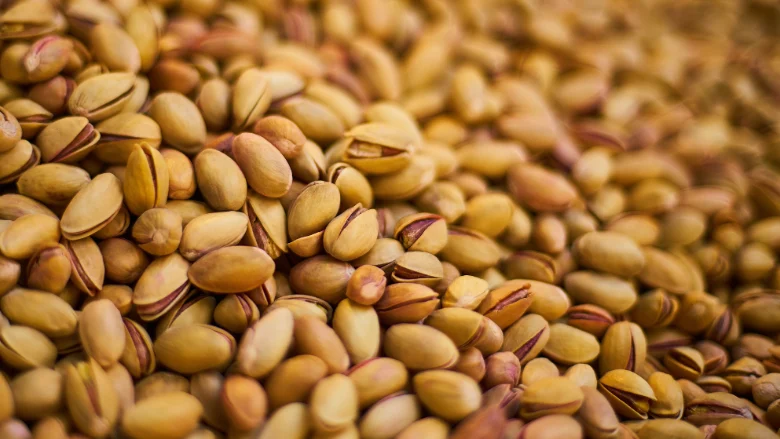
For decades, the produce aisle has been curated to appeal to the human eye. We favor bright, unblemished apples, vibrant citrus, and the pristine, uniform shells of walnuts, pistachios, and hazelnuts. However, a groundbreaking study from the University of Southern California (USC) has pulled back the curtain on the industrial processes used to achieve this "perfect" appearance, revealing that the chemical bleaching of tree nuts may be creating a class of previously overlooked, potentially harmful contaminants.
The research, led by Adam Simpson, Ph.D., an Assistant Professor in the Sonny Astani Department of Civil and Environmental Engineering at the USC Viterbi School of Engineering, suggests that the use of sodium hypochlorite (NaOCl)—common chlorine bleach—can trigger chemical reactions inside the nut kernel itself, creating compounds known as fatty acid chlorohydrins. Published in the Journal of Hazardous Materials, these findings raise urgent questions about the trade-offs between food aesthetics and consumer safety.
The Mechanism of Contamination: How Bleach Reaches the Kernel
The process of bleaching tree nuts is primarily cosmetic. By applying high concentrations of sodium hypochlorite, processors can strip away the natural discoloration of shells, resulting in a cleaner, more uniform look that consumers have been trained to associate with freshness and quality.
However, the USC study highlights a significant physical reality: nut shells are not impervious barriers. During the bleaching process, hypochlorous acid (HOCl) can permeate the shells through natural openings, such as the sutures in walnuts or the naturally occurring splits in pistachios. Once inside, the chlorine-based oxidant encounters the edible kernel, which is rich in unsaturated fatty acids.
The chemical reaction that ensues transforms these fatty acids into fatty acid chlorohydrins. Unlike surface residues that might be washed away, these contaminants integrate into the lipid matrix of the nut, making them difficult to detect through traditional safety testing methods. While postharvest disinfection for fruits and vegetables typically uses chlorine concentrations of around 200 milligrams per liter (mg/L), the bleaching process for tree nuts often employs concentrations ranging from 10,000 to 60,000 mg/L—a scale that is orders of magnitude higher than standard sanitation practices.
A Chronology of Discovery: From Lab Benches to Market Shelves
The investigation into these processing byproducts followed a methodical, multi-stage research trajectory.
Phase 1: Controlled Laboratory Simulation
The research team initiated the study by subjecting in-shell walnuts, pistachios, and hazelnuts to various concentrations of NaOCl, ranging from 1 percent to 12 percent. These treatments were held for three minutes at a neutral pH and room temperature, mimicking typical industrial conditions. Even at the lower 1 percent concentration, the results were striking. Pistachios, due to their naturally split shells, showed the highest concentration of chlorohydrins, followed by hazelnuts and then walnuts.
Phase 2: Variable Impact Analysis
To understand how processing duration affects contamination, the team performed stress tests. They discovered that the longer the nut was exposed to the bleaching agent, the higher the contaminant yield. When in-shell walnuts were exposed to 1 percent NaOCl for 15 minutes, they contained eight times the amount of chlorohydrins compared to a standard three-minute exposure. Furthermore, when the researchers pulverized the walnut kernels before exposure, the yield jumped to 49.4 µg/g, confirming that the more the kernel’s surface area is exposed to the bleach, the more significant the chemical reaction becomes.
Phase 3: Evaluating Commercial Products
The final phase of the study moved from the lab to the store. The researchers purchased three commercially available brands of in-shell walnuts. Upon analysis, they discovered that these real-world samples contained fatty acid chlorohydrin levels between 4.9 and 5.6 µg/g. This confirmed that the laboratory findings were not merely theoretical—the contamination is present in products currently being sold to unsuspecting consumers.
Supporting Data: Cytotoxicity and the "Hidden" Risk
Perhaps the most concerning aspect of the study is the toxicological assessment. The team conducted 72-hour in vitro cytotoxicity assays to see how these chlorohydrins affect cells. They compared these results to 3-monochloro-1,2-propanediol (3-MCPD), a well-known food processing contaminant already regulated by the European Union due to its potential toxicity.
The results were alarming: the fatty acid chlorohydrins exhibited significantly higher cytotoxicity than 3-MCPD. Specifically, it required over 4,000 micromolars (µM) less of the chlorohydrins to reach the same level of cell damage as the 3-MCPD.
To put this in perspective, the researchers performed a screening-level comparison against the EU’s tolerable daily intake (TDI) for 3-MCPD, which is set at 2 µg/kg of body weight. Their calculations suggest that a mere 3.6 to 4.0 grams of the commercially tested walnuts contained an equivalent in vitro cytotoxic potency to that daily limit. Given that a typical serving of tree nuts is roughly 30 grams, the data suggests that a single serving could potentially exceed the toxicological equivalent of the EU’s established safety benchmark for similar contaminants.
Implications and Official Caution
It is vital to note that these findings do not constitute a definitive dietary risk assessment. Dr. Simpson and his team have been careful to emphasize that in vitro (test tube) cell responses do not perfectly mimic the complexities of the human digestive system, metabolism, or bioavailability.
"We want to know how these compounds affect the consumer," Dr. Simpson stated. "We do basic toxicology in our lab, but now we want to move toward medical research." To this end, his laboratory is collaborating with Dr. Ana Claudia Maretti-Garcia at the USC Keck School of Medicine to study the effects of these chlorohydrins on human liver cells (hepatocytes).
The "Aesthetic" Dilemma
The study’s most profound implication is the questioning of industry standards. There is a distinct, legally and ethically significant difference between using chemicals to neutralize foodborne pathogens—where the risk of contamination is a clear threat to human life—and using them for purely aesthetic purposes.
"I can understand balancing the risk of pathogens against the chronic risk of these byproducts, because the yields are very low," Dr. Simpson noted. "But the industry is also bleaching tree nuts, whey protein, and many other foods with chlorine and similar oxidants for aesthetic purposes that have no nutritional value."
This observation challenges the food industry to justify the use of harsh chemical treatments for products that are often marketed as "natural" or "healthy" snacks. If the consumer is paying a premium for a product that has been bleached to look uniform, they may be unwittingly paying for a process that introduces unintended chemical risks.
Future Research and Industry Accountability
The study serves as a clarion call for further investigation into the "chemical footprint" of food processing. Fatty acid chlorohydrins appear to be part of a larger, underrecognized class of processing byproducts that remain invisible to conventional food safety monitoring, which typically prioritizes known hazards and smaller, more volatile molecules.
Researchers are now urging:
- Enhanced Toxicological Profiling: A deeper look into the metabolic fate of these compounds and their long-term, low-dose toxicity.
- Transparency in Processing: A push for the food industry to disclose when and how bleaching agents are used, allowing consumers to make informed choices.
- Alternative Sanitation: Research into safer, non-oxidative methods of cleaning nut shells that do not risk the structural integrity of the kernel.
- Targeted Analytical Monitoring: Development of new testing protocols that can detect these lipid-associated contaminants in supply chains.
The USC research does not sound an immediate alarm for those who have consumed bleached nuts; rather, it identifies a significant gap in our current food safety framework. As the global food industry continues to prioritize the visual appeal of produce, the scientific community is making it clear that we must look beyond the shell to understand the full chemical impact of the products on our plates.
For the time being, the conversation has shifted from the shelf-appeal of a walnut to the integrity of the kernel itself—a reminder that in the world of food science, perfection is often a chemical construct that deserves a much closer look.

 Azzam Bilal Chamdy