 Dwi Wanna
 Nana Wu
 Muslim
 Reynand Wu
 Ammar Sabilarrohman
 Suro Senen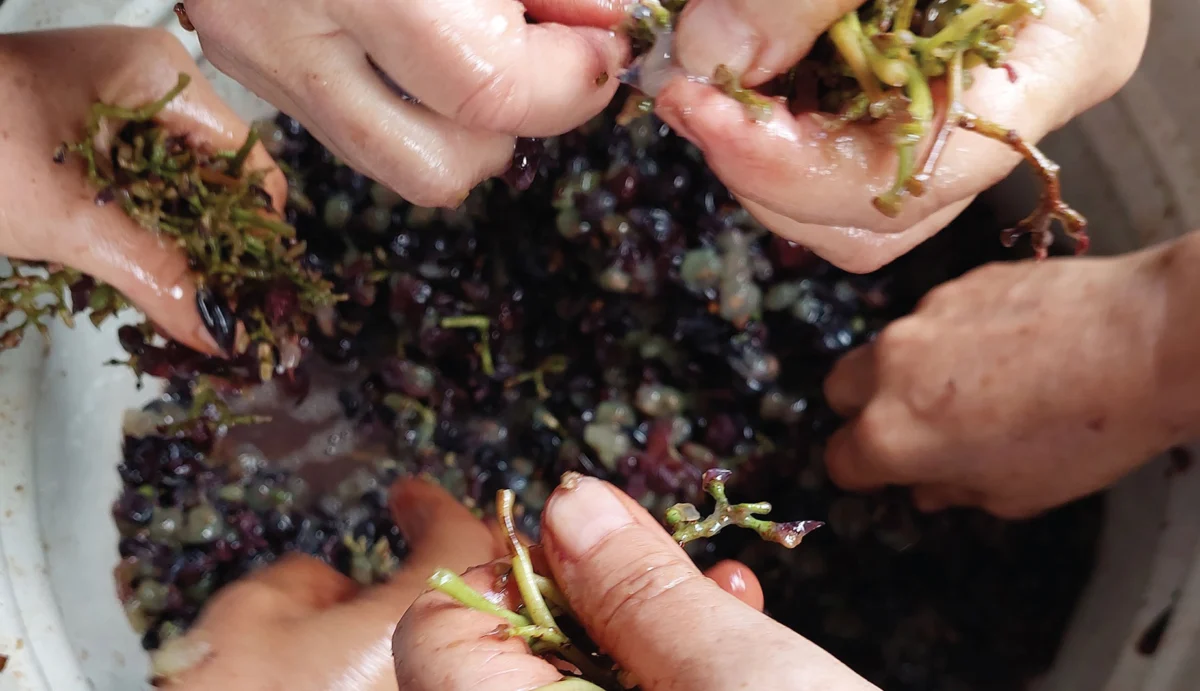
In 1952, the pharmaceutical giant Parke, Davis and Company commissioned portrait artist Robert Thom to capture a series titled Great Moments in Medicine. Among the most iconic was a depiction of French chemist Louis Pasteur and his wife, Marie. In the painting, Pasteur holds two experimental flasks to the light, his expression one of singular, focused sincerity. Behind him, Marie gazes through an open door, a peripheral witness to a scientific crusade. This image was not merely a biographical tribute; it was a Cold War manifesto. It codified a century-long narrative of Western science: that humanity’s primary duty toward the microbial world is one of combat, control, and ultimate triumph.
However, as we enter 2026, the academic landscape of food studies is undergoing a paradigm shift. The latest issue of Gastronomica (Vol. 26.1) challenges the "Pasteurian" mandate of microbial eradication, proposing instead a "post-Pasteurian" framework—one where the binary of human versus microbe is replaced by a complex, co-constitutive dance of collaboration.
The Pasteurian Legacy: A Century of Antagonism
To understand the modern food system, one must first dismantle the myth of the "Great Man" of science. George A. Bender, the pharmacist and historian who documented the Parke-Davis series, framed Pasteur not just as a chemist, but as a warrior. The language used in these historical accounts—"combats," "persists," "triumphs"—defined the relationship between humans and microbes as fundamentally antagonistic.
For over a century, this perspective allowed modern society to treat microbes as invisible enemies, lurking in the shadows of our kitchens and factories, waiting to be neutralized by sanitization, heat, and regulation. This control-oriented mindset has allowed the average consumer to remain blissfully unaware of the microbial architecture of their daily lives. Yet, as editors Maya Hey and Sarah Elton note in their introduction to the Gastronomica special section, "microbes are an invisible center of food systems." They do not merely exist on food; they structure the regulation, taste, and power dynamics of our entire global food economy.
Chronology: From Eradication to Microbiopolitics
The transition from the mid-20th-century obsession with sterility to our current, more nuanced "microbial moment" can be traced through several evolutionary stages:
- 1948–1964 (The Pasteurian Zenith): The era of the Great Moments in Medicine paintings, where pharmaceutical enterprise was glorified as the protector of human progress against "microbial unruliness."
- Late 20th Century (The Rise of Industrial Control): The acceleration of global food supply chains, heavily reliant on standardized, sterile industrial processes to ensure safety and shelf life.
- 2013 (The Paxson Pivot): Anthropologist Heather Paxson publishes The Life of Cheese, providing the intellectual bedrock for understanding how microbes in food production are not just risks to be managed, but partners in crafting value and identity.
- 2026 (The Post-Pasteurian Synthesis): The current moment, where scholars across anthropology, geography, and the environmental humanities are synthesizing "microbiopolitics" to describe a world where we can no longer afford the luxury of viewing microbes as purely disposable or dangerous.
Supporting Data: The Anatomy of a Microbial Shift
The special section in Gastronomica 26.1 provides a multidisciplinary look at how this shift manifests across different geographies and technologies.
The Gendered Politics of Production
Annie Sandrussi’s research into milk microbiota reveals that our microbial management is not neutral—it is deeply gendered. By applying Donna Haraway’s notion of the "cyborg," Sandrussi exposes how the management of milk is predicated on a "biopolitics of prevention." The more a food product is associated with the "feminized" body (such as raw milk), the more intense the technoscientific control becomes. Conversely, highly processed, precision-fermented products are viewed as "cleaner" and less in need of mediation, reinforcing a technological hierarchy that mimics historical gender biases.
Probiotic Agriculture vs. Vertical Containment
A stark contrast is observed between biodynamic wine producers and the operators of high-tech vertical farms. In the former, as studied by Nikolai Siimes, Nick Lewis, and Emma L. Sharp, growers adopt "probiotic" approaches, working with microbial life rather than trying to sterilize the soil. They resist the "eradicatory ethics of violence" common in conventional viniculture.
Conversely, vertical farming—the darling of modern sustainable agriculture—replaces the messy serendipity of soil with indoor, climate-controlled environments. While these systems rely on microbial life to function, they do so through a regime of strict containment. They represent a paradox: they are "pro-microbial" in their function but "anti-microbial" in their philosophy of control, effectively reinforcing the productivist, top-down logics of the 20th century.
Digestive Belonging and Migrant Terroir
The concept of terroir—traditionally tied to the soil of a specific region—is being radically redefined. Sevgi Mutlu Sirakova’s work on migrants carrying preserved foods across borders illustrates how microbes act as "carriers of bio-cultural diversity." The microbes on the hands of a maker, or within a fermented jar, create a "relational terroir" that persists even when the food is relocated to a new continent. Similarly, the concept of "digestive belonging," explored by Overstreet, suggests that our guts are biologically and immunologically linked to the places and non-human animals we interact with, anchoring us to our environment in ways that transcend simple nutritional consumption.
Official Responses and Broader Implications
The findings presented in this issue of Gastronomica suggest that we are at a crossroads. While the scientific community has moved toward a more sophisticated understanding of the human microbiome, our policy and regulatory frameworks remain largely stuck in the Pasteurian era.
The "illusion of food freedom," a topic explored by Phoebe Mitchem, highlights the darker side of this tension. For individuals with severe allergies or chronic conditions, the "freedom" touted by modern diet culture is a fiction. True control—or what Mitchem terms "food fascination"—requires a deep, ongoing, and often laborious engagement with the materials we consume.
Furthermore, the Cold War anxieties that once shaped how we viewed food are still echoing today. Rebecca Burditt’s study of cake imagery from 1945–1960 shows how the atomic age forced a strange, aestheticized acceptance of nuclear power through the domestic lens of baking. Today, we are similarly forced to confront the "sublime power" of the microbial world—not through the lens of a nuclear bomb, but through the lens of climate change and biodiversity loss.
Conclusion: Toward an Adaptable Symbiosis
The primary takeaway from the current scholarship is that we cannot simply "un-Pasteurize" our food systems. We live in a world that requires high-level safety standards, and we cannot abandon the technological gains of the last century. However, we must stop pretending that we are external to these processes.
As Senft, Stöckelová, and Borisova argue, flourishing in the future cannot be achieved by a post-Pasteurian understanding alone. It requires a synthesis: recognizing that we are in a "microbial moment" that demands adaptable responsiveness. We are not the masters of our microbial environments; we are their hosts, their partners, and their descendants.
As we look toward the future of food, the lesson is clear: the most sophisticated way to handle our relationship with the microscopic world is not to seek total victory, but to acknowledge the complex, messy, and fundamentally symbiotic reality of our existence. We are, quite literally, what we host.

 Lina Hope
 Lina Irawan