 Azzam Bilal Chamdy
 Neng Nana
 Nana Muazin
 Dwi Wanna
 Raul Delapena Setiawan
 Jia Lissa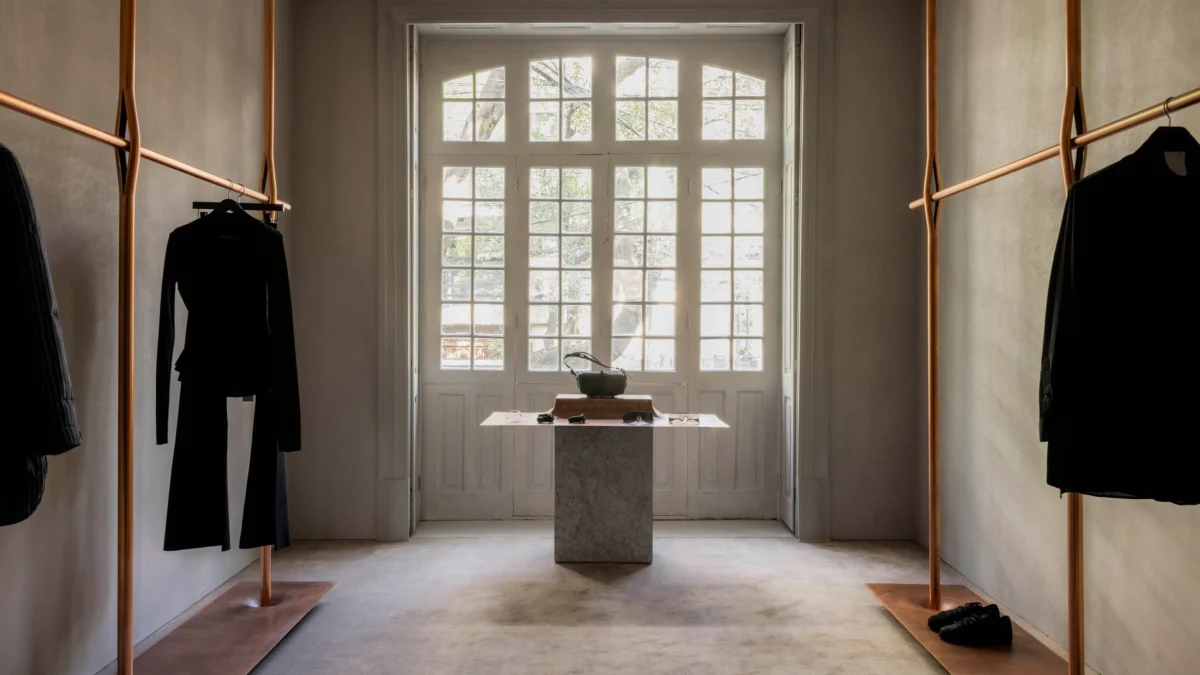
In the heart of Mexico City’s historic Roma Norte neighborhood, a quiet revolution in retail design has taken place. The recently unveiled Colima 162 boutique, a 210-square-meter luxury concept store, serves as a masterclass in the intersection of architectural heritage and contemporary minimalism. Spearheaded by local architect Laura Vela Lasagabaster and renowned designer Manu Bañó, the project breathes new life into a grand residence originally constructed in 1919 during the Porfirian era. By eschewing the cluttered visual language typical of high-end fashion retail, the duo has crafted a “purist” environment where recycled copper serves as the primary protagonist.
Main Facts: A Study in Materiality and Space
The boutique is located on Colima Street, housed within a structure that carries the weight of a century of history. The design philosophy behind Colima 162 is rooted in “minimal intervention,” a strategy that respects the building’s original architectural bones—such as its towering, full-height windows—while introducing a modern, highly sculptural layer of interior elements.

The project’s defining feature is its deliberate use of recycled, hand-hammered copper. Crafted by expert artisans in the copper-rich region of Santa Clara del Cobre, these bespoke fixtures function simultaneously as furniture, display units, and artistic installations. The material palette is intentionally restrained: warm, russet-toned copper offsets the neutral, beige-hued lime-plaster walls and a custom-fitted bamboo silk and wool rug that spans the floor. This color scheme creates a cohesive, immersive environment that invites customers to experience the retail space not merely as a site for commerce, but as a gallery of industrial craftsmanship.
Chronology: From Historic Residence to Retail Destination
The journey of Colima 162 began with the recognition of the property’s historical significance. Built in 1919, the residence was a hallmark of the Porfirian era, characterized by grand proportions and ornate spatial layouts.

- Initial Assessment (Early 2025): Lasagabaster and Bañó approached the space by first identifying the original structural highlights. They determined that the sequence of rooms—connected by open doorways—should be preserved to maintain the building’s original flow.
- Concept Development: The duo established a design narrative centered on “purist interior design.” They decided that the retail experience should be a linear, unfolding sequence, leading the visitor from the entrance staircase into the various chambers of the boutique.
- Collaboration with Artisans: Mid-2025 saw the commissioning of the copper elements. Working closely with the artisans of Santa Clara del Cobre, the team developed various finishes—hammered, brushed, and mirror-polished—to introduce texture and play with natural light.
- Final Implementation (Early 2026): The installation phase focused on the integration of these custom pieces. By late spring 2026, the boutique officially opened its doors, signaling a shift in the local retail landscape toward more curated, sculptural, and context-aware design.
Supporting Data: Architectural and Artistic Specifications
The success of Colima 162 lies in its precise execution. The following elements highlight the technical and aesthetic complexity of the space:
- The Entrance Sequence: Upon climbing the access staircase, the shopper is greeted by a large circular basin topped with a reflective surface. This piece acts as an anchor for the entrance area, positioned against four vertical panels that feature rods emerging from indents in the material.
- Garment Rails and Displays: Throughout the subsequent rooms, the designers utilized thin vertical copper poles, spliced by horizontal bars. These pieces serve as the primary garment rails, while flat copper plates at the base provide grounding for footwear.
- The Mirror Effect: One room utilizes tall, perpendicular mirrored panels. These are not merely decorative; they are strategically placed to create an optical illusion of expanded space, challenging the physical limitations of the 1919 floor plan.
- Lighting and Texture: The lighting design, handled by S-ombra, is engineered to interact with the varying copper finishes. The interplay between the “mirror-polished” surfaces and the “hammered” textures creates shifting light patterns throughout the day, ensuring the boutique’s atmosphere evolves as the sun moves across the sky.
Official Perspectives: The Philosophy of the Designers
In a joint statement, Laura Vela Lasagabaster and Manu Bañó articulated the ethos behind the project: “The sequence begins at the access staircase leading to the first level, where a clear and direct concept unfolds: a purist interior design grounded in minimal intervention.”

The designers emphasized that their goal was to move away from the "conventional language of retail." By treating the furniture as "sculptural objects," they have created a space where the products on display are secondary to the overall atmosphere. “The result is a proposal in which a restrained, contextual material palette and a deliberately neutral interior allow copper to emerge as both the dominant presence and the unifying element of the project,” the duo explained.
This project also highlights the collaborative nature of the Mexican design scene. Manu Bañó, a frequent collaborator with EWE Studio (alongside Hector Esrawe and Age Salajõe), brings a wealth of experience in blending traditional craftsmanship with contemporary forms. This background is evident in the choice of copper, a material deeply embedded in Mexican cultural history, yet utilized here with a radical, modern sensibility.

Implications: The Future of Retail Design in Mexico City
Colima 162 is emblematic of a broader trend currently reshaping the retail landscape of Mexico City. As the city cements its status as a global design hub, boutiques are increasingly moving toward “anti-retail” designs. Rather than focusing on maximum product density, designers are favoring spatial quality, artistic expression, and the preservation of historic architecture.
This shift has been mirrored in other recent projects throughout the city, such as the “intentionally simple” eyewear store designed by Calila Studio and the conceptually complex space featuring a double-conical staircase by MYT+GLVDK. Collectively, these projects suggest that luxury in Mexico City is no longer defined by opulence or excess, but by intentionality and the thoughtful use of local materials.

The implications for future architects are clear: the most successful retail environments will be those that can successfully negotiate the tension between the past and the present. By choosing to honor the 1919 architecture while boldly introducing contemporary, sustainable, and handcrafted elements, Lasagabaster and Bañó have created a landmark that feels both permanent and strikingly fresh.
As the retail sector continues to face competition from digital storefronts, spaces like Colima 162 offer a compelling argument for the necessity of the physical experience. Through the tactile beauty of copper and the silence of a purist design, the boutique creates an environment that cannot be replicated online—a sanctuary of light, texture, and history in the heart of Roma Norte.

Project Credits:
- Interior and Furniture Design: Manuel Bañó, Laura V. Lasagabaster
- Design Team: Natán Ayala, Roberto González, David Pfeiffer
- Lighting Design: S-ombra
- Artisans: Raúl Rauda, Pablo Reyes, Humberto Reyes
- Photography: Alejandro Ramírez Orozco

 Lina Hope