

 Raul Delapena Setiawan

 Ammar Sabilarrohman
 Lina Irawan
 Suro Senen
 Asro
Asro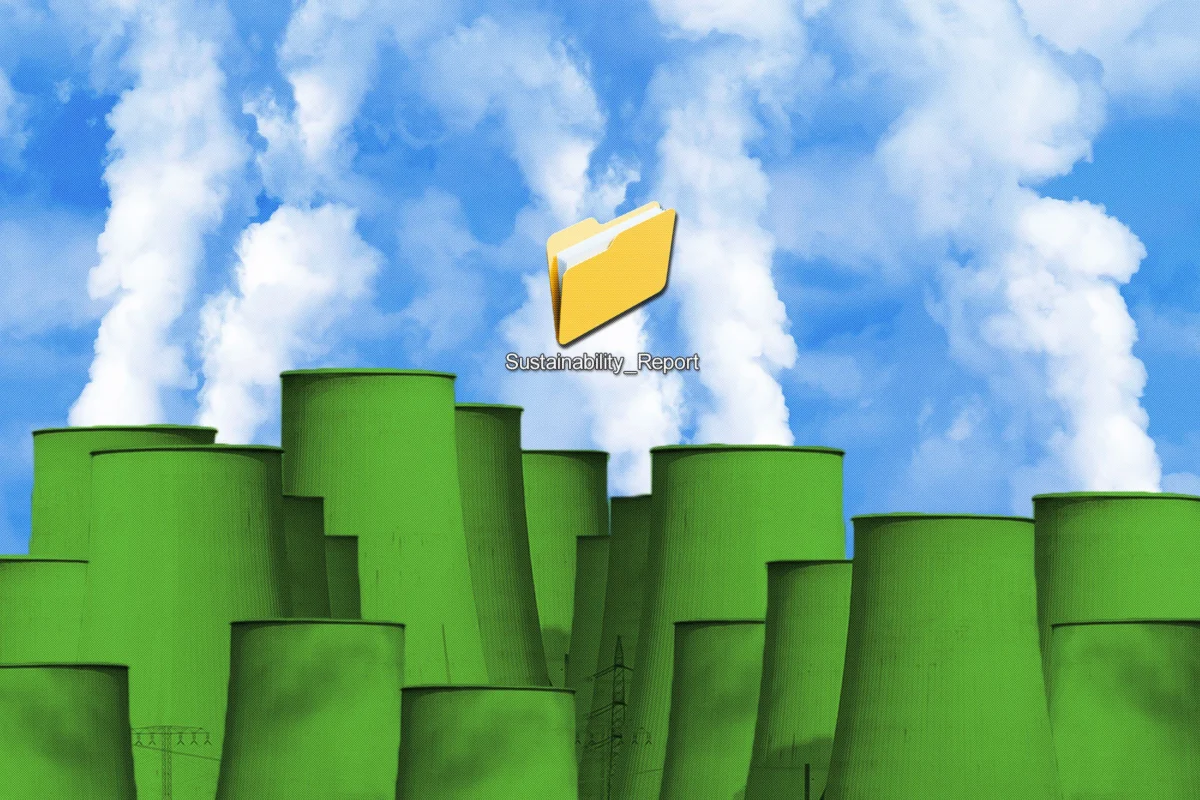
The global race to dominate the artificial intelligence landscape has triggered an unforeseen environmental consequence: a sharp, aggressive reversal in the decarbonization progress of the world’s largest technology companies. Microsoft, joining a chorus of industry peers including Google and Amazon, released its latest sustainability report this week, revealing a sobering reality. Despite ambitious public commitments to "carbon negativity," Microsoft’s greenhouse gas pollution surged by approximately 25 percent over the last fiscal year.
This dramatic spike underscores a growing tension between the massive computational requirements of generative AI and the planetary boundaries that these corporations have pledged to respect. As data centers proliferate to meet the insatiable demand for AI processing, the carbon footprint of the digital world is expanding at a pace that climate scientists and environmental advocates argue is unsustainable.
The Core Conflict: Infrastructure vs. Ambition
The primary engine driving this emissions surge is the rapid, large-scale construction of data center infrastructure. According to Microsoft’s sustainability report, the company’s emissions increase is "primarily" a result of this expansion.
Data centers serve as the physical backbone of the AI era, housing thousands of high-performance servers equipped with power-hungry graphics processing units (GPUs). These facilities require constant, reliable energy to function—a requirement that traditional renewable sources like wind and solar, which are intermittent by nature, are currently struggling to satisfy on the scale required by tech giants.
The Scope 2 Dilemma
A significant portion of the increase, accounting for roughly 13 percent of Microsoft’s total emissions, stems from "Scope 2" emissions—the greenhouse gases generated by the energy the company purchases to power its operations. While Microsoft claims to match 100 percent of its electricity consumption with carbon-free sources, the sheer volume of power required to sustain its AI ambitions is putting significant strain on existing electrical grids.
Chronology of a Rising Trend
The recent data from Microsoft is not an outlier; it is part of a systemic trend across the "Big Tech" sector. The last several weeks have provided a grim timeline of how the AI boom is rewriting corporate environmental trajectories:
- Mid-2024: Industry analysts begin noting a correlation between the surge in capital expenditure for AI infrastructure and increased electricity demand in major tech hubs.
- Late June 2026: Google releases its environmental report, revealing an 18 percent year-over-year increase in greenhouse gas emissions. This marks the largest single-year jump in the company’s history, driven largely by the energy intensity of its AI development.
- Early July 2026: Amazon reports a 16 percent increase in CO2 emissions, further confirming that the trend is industry-wide rather than company-specific.
- July 9, 2026: Microsoft officially releases its sustainability report, confirming a 25 percent increase in emissions for the 2025 fiscal year.
- Ongoing: Critics point to a series of recent deals—including partnerships between tech firms and fossil fuel providers—that suggest the trend is likely to continue or accelerate in the 2026 and 2027 fiscal periods.
Supporting Data: The Cost of Compute
The environmental cost of the AI boom is manifesting in several ways. While tech companies have historically relied on renewable energy credits (RECs) to "offset" their consumption, the limits of this strategy are now becoming clear.
The Problem with "Paper Transactions"
Microsoft has recently moved away from purchasing "unbundled" renewable energy certificates—a practice that many experts, including Danny Cullenward of the University of Pennsylvania, have long criticized as "greenwashing." Unbundled RECs represent a paper transaction that does not necessarily add new clean energy to the grid. By moving away from these, Microsoft is forced to confront its true physical emissions, which, while more transparent, exposes the lack of sufficient clean power infrastructure.
The Fossil Fuel Pivot
Perhaps most alarming to environmentalists is the shift toward localized, gas-powered energy production. To bypass grid bottlenecks, tech companies are increasingly partnering with fossil fuel companies to build dedicated, on-site power plants.
- The West Texas Project: A partnership between Microsoft and Chevron involves a power plant that could emit over 11.5 million tons of CO2 equivalent annually—an amount exceeding the total annual emissions of the entire state of Rhode Island.
- The Stargate Campus: Located in Abilene, Texas, this facility utilizes an on-site plant projected to emit 7.8 million tons of CO2 annually.
- West Virginia Development: A nonbinding letter of intent suggests a potential data center powered by off-grid gas with a carbon footprint exceeding 11 million tons.
Official Responses and Strategic Shifts
In a blog post accompanying the report, Microsoft Vice Chair Brad Smith and Chief Sustainability Officer Melanie Nakagawa acknowledged the challenge, stating that the company has a "responsibility to help ensure that technology strengthens, rather than strains, the systems and communities on which it depends."
Melanie Nakagawa further clarified the company’s stance in a statement to WIRED: "Microsoft’s strategy includes exploring a variety of options for mitigating the emissions from its electricity consumption, consistent with our sustainability ambitions."
The company maintains that its goal to be "carbon negative" by 2030 remains the North Star of its operations. However, industry insiders note that meeting this target will require a monumental shift toward grid-scale nuclear energy, battery storage, or breakthroughs in geothermal power—technologies that are currently years away from being deployed at the scale necessary to offset the massive growth of AI data centers.
Implications: A Looming Environmental Crisis
The implications of these reports are far-reaching, touching upon policy, public trust, and the future of the climate movement.
The Erosion of Net-Zero Credibility
When major corporations like Google and Microsoft miss their sustainability targets by such significant margins, it undermines the credibility of the "net-zero" framework as a whole. Investors and regulators are increasingly questioning whether tech companies can truly decouple their growth from carbon output.
Strain on Global Power Grids
Data centers do not exist in a vacuum; they compete for electricity with homes, hospitals, and schools. As tech companies hoard power capacity, the pressure on local grids often leads utilities to keep older, dirtier coal or gas plants online longer than planned to ensure stability. This creates a "carbon lock-in" effect that could haunt the energy transition for decades.
The Regulatory Horizon
The transparent admission of rising emissions is likely to invite increased scrutiny from the Securities and Exchange Commission (SEC) and international regulators. If companies continue to rely on gas-powered, off-grid solutions to meet their AI demands, they may face lawsuits or carbon taxes that could fundamentally change the economics of the AI industry.
The Path Forward: Innovation or Stagnation?
The industry stands at a crossroads. The current path leads to a high-carbon future where AI progress is purchased at the cost of climate stability. However, the sheer size and capital reserves of companies like Microsoft mean they also possess the unique ability to catalyze the market for new, clean energy technologies.
The question remains: will these tech giants prioritize their short-term AI dominance at the expense of their long-term environmental pledges, or will they leverage their resources to force a radical, necessary transformation of the global energy grid? For now, the latest sustainability reports suggest that the "AI future" is currently being built on a foundation of fossil fuels, leaving a heavy mark on the planet that will be difficult to erase.
As we look toward 2030, the gap between the promises of the boardroom and the reality of the data center will be the defining measure of whether the tech industry can be a partner in—or an obstacle to—global climate survival.


 Pevita Pearce