

 Raul Delapena Setiawan

 Ammar Sabilarrohman
 Lina Irawan
 Suro Senen
 Sagoh
Sagoh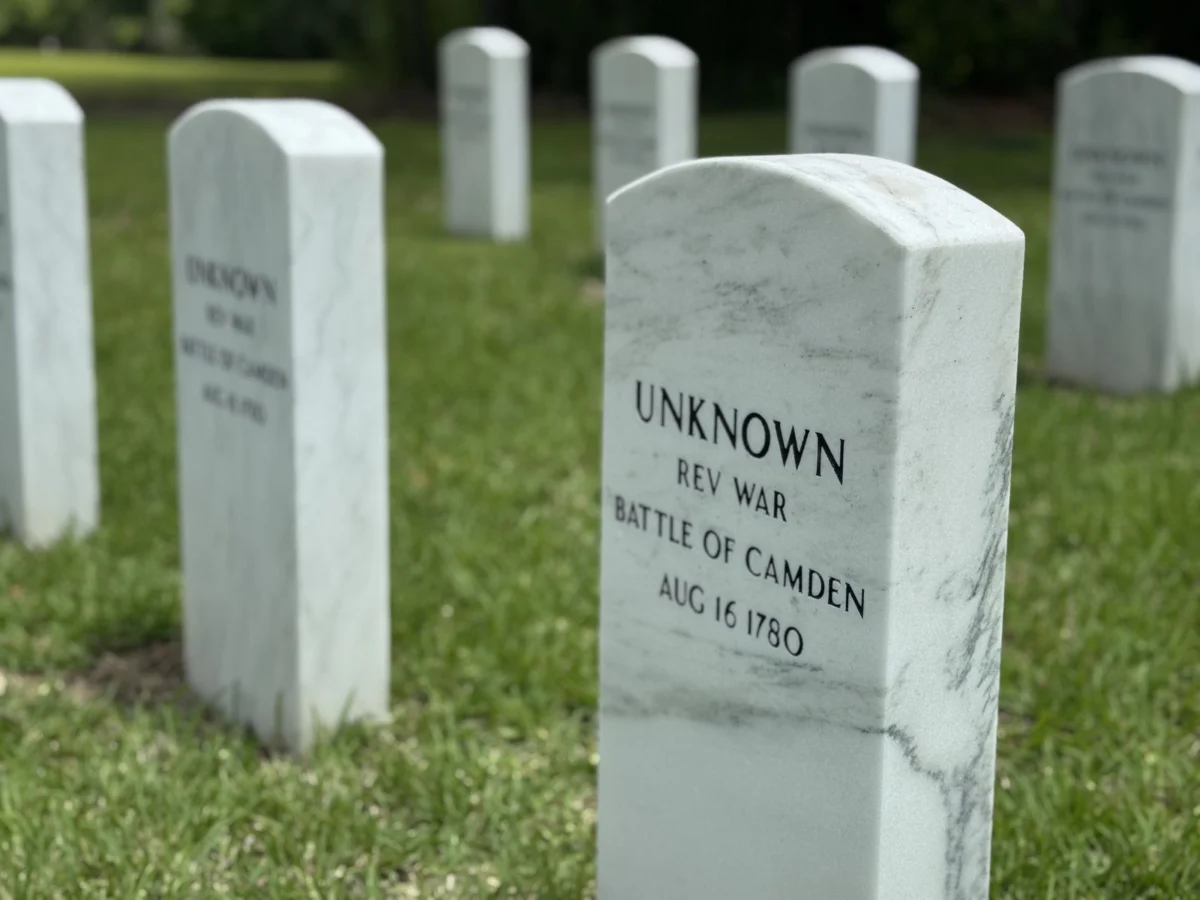
For nearly 250 years, he was nothing more than a nameless inhabitant of a shallow, forgotten grave in the South Carolina soil. He was a boy who marched over 1,000 miles, survived the brutal realities of an 18th-century military campaign, and ultimately vanished into the fog of history during one of the most disastrous defeats of the American Revolutionary War.
Today, that boy finally has a name: Private John Pumphrey.
The identification of Pumphrey, who died at the Battle of Camden in 1780, represents a landmark achievement in forensic science and historical research. By utilizing cutting-edge genetic genealogy—a tool typically reserved for modern cold cases—researchers have bridged the vast chasm of two and a half centuries, linking a long-dead teenage soldier to a community of 20,000 living descendants.
The Tragic Life of a Teenage Soldier
John Pumphrey’s story is one of profound loss and lost potential. Historical records and forensic analysis suggest he was approximately 14 years old when he enlisted in the Seventh Maryland Regiment in 1777. His signature on his enlistment papers was a simple, shaky "X," a testament to the lack of formal education that often characterized the lives of the era’s working-class youth.
/https://tf-cmsv2-smithsonianmag-media.s3.amazonaws.com/filer_public/f2/1f/f21fd14f-3eff-49e4-abcf-8bf3ccdc8115/img_3924_1.jpeg)
The trajectory of his short life was defined by tragedy. Orphaned around the age of ten after both his parents passed away, Pumphrey was thrust into a world where his inheritance was seized by an opportunistic relative. Robbed of his family estate and his prospects, the boy became a shadow, eventually finding a grim form of employment in the Continental Army. Military records confirm he accepted a $100 re-enlistment bonus in 1779—a significant sum for a boy who had effectively lost everything.
Forensic analysis of his remains, recovered in 2022, revealed that his growth plates had not fully closed, confirming his youth. While the cause of his death remains speculative, experts believe he likely succumbed to a soft-tissue injury, perhaps inflicted by a bayonet during the chaotic rout at Camden. For generations, he was simply "missing," a name on a muster roll that faded into the annals of time.
Chronology of Discovery: From Battlefield to Lab
The resurrection of John Pumphrey’s identity began in 2020, during an archaeological survey of the Camden battlefield. Armed with metal detectors, researchers from the South Carolina Battleground Preservation Trust and the University of South Carolina were searching for artifacts of the 1780 conflict. What they found instead were the physical echoes of the war: 14 sets of human remains buried in shallow graves.
- 2020: Excavation of the Camden site reveals 14 sets of remains, including "Camden 9B" (Pumphrey).
- 2022: The remains are moved to the Richland County Coroner’s Office for formal examination.
- 2023: A partnership is formed with FHD Forensics and Astrea Forensics to attempt DNA sequencing on 240-year-old samples—a task considered near-impossible by many in the field.
- 2024-2025: Genetic profiles are uploaded to public databases like FamilyTreeDNA and GEDmatch, identifying links to Maryland’s Anne Arundel County.
- June 2026: The official announcement confirms the identity of Private John Pumphrey.
The Science of the "Oldest John Doe"
The process of identifying Pumphrey pushed the boundaries of forensic science. Allison Peacock, president of FHD Forensics, admits that the team was initially skeptical. "As far as we knew, this was the first time somebody that died in the 1700s had been identified with their genetic genealogy profile," she says.
/https://tf-cmsv2-smithsonianmag-media.s3.amazonaws.com/accounts/headshot/Ellen_Wexler.png)
Working with Astrea Forensics, the team extracted ancient DNA from the femur of "Camden 9B." This DNA was then analyzed using three distinct markers: autosomal, X-chromosome, and Y-chromosome DNA. This triple-pronged approach, combined with extensive archival research into Maryland military records, allowed the team to construct a family tree that reached across two centuries.
The researchers discovered that Pumphrey’s great-grandfather had moved the family from New Jersey to the Baltimore area in 1713. By tracing the lineage of this specific family line, the researchers were able to pinpoint the exact individual who had vanished in 1780. The success of this methodology has turned the Camden battlefield into a proving ground for the future of historical forensics.
Official Responses and the Weight of History
The impact of this discovery extends far beyond the scientific community. For the descendants of the Pumphrey family, the identification has provided a tangible link to a past that was previously obscured by myth.
"He has waited almost 246 years for his name to be said out loud again," said Rick Wise, executive director of the South Carolina Battleground Preservation Trust. During a commemorative ceremony in Baltimore, the gravity of the moment was palpable. Descendants gathered to honor a boy who, in death, had become a bridge between the founding of the nation and the present day.
:focal(2016x1517:2017x1518)/https://tf-cmsv2-smithsonianmag-media.s3.amazonaws.com/filer_public/f2/1f/f21fd14f-3eff-49e4-abcf-8bf3ccdc8115/img_3924_1.jpeg)
Julie Strickland, a descendant who was herself adopted and raised without knowledge of her biological lineage, found a powerful resonance in the story. "I started out without a name. He wound up without a name. And now we both know our name," she told reporters. Her experience highlights the human element of these excavations: these are not just bones or historical specimens, but ancestors whose stories were cut short by the violence of the American Revolution.
Implications for the 250th Anniversary
As the United States approaches its 250th anniversary, the discovery of Private John Pumphrey serves as a poignant reminder of the cost of independence. The Battle of Camden, where roughly 2,000 British troops routed 4,000 American forces, is often reduced to maps and casualty statistics. The work at the Camden site is shifting this narrative.
"It’s almost like a mythology, the Revolution; like a story we all agree happened, but may not feel that it was real," archaeologist James Legg noted. "These gravesites make it real."
The project now faces a significant challenge: funding. Each identification requires tens of thousands of dollars in specialized laboratory work and historical research. Despite these costs, the team is already at work on the next set of remains. In a twist of fate, Allison Peacock herself discovered she is related to another of the soldiers found at the site. This personal connection has fueled her resolve to continue the work.
/https://tf-cmsv2-smithsonianmag-media.s3.amazonaws.com/filer_public/ea/d0/ead06dd3-b89f-4d26-91d4-8a657acb3dd0/card_grid_john_pumphrey.jpg)
"I’ll dig and dig and dig until 3 in the morning, finding out details about it," Peacock says. "I guess that’s why I do this work."
A Legacy Restored
The identification of John Pumphrey is more than a cold case solved; it is a restoration of dignity. By elevating a forgotten soldier from the status of "John Doe" to a recognized participant in the American story, researchers have demonstrated that the past is never truly buried.
As the project continues to seek funding, the hope is that more names will be recovered from the soil of South Carolina. For now, the story of the 14-year-old boy from Maryland stands as a testament to the resilience of memory. Private John Pumphrey is no longer missing; he has returned home to the history books, finally recognized for the sacrifice he made for a nation that was only just beginning to be born.


 Lina Hope