 Dwi Wanna
 Nana Wu
 Muslim
 Reynand Wu
 Ammar Sabilarrohman
 Suro Senen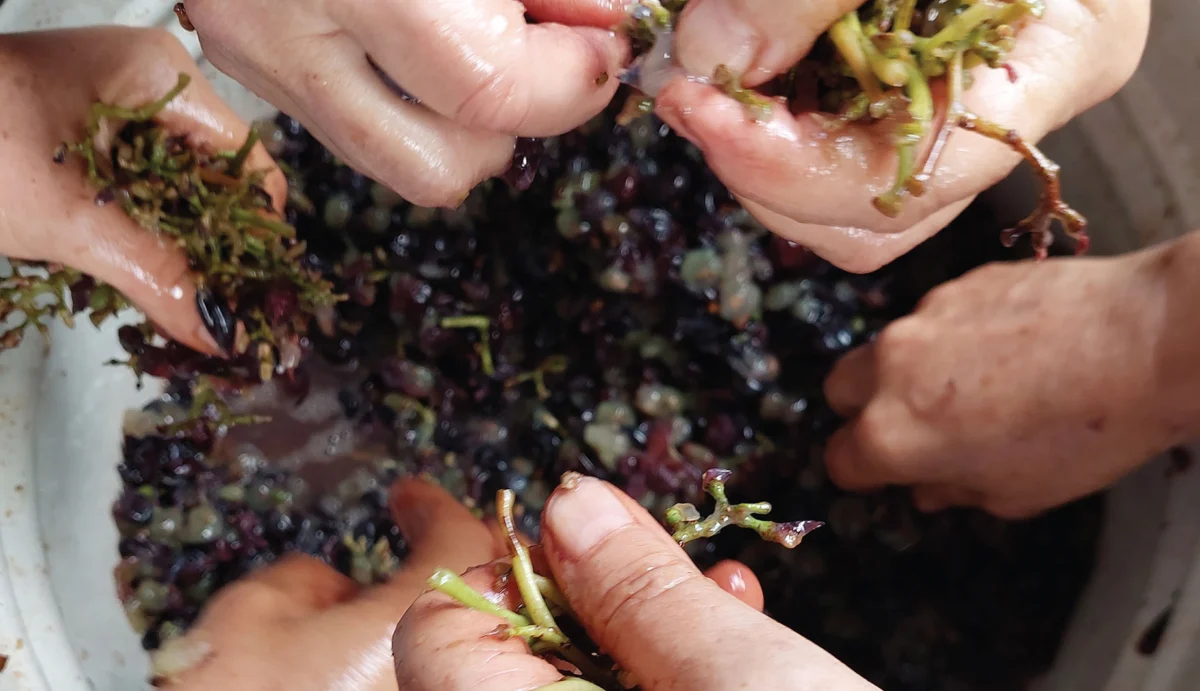
For over a century, the Western scientific imagination has been dominated by a single, heroic narrative: the war against microbes. This era, defined by the work of French chemist Louis Pasteur, envisioned a world where humanity’s survival depended upon the eradication or containment of microbial life. Today, however, that paradigm is shifting. As explored in the Spring 2026 issue of Gastronomica, we are entering a "post-Pasteurian" moment—a period characterized not by the total dominance of sterile control, but by a complex, often uneasy recognition of our intimate, co-constitutive relationship with the microbial world.
The Legacy of the "Great Moments"
In 1952, portrait artist Robert Thom captured the essence of the mid-century scientific ethos in his painting of Louis Pasteur and his wife, Marie. In the frame, Pasteur stands in the foreground, holding experimental flasks to the light, inspecting them with the gravity of a crusader. In the background, Marie gazes through an open door, a spectator to her husband’s singular focus.
This work was part of a broader series commissioned by pharmaceutical giant Parke, Davis and Company between 1948 and 1964, titled Great Moments in Medicine. At the height of the Cold War, these paintings served as propaganda for the superiority of Western science. They cast Pasteur as a triumphant general, not just a scientist, "combating" and "triumphing" over the "unruliness" of microbes. This rhetoric of struggle—the antagonistic relationship between human civilization and the microscopic world—became the bedrock of modern public health and industrial food production. It taught us to view microbes as invaders to be vanquished, a mindset that has persisted for over a century.
Chronology: From Erasure to Co-habitation
The history of this relationship can be mapped across three distinct phases:
- The Pasteurian Era (Late 19th Century – Mid 20th Century): Defined by the germ theory of disease, this period prioritized sterilization, pasteurization, and the creation of sterile environments. The goal was to render food and bodies "safe" through the systematic exclusion of microbial life.
- The High-Modernist Peak (1948–1964): As exemplified by the Parke-Davis series, this era weaponized microbial control. Science was synonymous with progress, and progress meant the total mastery of nature.
- The Post-Pasteurian Turn (Present Day): Influenced by the rise of the microbiome sciences and the work of scholars like Heather Paxson, this era recognizes that absolute control is not only impossible but undesirable. We are shifting toward a framework of "microbiopolitics," where microbes are acknowledged as essential partners in digestion, agriculture, and identity.
Supporting Data: The Microbiome in the Kitchen
The latest issue of Gastronomica argues that microbes are the "invisible center" of our food systems. They are not merely contaminants to be washed away; they are the architects of taste, the regulators of digestion, and the catalysts for fermentation.
In their introduction to the journal’s special section, Maya Hey and Sarah Elton suggest that microbes structure power relationships across societal spheres. Whether through the regulation of raw milk or the design of high-tech vertical farms, our interactions with microbes are always political. The contributors to this issue—a diverse group of anthropologists, geographers, and environmental humanities scholars—trace how this politics manifests in varied global contexts, from Germany and Czechia to South Africa and the United States.
Case Studies in Microbial Management
- The Cyborg Politics of Milk: Annie Sandrussi’s research highlights how the management of milk microbiota is deeply gendered. The industry treats "natural" milk from feminized bodies with suspicion, requiring heavy technoscientific intervention, whereas "precision-fermented" products are marketed as cleaner and more controlled.
- Biodynamic Viniculture: Contrary to the "eradicatory ethics" of conventional farming, researchers Nikolai Siimes, Nick Lewis, and Emma L. Sharp find that biodynamic wine producers are adopting "probiotic" approaches. These farmers work with microbial life, though they must balance these ecological values against the persistent pressures of economic, anthropocentric goals.
- The Illusion of Vertical Farming: Lukáš Senft and his colleagues analyze how vertical farms and cultivated meat technologies, while relying on microbes, attempt to impose a regime of "containment." These spaces aim to exclude the serendipity of the seasons, but ultimately create new, highly artificial human-microbial environments.
Official Perspectives: The Limits of Control
The academic consensus emerging from these studies is that we are living in a "microbial moment" that demands a new vocabulary. We can no longer rely on the binary of "pro-biotic" (good) and "anti-biotic" (bad). Instead, scholars propose the concept of "digestive belonging." As researcher Overstreet articulates, our guts are biologically and immunologically remade by the specific microbes we encounter in our environment. This process anchors us to a place, effectively expanding the notion of terroir from the soil and climate to the microbial community of the farm and the human body.
Conversely, the "food freedom" movement—often championed in modern diet literature—is critiqued for its failure to acknowledge the reality of microbial dependency. As Phoebe Mitchem observes in her piece, (Don’t) Let Them Eat Cake, those with severe allergies or chronic conditions are often trapped between the impossible goal of absolute control and the dangerous illusion of total freedom. She suggests an alternative: "food fascination," a state of mindful, balanced engagement with the materiality of what we ingest.
Implications: The Anthropocene and the Future of Food
The implications of this shift are profound for how we perceive our place in the world. The Pasteurian model offered a sense of security through distance; the post-Pasteurian reality offers a sense of vitality through connection.
As the authors in Gastronomica demonstrate, we are moving toward a reality where "flourishing with microbes" is the central challenge of the Anthropocene. This is not a transition to a utopian future, but a recognition of an evolving, open-ended symbiosis.
Key Takeaways for Future Food Policy:
- Beyond Sterility: Policies must move away from the assumption that all microbial presence is a failure of safety. We need nuanced regulations that distinguish between harmful pathogens and the essential microbial communities that support food systems.
- Microbial Terroir: Recognizing that food quality is tied to microbial "travel" and "belonging" (as seen in the movement of migrant foodways) challenges rigid border controls that often ignore the biocultural value of informal food exchanges.
- Gendered Technology: We must remain critical of how "high-tech" food solutions often reproduce older, oppressive gendered norms by pathologizing "natural" biological processes while celebrating "clean" industrial alternatives.
Ultimately, the lesson of the 2026 Gastronomica volume is one of humility. The "Great Moments in Medicine" were a hallucination of human supremacy. The future of food, and perhaps the survival of our species in a changing climate, depends on our ability to look past the flasks and the laboratory doors and acknowledge the complex, messy, and indispensable microbial life that eats with us at every table. We cannot "win" against the microbial world; we can only learn to live within it.

 Lina Hope
 Lina Irawan