

 Azzam Bilal Chamdy
 Neng Nana
 Nana Muazin
 Dwi Wanna
 Raul Delapena Setiawan
 Laily UPN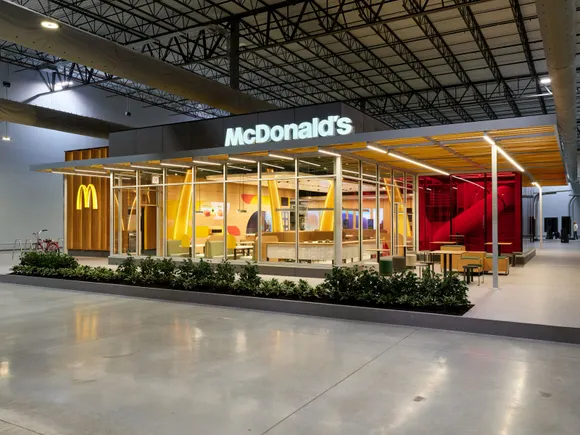
McDonald’s, the world’s largest quick-service restaurant chain, finds itself navigating a precarious period of transition. As the company pushes forward with its ambitious “Next” strategy—a massive overhaul designed to modernize operations and accelerate growth—it is encountering significant resistance from its backbone: its franchisees. Compounding these internal tensions is a high-profile legal battle centered on allegations of price-fixing via artificial intelligence, a controversy that threatens to tarnish the brand’s image and invite heightened regulatory scrutiny.
At the heart of the current friction is a projected $8.5 billion investment aimed at revolutionizing the customer experience through store remodels, technological deployment, and operational efficiencies. While corporate leadership views these changes as essential for long-term survival, many independent operators—who bear the brunt of the capital expenditure—are pushing back, citing concerns over debt, inflation, and a lack of transparency regarding the initiative’s ultimate return on investment.
The "Next" Strategy: A Massive Capital Undertaking
The "Next" strategy is McDonald’s blueprint for the future. Announced as a comprehensive plan to modernize its global footprint, the initiative seeks to deploy approximately $8.5 billion in partner support through 2036. The lion’s share of this—roughly $5 billion—is earmarked for completion by 2030, specifically targeted at rent relief and capital support for franchisees.
The primary objective of this expenditure is to drive gross restaurant-level efficiency by 250 basis points. According to corporate projections, the successful implementation of these measures should net a standard U.S. restaurant approximately $100,000 in additional annual cash flow. However, the path to these gains is paved with significant upfront costs, including $800,000-per-store remodels that have left many franchisees reeling.
The Franchisee Resistance
For many operators, the sticker shock of an $800,000 remodel is exacerbated by the current economic climate. With foot traffic in decline across the quick-service restaurant (QSR) sector and inflation squeezing margins, operators are wary of taking on the additional debt required to finance these renovations.
"The concern isn’t just the price tag; it’s the lack of a clear, guaranteed sales lift," noted one industry analyst. Franchisees are demanding more granular data on how these physical store upgrades will translate to increased daily transaction volume. Without a concrete promise of growth, many feel that the "Next" strategy asks them to shoulder too much risk in an era of waning consumer spending power.
Chronology: From Innovation to Litigation
The current conflict is the culmination of several months of strategic maneuvering and growing external pressure.
- Early 2026: McDonald’s begins rolling out details of the "Next" strategy, emphasizing a shift toward digital integration and high-tech kitchen capabilities.
- Summer 2026: Initial feedback from franchisee associations begins to reflect unease regarding the capital requirements of the new store design and the pace of the rollout.
- September 2026: Media reports surface suggesting that McDonald’s is utilizing a sophisticated AI-driven pricing tool that tracks transactional data to suggest "willingness-to-pay" price points, sparking immediate public outcry.
- October 2026: A consumer lawsuit is filed in federal court, alleging that McDonald’s used this AI to orchestrate an illegal price-fixing scheme.
- Present: McDonald’s continues to defend its pricing tools as voluntary, while simultaneously attempting to placate franchisees concerned about the economic viability of the "Next" remodel cycle.
Supporting Data and Analyst Perspectives
The skepticism surrounding McDonald’s current trajectory is not limited to the franchisee base; Wall Street analysts have also begun to raise red flags.
Bernstein analyst Danilo Gargiulo has been particularly vocal about the operational complexity of the plan. "We ponder the willingness of franchisees to underwrite a plan that involves entering uncharted territory," Gargiulo wrote in a recent report. He specifically pointed to the company’s push for hand-breaded chicken—a labor-intensive menu item—as an example of how the strategy may introduce operational friction that could hinder rather than help efficiency.
Meanwhile, BMO Capital Markets analyst Andrew Strelzik has highlighted the "lack of visibility" surrounding the plan. While he noted that the company’s financial support packages were "better than anticipated," he emphasized that the absence of a clear timeline for the rollout makes it difficult to project earnings per share (EPS) growth for the coming years. Investors are essentially being asked to wait for a "comp recovery" without being told exactly when that recovery is expected to manifest.
The Pricing Controversy: Allegations of AI-Driven Collusion
Perhaps the most significant threat to the brand’s reputation is the recent lawsuit alleging that McDonald’s has been using AI to fix prices. The suit, filed by a consumer, claims that the chain utilized a proprietary algorithm to analyze millions of daily transactions across its 14,000 U.S. locations to set prices based on real-time demand.
The plaintiff alleges that this was not merely a suggestion tool but a coercive system. According to the court filing, franchisees were pressured to adhere to these AI-generated prices, with the threat of non-renewal or limited expansion opportunities for those who deviated. The lawsuit points to the 40% increase in menu prices between 2019 and 2024 as evidence of the system’s effectiveness in extracting higher premiums from consumers.
"The system warns in the pricing portal’s terms of service that fellow users may be competitors… instead, McDonald’s and its franchisees have together colluded to fix prices for consumers," the lawsuit claims.
The Company’s Defense
McDonald’s has responded to these allegations with a categorical denial. In a public statement issued via its corporate website, the company characterized the media reports as "false" and emphasized the distinction between "dynamic pricing" and "pricing recommendations."
"McDonald’s can provide franchisees with tools, resources, research, and recommendations, and we encourage them to focus on delivering value for customers," the company stated. "But a recommendation is exactly that: a recommendation, not a mandate. The bottom line: The tool provides information. People make the final pricing decisions."
Implications for the Future
The situation leaves McDonald’s in a delicate position. If the company forces the "Next" remodel strategy too aggressively, it risks alienating the very partners who operate the majority of its stores. If it retreats, it risks falling behind competitors who are also investing heavily in digital and physical modernization.
Furthermore, the legal challenge surrounding its pricing tools creates a new layer of regulatory risk. If the court finds that the company’s "recommendations" were effectively mandates, the brand could face significant antitrust fines and be forced to abandon the very data-driven tools it views as a cornerstone of its future competitiveness.
The Path Forward: Flexibility and Communication
CFO Ian Borden’s recent comments at the Investor Day presentation suggest that the company is attempting to pivot toward a more flexible approach. By framing the investments as "phased over time" and promising that the mix of rent relief and capital support will be "targeted to the realities that franchisees face locally," corporate leadership is clearly trying to lower the temperature of the internal debate.
However, the effectiveness of this strategy will depend on execution. As Bernstein’s Gargiulo noted, "In other times and with a different franchisee base, we would have had no doubt on the success of the strategy, but execution remains key."
For now, the restaurant giant must prove that it can balance the demands of shareholders, the concerns of its franchisees, and the scrutiny of the legal system. Whether "Next" becomes a catalyst for a new era of growth or a source of lasting instability will be decided by how effectively McDonald’s bridges the widening gap between its boardroom ambitions and the realities of the front-line restaurant business.

 Rifan Muazin
 Ali Ikhwan
