

 Azzam Bilal Chamdy
 Neng Nana
 Nana Muazin
 Dwi Wanna
 Raul Delapena Setiawan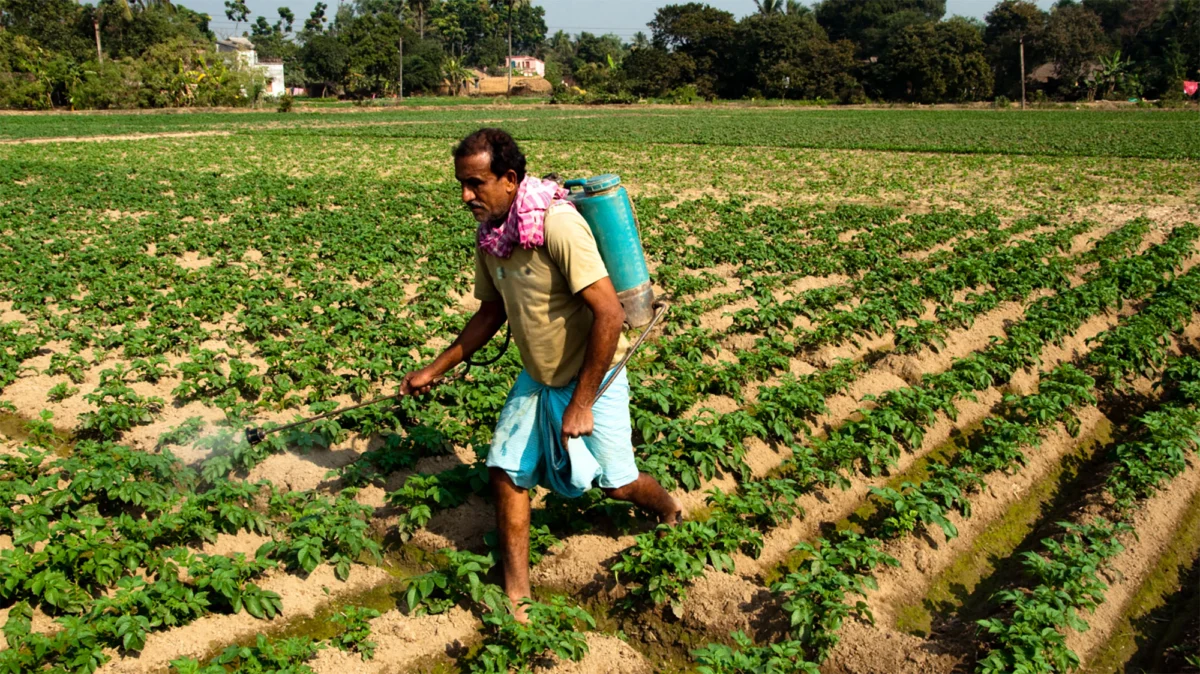
A staggering, invisible crisis is unfolding across the world’s agricultural heartlands. According to a landmark study published in the journal Frontiers in Public Health, an estimated 46% of the global farming population—roughly 400 to 433 million people—suffers from acute pesticide poisoning every single year.
This comprehensive analysis, commissioned by the Pesticide Action Network (PAN) and based on data spanning from 2006 to 2023, paints a harrowing picture of an industry that relies on a chemical backbone that is actively sickening those who labor to feed the world. With 11,000 preventable deaths recorded annually and a persistent rise in global chemical reliance, the findings have ignited calls for an urgent, systemic overhaul of international agricultural policy.
The Scale of the Crisis: Main Facts and Regional Impacts
The study, which synthesizes nearly two decades of public data, establishes a baseline for a problem that has historically been obscured by poor reporting and lack of standardized surveillance. With a global farming workforce estimated at 934 million individuals, the fact that nearly half are poisoned annually—defined in the study as any adverse health effect occurring shortly after exposure—represents a public health emergency of unprecedented proportions.
The geographical distribution of these poisonings is highly uneven, highlighting a disproportionate burden on the Global South.
- Southern Asia currently accounts for the highest estimated number of absolute poisoning cases.
- Southeast Asia and East Africa follow as major hotspots.
- Burkina Faso holds the grim distinction of having the highest national incidence rate, where an estimated 84% of farmers and agricultural workers report experiencing poisoning symptoms annually.
These figures do not account for the "silent" poisonings that go unreported, nor do they reflect the long-term, chronic health consequences that often remain undiagnosed until years later.
A Chronological Perspective: The Escalation of Chemical Dependency
The rise in pesticide poisoning is not an accident of nature; it is the byproduct of a global food system that has doubled its chemical intake in just over three decades.
- 1990–2000: The era of "Green Revolution" intensification solidified the use of synthetic pesticides as a cornerstone of industrial farming. Global consumption began a sharp upward trajectory.
- 2006–2015: As awareness of environmental impacts grew, public health researchers began documenting the correlation between occupational exposure and neurological decline. However, reporting mechanisms remained fragmented and inconsistent across borders.
- 2023: Global pesticide usage reached a staggering 3.8 million metric tons—a 100% increase compared to 1990 levels. Despite international summits and rhetoric regarding "sustainable agriculture," the volume of hazardous chemicals applied to fields continues to climb.
- September 2026: The publication of the Frontiers in Public Health study serves as the definitive indictment of current agricultural practices, providing the most robust dataset to date on the human cost of these chemicals.
Supporting Data: The Hidden Toll of Modern Farming
While the study focuses on "acute" poisoning—illnesses such as nausea, skin irritation, respiratory distress, and neurological tremors occurring shortly after contact—experts are quick to point out that this is only the tip of the iceberg.
Crucially, the researchers noted that their data did not include the estimated 84 million children who work in agricultural settings. These children, whose physiological systems are still developing, are arguably the most vulnerable to the neurotoxic effects of pesticides, yet they remain largely invisible in existing occupational health reports.
The mechanism of exposure is systemic. Farmers and laborers are primarily exposed during the preparation of chemical mixtures, the mechanical application of sprays, and the handling of contaminated crops, tools, and protective clothing—or lack thereof. In many developing nations, the cost of specialized Personal Protective Equipment (PPE) is prohibitive, leaving workers to handle potent toxins with little more than standard work clothing.
Official Responses and the Call for Policy Reform
The response from the scientific and advocacy communities has been swift and severe. Jayakumar Chelaton, the executive director of Pesticide Action Network India, characterized the research as "a crisis that can no longer be ignored."
The Push for a UN-Led Phase-Out
The study’s authors are demanding that the United Nations move beyond recommendations and implement binding mandates to phase out "highly hazardous pesticides" (HHPs). These are chemicals known to cause acute toxicity, as well as those that persist in the environment or cause long-term health issues like cancer and reproductive failure.
The Parkinson’s Connection
Perhaps the most alarming implication of the study is the link between pesticides and neurodegenerative diseases. Hélène Nicora, director general of Parkinson’s Europe, cited "overwhelming evidence" that Parkinson’s is increasingly being viewed as an environmentally driven disease.
This is not merely anecdotal. In countries like France, Germany, and Italy, the link between long-term pesticide exposure and Parkinson’s has become so scientifically established that some jurisdictions now officially recognize the condition as an occupational disease for farmers.
The personal narrative of Rendert Algra, a Dutch farmer, brings a human face to this cold data. A lifelong laborer, Algra attributes his own diagnosis of Parkinson’s to years of daily exposure while working on his family farm. His testimony—and that of thousands like him—highlights that for many, the "cost" of farming is a lifetime of neurological decay.
Implications: The Need for Structural Transformation
The study concludes with a call for the standardization of surveillance and reporting protocols. Currently, there is no global, unified system to track pesticide-related illness, which allows chemical manufacturers and agricultural lobbies to downplay the risks.
"Now that the scale of suffering has been revealed, farmers must be supported to access safer alternatives to protect their health and that of their families," says Dr. Sheila Willis, head of international programs at PAN UK.
The Path Forward:
- Standardized Reporting: Governments must implement mandatory reporting of all pesticide-related health incidents to create a reliable global database.
- Investment in Alternatives: Subsidies currently favoring chemical-heavy industrial farming must be redirected toward agroecology, integrated pest management (IPM), and organic farming practices.
- Legal Liability: Establishing a clear legal framework that holds manufacturers accountable for the health outcomes of workers using their products, similar to the precedents being set in the EU.
- Protecting the Most Vulnerable: Implementing strict bans on the use of the most hazardous chemicals in areas near schools, water sources, and regions where children are employed in agriculture.
The findings from Frontiers in Public Health act as a clarion call. If the global agricultural system continues on its current path, it is not just the soil and the biodiversity of the planet that are at stake—it is the health and lives of nearly half of the people responsible for the global food supply. The transition to a safer, more sustainable model of agriculture is no longer just an environmental goal; it is a fundamental human rights imperative.


 Iffa Jayyana
