

 Ali Ikhwan

 Iffa Jayyana

 Muslim

 Nana

 Dwi Wanna
 Asro
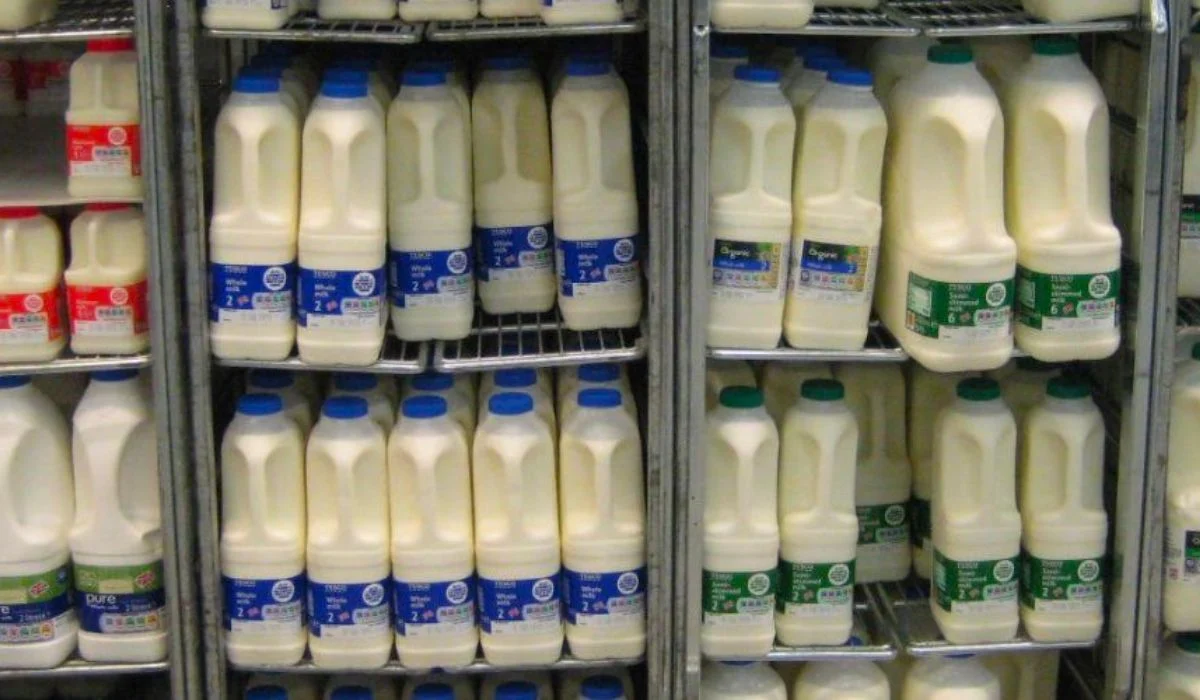
At a time when governments are doubling down on productivity, technological acceleration, and agricultural intensification, a fundamental question is being sidelined: are we mistaking short-term output for long-term resilience? As the British landscape shifts toward "mega-dairies"—facilities housing hundreds or thousands of cows in permanent indoor systems—the Sustainable Food Trust (SFT) warns that this drive for hyper-efficiency may be creating a fragile food system that is increasingly vulnerable to the shocks of a changing world.
Robert Barbour, Senior Research Manager at the SFT, argues that the current trajectory of British dairy is not merely a technical evolution, but a systemic pivot that trades ecological stability for volume. With dairy farm numbers in Great Britain plummeting below 7,000 for the first time—a staggering 50% decline since the early 2000s—the sector is at a crossroads.
Main Facts: The Consolidation of British Dairy
The British dairy industry is currently defined by a "hollowed-out" middle. Recent investigative work by Andrew Wasley for The Bureau of Investigative Journalism has brought the scale of this transformation to light: the number of mega-dairies in the UK has doubled in just ten years. These operations, which often bypass grazing entirely, rely on a factory-style model where cows are kept indoors year-round, fed on imported grains, and managed through high-tech precision tools.
This consolidation is not happening in a vacuum. It is the byproduct of decades of economic pressure. Faced with stagnant milk prices and spiraling costs for energy, feed, and synthetic fertilizers, farmers have faced a brutal ultimatum: scale up or shut down. The result is an industry with fewer, larger players who are heavily tethered to global commodity markets and fossil-fuel-intensive inputs.
A Chronology of Intensification
To understand how we arrived at this moment, one must look at the historical pressure points that have shaped modern agriculture:
- The Early 2000s: The British dairy sector was characterized by a diverse, distributed network of over 14,000 farms. Most systems were based on traditional grazing, keeping input costs relatively manageable.
- The 2010s: Increased volatility in global milk prices, compounded by the rising cost of land and labor, began to squeeze smaller producers. The "efficiency mandate" gained traction in government policy, prioritizing yield per cow over ecological sustainability.
- The Last Decade: Mega-dairies emerged as the "modern" solution to low profit margins. During this period, the number of these industrial units doubled.
- The Present Day: The total number of dairy farms in Great Britain has officially fallen below 7,000. Simultaneously, geopolitical instability—most notably the disruption of nitrogen fertilizer shipments through the Straits of Hormuz—has exposed the fragility of a system that relies on long, international supply chains to keep its cattle fed and its crops growing.
Supporting Data: The Fragility of High-Input Systems
The argument for intensification has historically relied on the premise that only high-input systems can produce the caloric volumes required to feed a growing population. However, climate change is invalidating this assumption.
The Vulnerability of Arable Land
The UK’s Climate Change Committee (CCC) recently issued a stark warning regarding the future of British farmland. Under a 2°C warming scenario, the amount of "high-quality" farmland in England and Wales is projected to drop from 38% to just 11% by 2050.
Yield Declines
Extreme weather is no longer a "future" threat; it is a current reality. England has endured three of the five worst harvests on record within the last ten years. This has pushed the five-year average yield below the 20-year average—a reversal that should alarm policymakers. Soil erosion is expected to increase by 15%, and wheat yields in the South East of England have already seen drops of 20% in drought-affected years.
The Fertilizer Trap
The reliance on synthetic nitrogen is a major point of systemic risk. Because nitrogen fertilizer production is heavily dependent on natural gas, any geopolitical tremor—like the instability in the Straits of Hormuz—sends costs soaring. Relying on such inputs for livestock feed is a strategy that leaves the UK’s food security hostage to the stability of energy-exporting nations.
Official Responses and Perspectives
The industry remains divided on the solution. Proponents of mega-dairies often point to their "lower carbon footprint per liter" of milk, arguing that concentrated, indoor systems allow for more precise control over emissions.
However, critics like Patrick Holden, CEO of the Sustainable Food Trust, argue that this metric is dangerously narrow. By focusing only on the "product-level footprint," the industry ignores the systemic damage—such as the loss of biodiversity, the degradation of soil health, and the erosion of rural communities.
The government’s own security assessments have acknowledged this instability. A report published earlier this year warned that the UK would likely struggle to maintain food security if "ecosystem collapse drives geopolitical competition for food." Despite this, government policy continues to favor productivity-linked subsidies that inadvertently incentivize the very intensification that makes the system more fragile.
Implications: The Case for Agroecology
If the current high-input model is a dead end, what is the alternative? The answer lies in a return to agroecological principles—specifically, grazing-based livestock systems.
Upcycling Resources
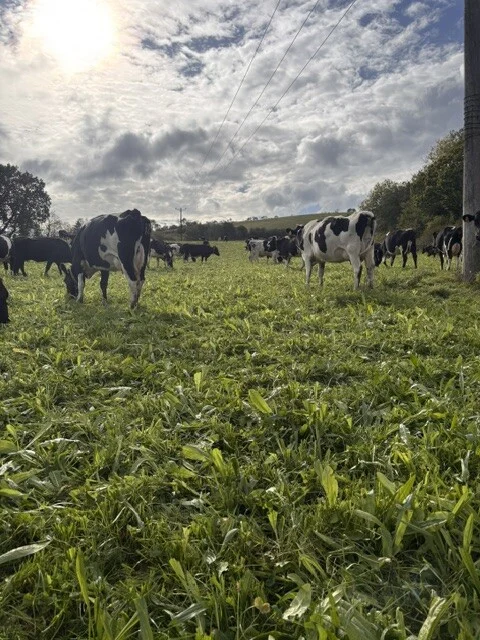
Grazing animals possess a unique biological advantage: they can convert human-inedible plants (grass and crop residues) into high-quality, nutrient-dense protein. By shifting the focus of livestock farming away from grain-based feed and toward pasture-based systems, the UK could decouple its food security from volatile international grain and fertilizer markets.
The "Feeding Britain" Model
The SFT’s Feeding Britain report suggests that while total production volume might decrease by 20%, the system would become significantly more resilient. By reducing the reliance on arable crops for animal feed, we could reclaim millions of hectares of land. This land could then be used for more diverse, climate-resilient crop rotations that prioritize soil health over raw volume.
Dietary Shifts
Transitioning to an agroecological system necessitates a change in consumer habits. Smaller quantities of high-quality, pasture-raised meat and dairy would replace the flood of cheap, intensively produced products. Research from Wageningen University suggests that if livestock are fed exclusively on human-inedible waste and grass, the land-use efficiency of the food system actually improves, requiring only 75% of the arable land needed to support a purely vegan diet.
Conclusion: Redefining Efficiency
The surge in mega-dairies is a siren song of progress that masks a deeper retreat from true sustainability. If we continue to judge the success of our food system solely by output—by how many liters of milk or tons of grain we produce in a single season—we risk accelerating the collapse of the very natural resources we rely on.
True efficiency must be measured at the system level. It must account for the health of our soil, the security of our supply chains, the welfare of our animals, and the viability of our rural livelihoods. As geopolitical instability creates an era of "permanent stress" for global food chains, the UK cannot afford to stay on its current course.
Transitioning to an agroecological model is not just an environmental imperative; it is a national security necessity. It requires moving beyond the narrow, market-driven focus on intensification and embracing a model that works with the land, rather than attempting to conquer it. The question is no longer whether we can build a more resilient food system—it is whether we have the political courage to prioritize the long-term survival of our agricultural landscape over the short-term profits of "Big Dairy."

 Sagoh
 Layla Zulfa

