

 Dwi Wanna
 Nana Wu
 Muslim
 Reynand Wu
 Ammar Sabilarrohman
 Raul Delapena Setiawan
The modern agricultural landscape stands at a precarious crossroads. For centuries, the global food system has relied on the industrial model of arable farming—the cultivation of annual crops on a field scale. While this system has fueled the rise of civilization by providing high-yield, storable staples like wheat, maize, and rice, it has also exacted a heavy toll on the planet. From the ecological collapses of the Fertile Crescent to the catastrophic Dust Bowl of the 20th century, history serves as a stark warning that our current methods are often extractive and finite.
As the organic movement continues to gain momentum as a counter-narrative to industrial agriculture, a new, more radical philosophy is emerging: permaculture. While both movements share a goal of moving away from chemical-heavy, industrial models, permaculture offers a more fundamental critique of the very nature of arable farming. By challenging the necessity of tillage, the reliance on monocultures, and the alienation of producers from consumers, permaculture provides a roadmap for a resilient, sustainable future.
The Core Critique: Why Arable Farming Struggles
To understand the necessity of a permaculture shift, one must first recognize the inherent tensions between traditional arable practices and natural ecosystems. The central pillar of arable farming—tillage—is increasingly viewed as a major ecological liability.
In nature, soil is rarely turned, exposed, or disturbed with the frequency seen in modern agriculture. Regular tillage triggers the loss of organic matter, promotes nutrient depletion, and leaves the earth vulnerable to the dual threats of drought and flooding. Furthermore, the reliance on annuals creates a system that is, by definition, transient. Natural ecosystems are almost exclusively dominated by perennials; when humans impose an annual-heavy, monocultural landscape, they are fighting against the fundamental patterns of ecological stability.
A Chronology of Agricultural Evolution
The trajectory of human civilization has been inextricably linked to the plow.
- The Neolithic Transition: The shift from foraging to settled agriculture allowed for surplus, specialization, and the birth of complex societies.
- The Rise of Industrialism: The 19th and 20th centuries saw the mechanization of the farm. The invention of the tractor and the introduction of synthetic fertilizers and pesticides allowed for unprecedented yields but triggered a massive decline in soil health.
- The Modern Reckoning: Today, we face the cumulative consequences: widespread soil erosion, the collapse of biodiversity, and a water crisis exacerbated by industrial irrigation.
- The Permaculture Pivot: The current era is defined by the emergence of "arable permaculture"—an attempt to reconcile the human need for staple annual crops with the design principles of permanent, resilient ecosystems.
Supporting Data: The Case for Resilience
The argument for rethinking arable farming is not merely philosophical; it is supported by the physical reality of the landscape. Data consistently shows that soil disturbance leads to a decline in soil microbiology. When we flip the soil, we destroy the complex fungal networks that allow plants to access nutrients.
Furthermore, the "extravagant" energy consumption of modern farms is a critical failure point. Most farms operate on a linear model: inputs (fossil fuels, synthetic fertilizers, machinery) enter the system, and outputs (commodities) leave it. This model is inherently wasteful. By contrast, a permaculture-inspired farm functions as a closed loop. For example, by integrating livestock—using pigs for clearing or ducks for pest control—farmers can reduce their reliance on external, high-energy interventions, simultaneously improving the soil and the farm’s bottom line.
Practical Solutions: Principles for a New Era
"Arable permaculture" does not advocate for the abandonment of crops; rather, it promotes the "conscious design and maintenance of agriculturally productive ecosystems which have the diversity, stability, and resilience of natural ecosystems."
1. Purposeful and Minimal Tillage
Before a field is touched, the farmer must ask: Why? Many traditional practices, such as autumn plowing that leaves soil fallow and exposed throughout the wet winter months, serve no ecological purpose. Minimal tillage preserves soil structure and keeps the microbial life intact, directly combating erosion.
2. The Power of Landraces and Polycultures
The dominance of single-cultivar crops is a recipe for vulnerability. By transitioning to landraces—genetically diverse, locally adapted varieties—farmers can create crops that coexist with weeds, require fewer inputs, and produce multi-purpose byproducts like straw. Furthermore, moving toward polycultures—where multiple species are grown in the same field—mimics natural diversity and reduces the risk of total crop failure.
3. Agroforestry as the "Middle Way"
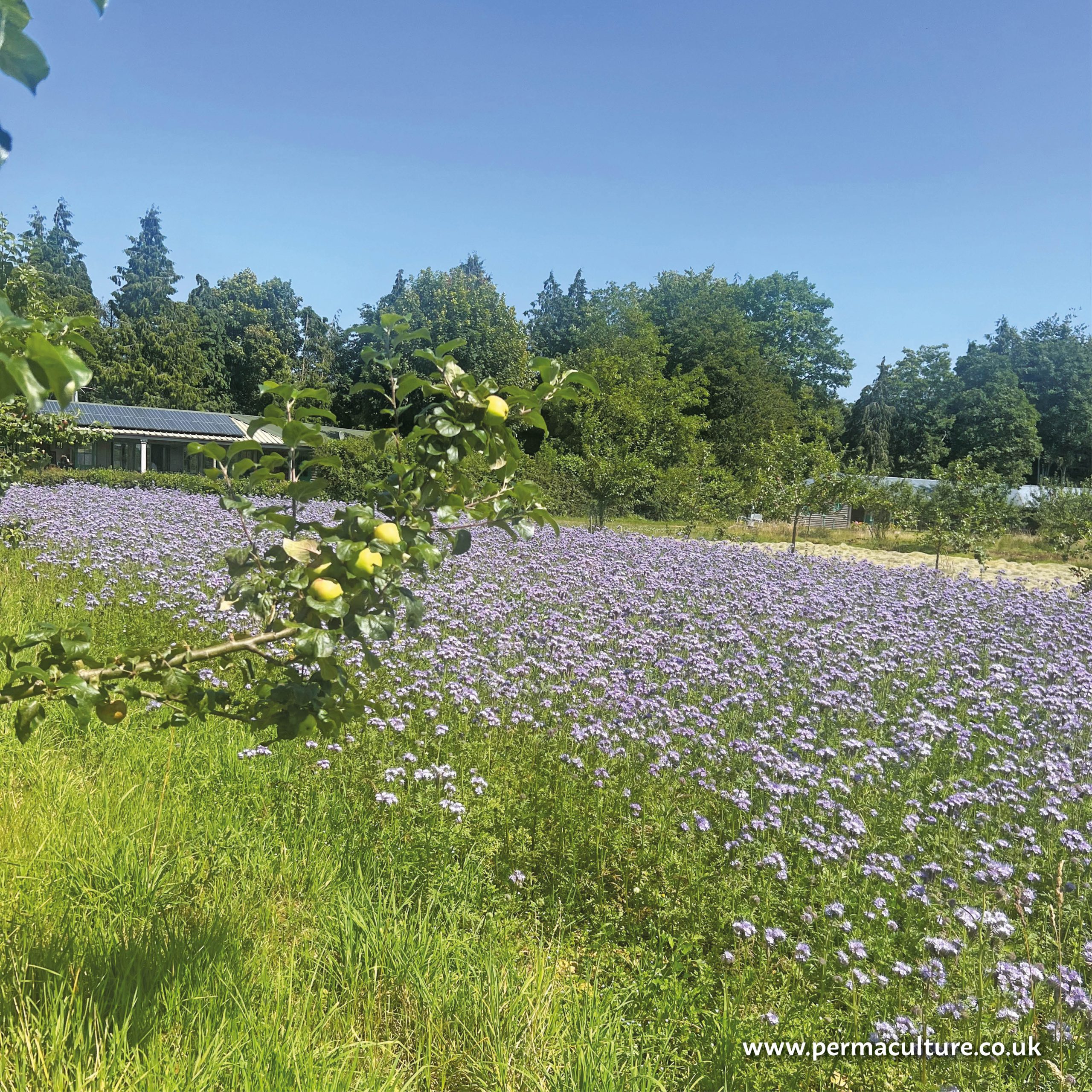
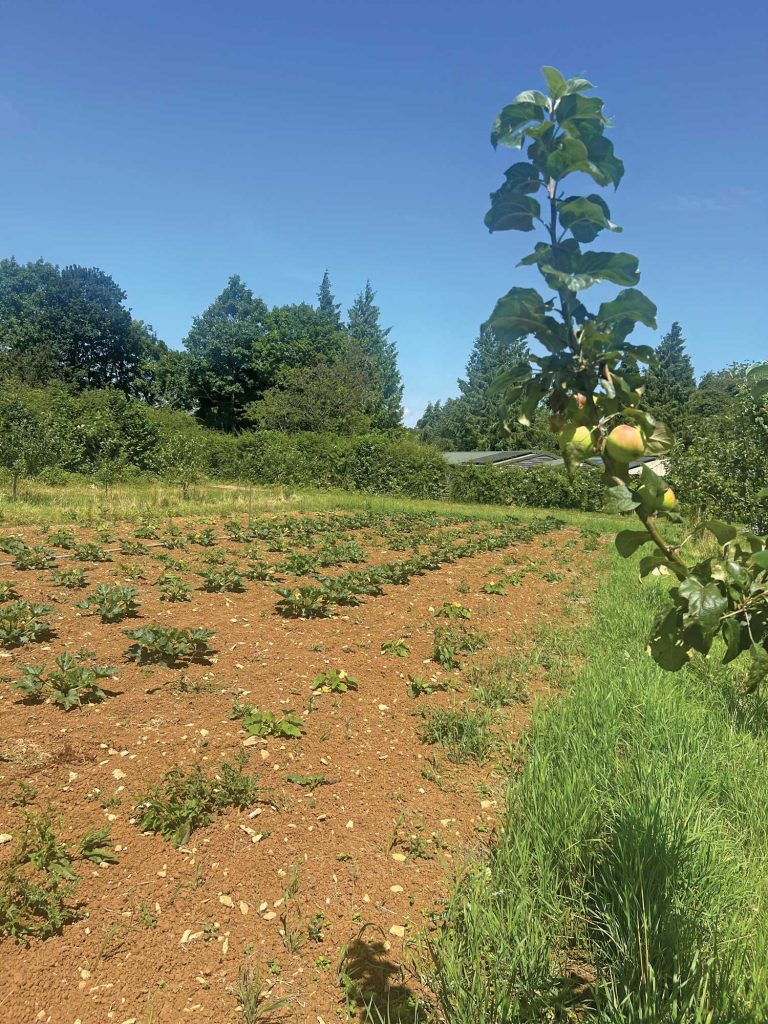
It is not necessary to convert every acre of arable land into a perennial forest garden. A more pragmatic approach is agroforestry, which integrates multipurpose perennial trees into the arable landscape. These trees act as windbreaks, provide shade, help hold water in the soil, and create microclimates that protect the annual crops beneath them.
Official Responses and Global Perspectives
Agricultural authorities and NGOs are beginning to acknowledge that the status quo is unsustainable. Organizations focused on regenerative agriculture are increasingly adopting terminology pioneered by the permaculture movement, such as "cover cropping," "no-till farming," and "holistic grazing management."
However, the transition faces structural resistance. Modern banking, government subsidies, and international trade policies are built around the high-volume, monocultural commodity model. Critics often argue that permaculture methods cannot scale to feed a global population of eight billion. Proponents of permaculture, however, argue that the "scale" argument is flawed; the current industrial model is failing to feed the world sustainably and is actively destroying the natural capital—the soil—upon which all future food production depends.
Implications: The Path Toward Localization
The final, and perhaps most difficult, step in this evolution is the reintegration of the consumer. The modern model relies on the commodification of crops, creating an alienation between the producer and the eater.
Permaculture ethics emphasize self-reliance and community responsibility. The future of agriculture depends on the localization of production and processing. When a farm mills its own wheat, produces its own value-added goods, and sells to its local community, it bypasses the industrial supply chain that demands monocultures and long-distance transport.
The Role of Energy
The ideal farm of the future must decouple itself from fossil fuels. This means reintroducing smaller, lower-impact machinery, exploring renewable energy sources like on-site water or wind power, and potentially reintroducing animal power for lighter tasks. The "behemoths" of modern farming—tractors that cause massive soil compaction—must be replaced by more nuanced, energy-efficient tools.
Conclusion: A Call to Observe
Permaculture does not offer a static set of rules; it offers a framework for inquiry. For the arable farmer, the path forward is one of observation. It requires asking the difficult questions: Why are we tilling this land? What are the long-term consequences of this crop choice? How can we better mirror the symbiotic relationships found in the wild?
The marriage of permaculture and arable farming is not just possible; it is essential. By treating the farm as a living, breathing ecosystem rather than a factory floor, we can ensure that the food systems of the future are not only productive but also capable of restoring the earth they rely upon. The transition will not happen overnight, but through the deliberate, design-led application of ecological principles, we can move toward an agriculture that nourishes both the planet and the people who inhabit it.
Federico Filippi is the Co-Founder and Director of Local Organic Growers CIC, based in Watford, UK. His work focuses on bridging the gap between ecological design and practical, community-based food production. For further exploration of these methods, readers are encouraged to investigate local land-stewardship initiatives and the growing body of literature on regenerative field-scale agriculture.

 Sagoh
Sagoh
