Lina Hope
 Iffa Jayyana
 Lina Irawan
 Ammar Sabilarrohman
 Ali Ikhwan
 Suro Senen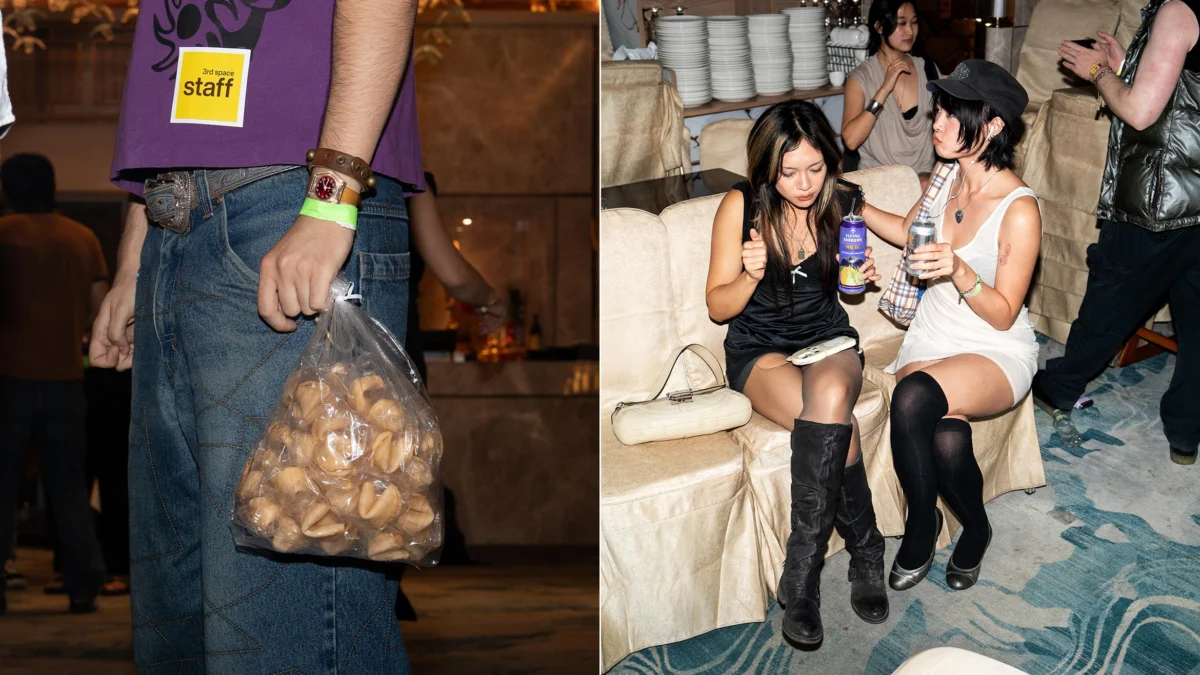
In an era where live music is increasingly defined by the sterile homogeneity of mega-stadiums and the repetitive layouts of mid-sized club chains, a new movement is emerging in New York City. 3rd Space, an experimental event production collective, is stripping away the pre-fabricated concert environment, opting instead to host performances in locations that defy traditional venue classification. From the hum of an underground dim sum parlor to the sweeping industrial vistas of a Manhattan heliport, 3rd Space is proving that where you see a band is just as important as who is playing.
The Core Concept: Redefining the "Third Place"
At its heart, 3rd Space is a challenge to the "phone-first" culture that has permeated the modern live music experience. Spencer Papandrea, the founder of 3rd Space, suggests that the malaise currently affecting the nightlife industry—a lack of dancing, constant documentation, and general detachment—is a direct result of venue fatigue.
"Brooklyn Steel versus Webster Hall versus Terminal Five are all similar at the end of the day," Papandrea notes. "It loses a little bit of the magic that I got when I was a kid going to these places for the first time."
By stripping away the standard lighting rigs and barricades, 3rd Space forces attendees to engage with their surroundings. The "third space"—a term coined by sociologist Ray Oldenburg to describe social surroundings separate from the two usual social environments of home ("first place") and the workplace ("second place")—is being re-engineered here as a temporary, high-impact cultural hub.
Chronology: From Local Hustle to Urban Phenomenon
The evolution of 3rd Space has been defined by a rapid, organic growth pattern that mirrors the scrappy energy of the artists it features.
- The Genesis (Early 2023): Papandrea, then balancing management consulting with the demands of law school, began walking through his local neighborhood with a simple proposition for business owners: would they be interested in hosting a live concert?
- The Proof of Concept: The first wave of shows took place in spaces never intended for performance—a local record store, a cramped dumpling shop, and a functional laundromat. These early experiments established the brand’s identity: high-concept, low-fi, and deeply localized.
- Expansion and Curation (2024): The project moved beyond simple neighborhood shows. The team began collaborating with niche curators like the Ginseng Museum to produce thematic events. This period saw the high-profile show at 88 East Broadway, a mall structure underneath a bridge in Chinatown, which proved that the "weirder the better" ethos could draw significant crowds.
- The Present (2025-2026): 3rd Space has now matured into a logistical operation capable of managing complex sites, such as midtown heliports and active soccer facilities, balancing the delicate needs of food service, sound engineering, and crowd safety in spaces never designed for high-decibel audio.
Supporting Data: The Logistics of the Unexpected
Producing a concert in a non-traditional venue is not merely a creative choice; it is a complex logistical undertaking. According to the team at 3rd Space, the transition from a standard venue to an "alternative" site requires a recalibration of almost every production variable.

Venue Accessibility and Cost
The economic reality of these shows is nuanced. While a neighborhood laundromat might be eager for the exposure and low-cost rental, established restaurants operate on razor-thin margins. Booking a restaurant for a private event often requires a premium, especially during peak hours. Furthermore, the "service" aspect adds a layer of complexity; for instance, at the dim sum lounge event, the menu had to be streamlined from a standard 15-item list to a four-item "concert menu" to maintain flow and service speed while the music played.
Technical and Safety Requirements
Unlike a purpose-built venue with pre-installed sound systems, acoustic treatment, and fire safety protocols, these alternative sites are blank slates. The 3rd Space team must:
- Conduct Site Audits: Assessing the acoustics of concrete-heavy spaces like heliports vs. the dampening effect of clothing in a laundromat.
- Infrastructure Scaling: Bringing in portable power, modular staging, and localized sound reinforcement that won’t overwhelm the space’s structural integrity.
- Staffing and Flow: Managing the intake of patrons in spaces without traditional lobbies or coat checks, often requiring creative crowd control strategies.
Official Perspective: The Creative Vision
When asked about the future of the project, Papandrea remains steadfast in his pursuit of the "un-concert." His philosophy relies on the concept of bespoke immersion.
"We want to shape the concept of the event around the spaces themselves," says Papandrea. "When we had a gritty dumpling restaurant, we had a punk show there because the texture of the space matched the music. When we were at the heliport, we opted for left-field, IDM-style electronic music because the environment felt cold, futuristic, and industrial."
This curation strategy extends to the audience. By diversifying the lineups—moving from crust-punk to hyper-pop to East Asian underground—3rd Space has successfully avoided becoming a siloed "scene." Instead, they have created a cross-pollination of subcultures, bringing together fashion-forward enthusiasts, local residents, and touring music fans. The goal is to facilitate human connection; Papandrea frequently cites the "beautiful" trend of attendees meeting new friends or romantic partners at these shows as the ultimate measure of success.
Implications: The Future of Live Entertainment
The success of 3rd Space raises broader questions about the future of urban cultural consumption. If audiences are increasingly willing to pay for "experiences" rather than just "performances," the traditional concert model may find itself in a period of necessary evolution.

The "Stunt" vs. The "Soul"
Critics of the modern experiential economy often label these events as "stunts"—gimmicks designed for Instagram engagement. However, the data suggests otherwise. The audience retention at 3rd Space events is high, and the engagement is visceral. By creating an environment where the physical space is a character in the performance, the barrier between the artist and the audience is lowered.
A Blueprint for Hospitality
For the restaurant and hospitality industry, 3rd Space offers a roadmap for utilizing dormant space. By turning a restaurant into a concert venue, owners can generate revenue during off-hours and attract a younger demographic that might otherwise never visit their establishment. The key, however, is the intentionality of the pairing; food, venue, and sound must exist in a symbiotic relationship.
Future Horizons
As the collective looks toward the future, the ambition remains focused on the "impossible" venue. The dream list includes abandoned armories, public swimming pools, and even ice skating rinks. These environments are not chosen for their comfort, but for their ability to force the audience to confront their reality.
In a world where everything is digitized and curated, 3rd Space represents a return to the tactile. By turning the city itself into a stage, they are reminding concertgoers that the most memorable nights aren’t just about the music—they are about the atmosphere, the people you meet, and the realization that with enough imagination, any corner of a city can become a stage.
For the average music lover, the takeaway is clear: the era of the standardized arena show is being challenged by a grassroots movement that prioritizes context, community, and the thrill of the unknown. Whether it’s an ice rink in mid-winter or a mall under a bridge, the next great concert venue might just be the one you walk past every day without a second thought.


 Siti Muinah