
 Rifan Muazin
 Layla Zulfa
 Nana
Nana
 Asro
Asro
 Siti Muinah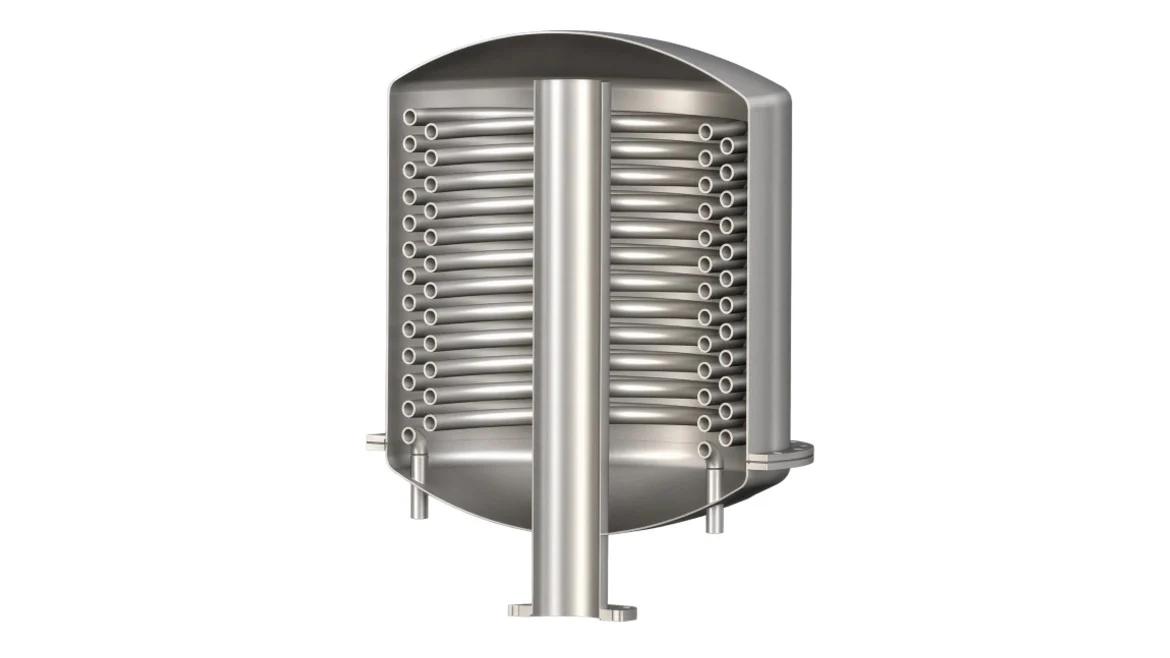
In the high-stakes world of industrial food processing, the spray drying of heat-sensitive proteins—such as dairy caseinate, plant-based isolates, and egg proteins—has long been defined by a frustrating physical limitation: the trade-off between viscosity and thermal degradation. Manufacturers have historically been forced to choose between pushing their dryers to maximum capacity or protecting the integrity of their sensitive, high-value ingredients.
Minnesota-based Dahmes, a leader in the design and manufacture of advanced spray drying and powder processing systems, aims to dissolve that compromise. The company has officially introduced the VacuCoil High Pressure Preheater, a novel technology designed to reside on the high-pressure side of the feed line. By applying precise, short-duration thermal energy immediately before the atomizer, the VacuCoil promises to unlock hidden capacity in existing drying systems without compromising product quality.
The Core Innovation: Solving the Viscosity Dilemma
At the heart of the spray drying process lies a critical mechanical challenge: the feed viscosity. In many production facilities, the spray dryer’s capacity is not actually limited by the thermal output of the drying chamber itself, but rather by the ability of the feed pump and atomizer to handle the viscous liquid concentrate.
"Spray dryer output for heat-sensitive concentrates is often limited by the viscosity of the feed rather than by the dryer itself," notes the technical team at Dahmes. "Raising the feed temperature naturally lowers viscosity, allowing more solids to reach the atomizer and, consequently, increasing total throughput."
However, traditional preheating methods—which typically occur earlier in the process—subject the sensitive protein to prolonged heat exposure. This extended "residence time" at elevated temperatures is a recipe for protein denaturation, which ruins the functionality and market value of the end product. To mitigate this risk, many processors have traditionally kept their preheat temperatures conservative, effectively leaving significant capacity on the table.
The VacuCoil addresses this by relocating the heating phase. By mounting the unit on the high-pressure side of the feed line—immediately before the nozzle—the concentrate is exposed to the required temperature for only a matter of seconds. This minimal thermal exposure effectively reduces viscosity without allowing enough time for protein structure degradation.
Chronology: From Concept to Commercial Success
The development of the VacuCoil reflects a shift in the industry toward precision engineering as a means of increasing plant capacity.
The R&D Phase
Dahmes spent years analyzing the bottlenecks of industrial spray dryers. Recognizing that customers were frequently requesting ways to increase throughput without the massive capital expenditure of installing an entirely new dryer, the engineering team began experimenting with point-of-use heating. The challenge was finding a method that could provide uniform, rapid heat transfer without causing "hot spots" that would burn or coagulate the product.
The Pilot and Proof-of-Concept
The technology underwent rigorous testing, moving from controlled laboratory environments to real-world industrial settings. One of the most significant trials took place at a customer facility focusing on sodium and calcium caseinate. As some of the highest-viscosity feeds in the dairy industry, these proteins served as the ultimate stress test for the VacuCoil. The unit’s ability to maintain a consistent surface temperature of approximately 160°F while handling these difficult materials proved that the technology could scale across various high-value protein categories.
Commercial Launch
With proven metrics in hand, Dahmes has now positioned the VacuCoil as a standard-ready retrofit for any spray drying operation. The unit is designed to be "brand-agnostic," meaning it is fully compatible with spray dryers manufactured by any firm, allowing processors to integrate the technology into existing lines with minimal disruption.
Supporting Data and Performance Metrics
The economic argument for the VacuCoil is rooted in its ability to generate immediate gains in output. According to data provided by Dahmes, the installation of a VacuCoil unit typically results in a 7% to 9% increase in dryer output. In specific high-performance scenarios, the company has documented capacity improvements exceeding 11%.
Beyond Throughput: Microbial Load Reduction
While throughput is the primary driver for adoption, the VacuCoil provides a secondary operational benefit: improved food safety. The high-temperature, short-time (HTST) nature of the heating process assists in reducing the microbial load of the concentrate. By exposing the feed to precisely controlled steam heat just before atomization, the unit acts as an additional critical control point in the plant’s food safety plan.
Installation Efficiency
One of the most compelling features for plant managers is the installation profile. The VacuCoil is designed to be installed on the feed line with minimal downtime. In many cases, the bulk of the installation work can be conducted while the plant remains operational. Unlike the installation of a new dryer, which requires building permits, expanded facility footprints, and massive structural overhauls, the VacuCoil is a "bolt-on" solution. The capacity increase is effectively available the moment the installation and commissioning are complete.
Official Perspectives: The End of the Trade-Off
Hans Kabat, Vice President of Engineering at Dahmes, emphasizes that the VacuCoil is not merely a piece of equipment, but a philosophical shift in how processors approach production constraints.
"Protecting the protein and pushing the dryer have always been a trade-off," says Kabat. "The VacuCoil removes that trade-off. This product gives processors the increased capacity that comes with a hotter feed without the denaturation risk that has kept preheat conservative for years, and that is the part that makes plants comfortable saying yes."
Kabat’s sentiment reflects the reality of the current food ingredient market: as demand for plant-based proteins and specialized dairy fractions continues to climb, processors are under immense pressure to squeeze more volume out of existing equipment. The VacuCoil represents a move away from "brute force" expansion—building larger, more expensive dryers—toward "precision optimization."
Implications for the Industry
The introduction of the VacuCoil has significant implications for several sectors of the food and beverage industry, particularly those dealing with heat-sensitive materials.
The Rise of Plant-Based Proteins
The plant-based sector is currently experiencing a boom, but the proteins derived from peas, soy, lentils, and oats are notoriously difficult to spray dry due to their viscosity and thermal sensitivity. By allowing these processors to heat their feed more aggressively without fear of denaturation, the VacuCoil could help stabilize supply chains and reduce the cost per pound of high-quality plant-based protein powders.
Flexibility in Flavors and Extracts
The technology is not limited to proteins. Dahmes has noted that the VacuCoil is equally applicable to flavors, extracts, and protein hydrolysates. In the flavor industry, where preserving volatile compounds is essential, the short-duration heating provided by the VacuCoil allows for the necessary viscosity reduction for atomization while potentially protecting the delicate aromatic profiles that might otherwise be lost in a traditional, longer-duration preheater.
Sustainability and Asset Utilization
In an era where sustainability is paramount, the ability to increase capacity without constructing new facilities is a major win. By optimizing existing spray dryers, manufacturers can reduce their overall energy intensity per kilogram of product produced. Maximizing the throughput of an existing asset is often the most sustainable path to growth, as it avoids the carbon footprint associated with new construction and heavy machinery manufacturing.
A New Standard for Retrofitting
The success of the VacuCoil may set a new standard for how companies view the "end of life" for their processing equipment. Rather than decommissioning a dryer that has reached its capacity limit, processors now have a viable, cost-effective path to extend the productive life and utility of that equipment for years to come.
Conclusion
Dahmes has identified a classic industrial bottleneck and applied a sophisticated, elegant solution. By utilizing condensing steam under vacuum, the VacuCoil High Pressure Preheater ensures that the thermal energy is applied exactly where it is needed, for exactly the amount of time required, and no longer.
As the industry continues to push the boundaries of what is possible with protein concentrates and heat-sensitive ingredients, technologies like the VacuCoil will likely become essential tools in the processor’s arsenal. For plant managers and engineering leads, the prospect of an 11% capacity boost without the need for a new building or extensive permitting is not just a marginal improvement—it is a transformative shift in operational capability. As the VacuCoil continues to see implementation across diverse production facilities, it stands as a testament to the idea that in the world of spray drying, sometimes the most significant gains are found in the details of the feed line.


 Sagoh
Sagoh