

 Ammar Sabilarrohman
 Dwi Wanna
 Nana Wu
 Neng Nana
 Nana
Nana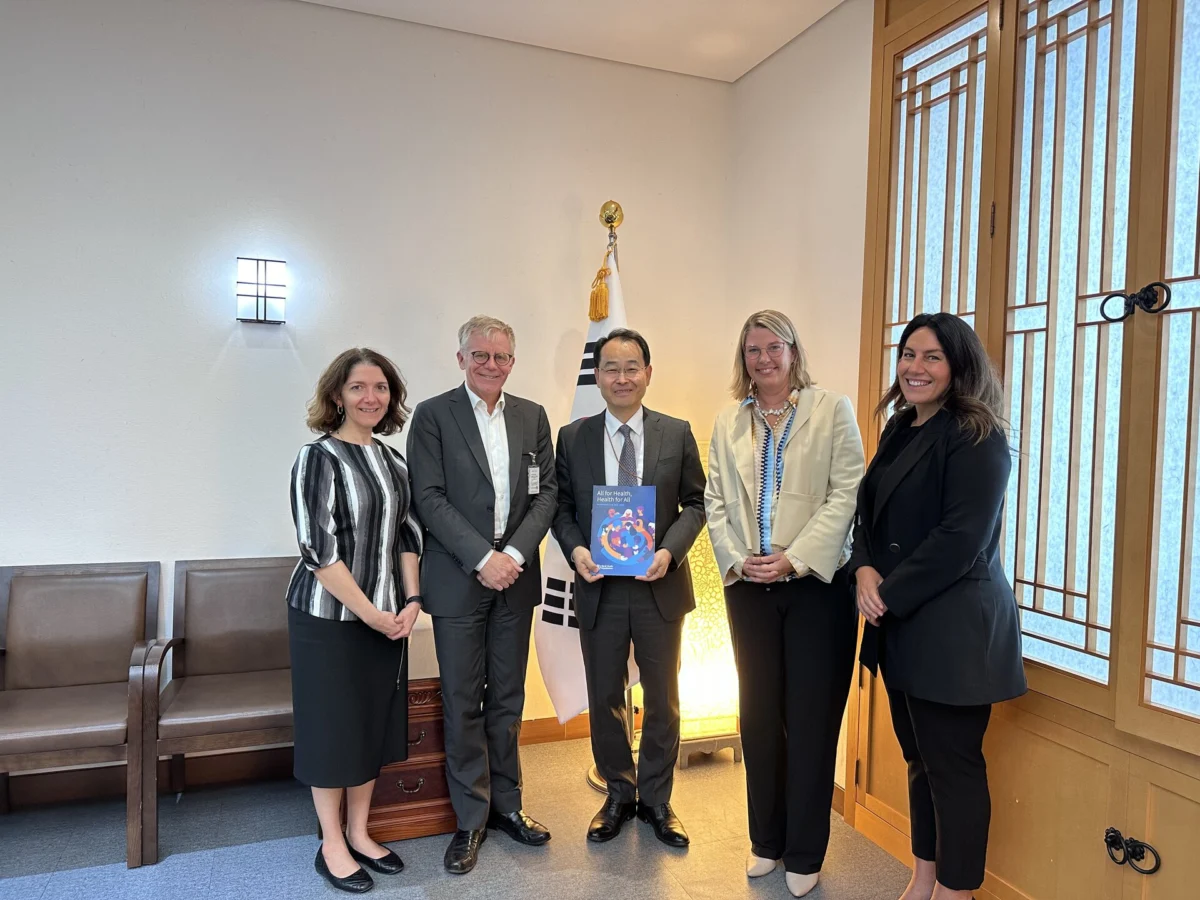
Introduction: A 75-Year Transformation
The global health landscape has been fundamentally reshaped over the last three-quarters of a century, and few nations exemplify the arc of development and leadership as clearly as the Republic of Korea. Marking over 75 years of partnership, the World Health Organization (WHO) and the Republic of Korea have transitioned from a relationship defined by post-war humanitarian aid to one characterized by strategic co-leadership and innovation.
Once a recipient of international assistance, the Republic of Korea has achieved a remarkable metamorphosis, rising to become a global donor and a cornerstone of international health security. This evolution was center-staged during the second WHO-Republic of Korea Strategic Dialogue, held in Seoul from August 28 to 29, 2024. The meeting served as a crucible for aligning policy, accelerating investment, and cementing a shared vision for the future of global health governance.
The Strategic Dialogue: A Framework for Cooperation
The recent Strategic Dialogue in Seoul was not merely a ceremonial gathering; it was a high-level operational summit designed to harmonize the objectives of a major international health body with one of the world’s most agile and advanced public health systems.
The WHO delegation was led by Dr. Catharina Boehme, Assistant Director-General for External Relations and Governance. Recognizing the complexity of modern health crises, the WHO ensured a comprehensive presence, featuring an interdisciplinary team that spanned the organization’s three functional levels: headquarters, regional offices, and country-level representatives. This "whole-of-organization" approach ensured that the dialogue was grounded in both high-level policy theory and the pragmatic realities of field implementation.
On the host side, Dr. Hye-Jin Kim, Deputy Minister for Planning and Coordination at the Ministry of Health and Welfare, led a robust delegation. The inclusion of senior leadership from the Korea Disease Control and Prevention Agency (KDCA)—represented by Commissioner Dr. Young-Mee Jee—alongside key figures from the Ministry of Foreign Affairs and the Ministry of Food and Drug Safety, underscored the multisectoral nature of Korea’s commitment to global health.
Key Objectives of the Dialogue:
- Alignment of Priorities: Synchronizing WHO’s global health strategy with Korea’s national health priorities to ensure mutual support.
- Operational Synergy: Identifying gaps in current collaborative frameworks and streamlining communication channels.
- Political Advocacy: Engaging with the National Assembly to foster long-term legislative support for global health initiatives.
- Investment Mobilization: Reviewing the WHO Investment Case report to explore sustainable funding mechanisms.
Chronology of Collaboration
To understand the significance of this meeting, one must look back at the historical trajectory that brought the two entities to this point.
- 1949–1950s (The Era of Reconstruction): Following the founding of the WHO, the organization played a critical role in providing basic health infrastructure to a war-torn Korean peninsula.
- 1970s–1990s (Developmental Growth): As Korea’s economy grew, its health metrics improved rapidly. WHO shifted from an "aid provider" to a "technical advisor," helping Korea build its universal health coverage system.
- 2000s–2015 (The Rise of a Global Citizen): Korea began participating more actively in the World Health Assembly, contributing to global efforts against malaria, tuberculosis, and HIV/AIDS.
- 2020–2023 (The Pandemic Catalyst): The COVID-19 pandemic acted as an accelerator for the partnership. Korea’s rapid, tech-driven response to the virus became a blueprint for the world, leading to closer integration between the KDCA and WHO’s health emergency programs.
- 2024 (The Strategic Dialogue): The second formal Strategic Dialogue marks the formalization of this partnership as a pillar of global health security.
Supporting Data and the Investment Case
Central to the 2024 discussions was the "WHO Investment Case," a strategic document that outlines the financial requirements for achieving the Sustainable Development Goals (SDGs) related to health.

The report highlights that for every $1 invested in WHO, there is a potential return of $35 in health and economic benefits. During the Seoul dialogue, the WHO delegation presented this data to the Ministry of Foreign Affairs, emphasizing the Republic of Korea’s critical role in closing the funding gap. Korea has consistently increased its voluntary contributions to WHO, focusing on areas such as digital health, pandemic preparedness, and the strengthening of health systems in the Asia-Pacific region.
Furthermore, the integration of Korea’s "K-Health" initiatives—which prioritize digital innovation, biotech manufacturing, and data-driven disease tracking—into the WHO framework provides a scalable model for low- and middle-income countries.
Official Responses and Stakeholder Perspectives
The View from the WHO
Dr. Catharina Boehme emphasized the unique value of the Korean partnership. "The Republic of Korea is no longer just a partner; it is a trailblazer," she noted. "By combining our global reach with Korea’s technological prowess and its unique history of transformation, we are creating a blueprint for resilience that can be adapted across the globe."
The View from the Ministry of Health and Welfare
Dr. Hye-Jin Kim reiterated the Republic of Korea’s unwavering commitment to the WHO’s mission. "Our history is a testament to the fact that health is the foundation of development. As we look forward, Korea is committed to leveraging its resources, expertise, and political will to ensure that no nation is left behind in the quest for universal health coverage."
Parliamentary Engagement
A notable feature of this year’s dialogue was the deliberate effort to involve the National Assembly. Recognizing that international treaties and funding require domestic political consensus, the WHO delegation held side meetings with key parliamentarians who champion the global health agenda. This engagement is crucial for ensuring that the Republic of Korea’s global health funding remains consistent, regardless of domestic political shifts, thereby ensuring the predictability of international aid.
Implications for Global Health
The outcomes of the Seoul Strategic Dialogue have profound implications for the future of international health policy.
1. Resilient Supply Chains
The discussions between the WHO and the Ministry of Food and Drug Safety suggest a move toward deeper collaboration on medical countermeasure production. By leveraging Korea’s manufacturing capabilities, the partnership aims to create regional hubs that can produce vaccines and therapeutics during future health emergencies, reducing the global reliance on a few centralized suppliers.

2. Digital Health and AI Integration
Korea’s leadership in AI-driven healthcare and electronic health records is being integrated into WHO’s digital health strategy. The implication here is a global push toward standardized health data, which is essential for early warning systems that can detect the next pandemic before it goes global.
3. Sustainable Financing
The formal alignment on the WHO Investment Case signals a shift toward more predictable, flexible, and sustainable funding. By moving away from short-term, earmarked grants toward long-term strategic investments, the Republic of Korea is setting a standard for how "middle-power" nations can influence global health outcomes.
4. Health Diplomacy as Soft Power
For the Republic of Korea, this partnership is a significant exercise in soft power. By positioning itself as a leader in global health, Korea strengthens its diplomatic ties, fosters regional stability, and enhances its international reputation as a responsible stakeholder committed to the common good.
Conclusion: A Model for the Future
The 2024 Strategic Dialogue between the WHO and the Republic of Korea marks the beginning of a new chapter. As the world faces an increasingly complex array of health threats—ranging from climate-induced disease outbreaks to the challenges of aging populations—the synergy between a global governing body and a technologically advanced, experienced nation is more vital than ever.
The Republic of Korea’s transformation from a recipient to a leader serves as a powerful beacon of hope for developing nations. By continuing to deepen this partnership, both the WHO and the Republic of Korea are not just reacting to the health challenges of today; they are proactively architecting a more secure, equitable, and healthy world for tomorrow. The momentum generated in Seoul suggests that this partnership will remain a driving force in international health for decades to come, proving that when nations collaborate with foresight and purpose, the global impact is transformative.


 Pevita Pearce
