Laily UPN

 Suro Senen
 Muslim

 Raul Delapena Setiawan

 Layla Zulfa

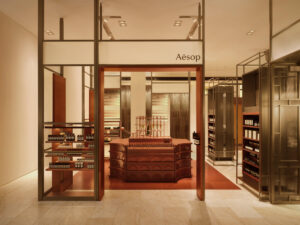
In the hallowed, high-traffic corridors of London’s Harrods department store, a new architectural intervention has emerged that challenges the traditional concept of retail display. Skincare titan Aesop, long celebrated for its idiosyncratic approach to store design, has unveiled a radical redesign of its decade-old counter space. Orchestrated by the London-based architecture studio Al-Jawad Pike, the project moves beyond the typical cosmetic kiosk, manifesting instead as a “miniature building” that pays homage to both the heritage of its host site and the ancient origins of perfumery.
The Genesis of the Concept: A Miniature Architecture
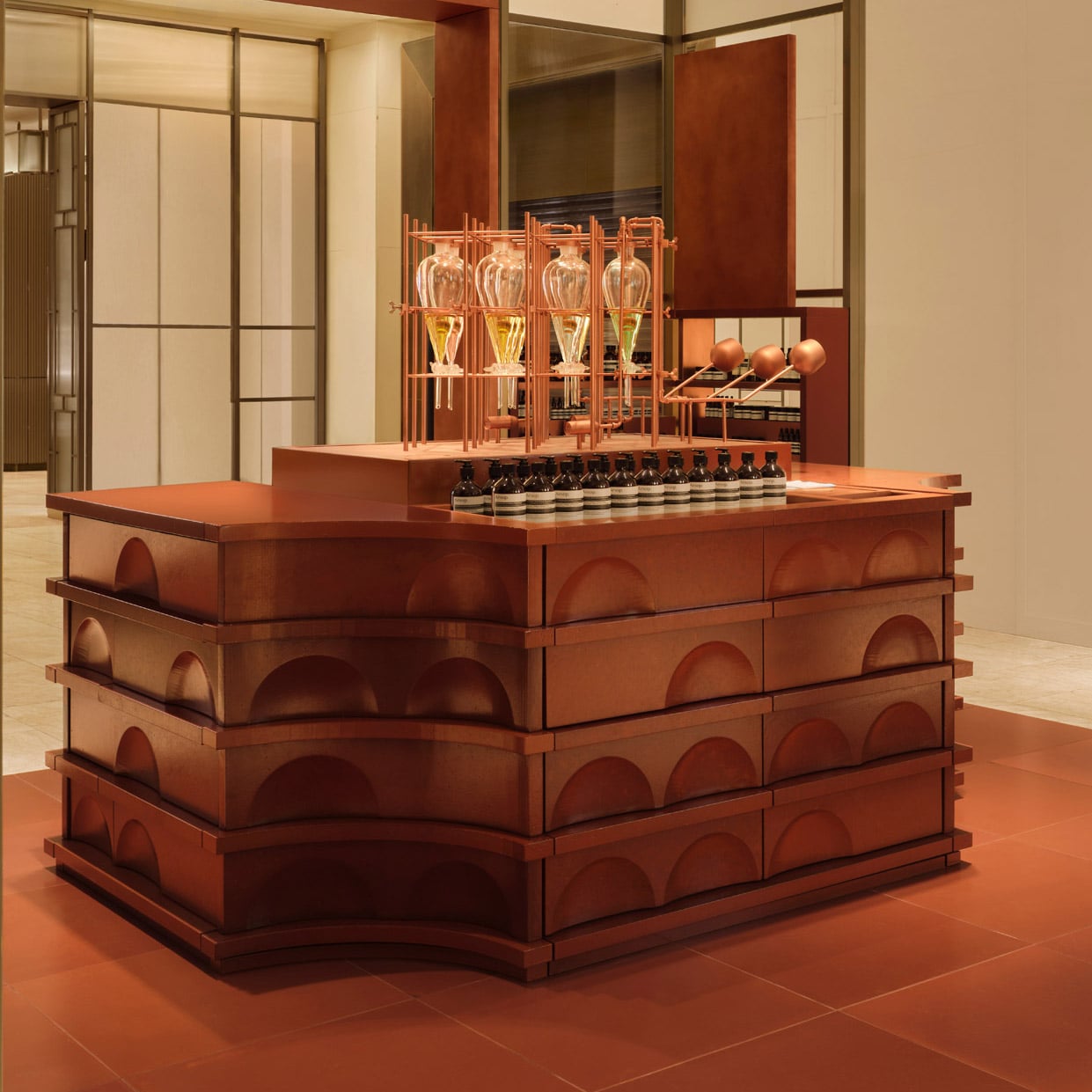
The core of the installation is a monolithic counter clad in Italian terracotta tiles. Rather than approaching the project as a mere retail fixture, co-founder Jessam Al-Jawad and his team treated the counter as an exercise in micro-urbanism.
“We were interested in giving the counter the qualities of a miniature building,” Al-Jawad explains. The structure features carefully considered apertures, varying floor levels, and carved alcoves that invite curiosity. By prioritizing “the architectural ambition of a building but the care of a cabinet,” the design team has succeeded in creating a focal point that feels anchored and permanent despite the transient nature of department store retail.
This design choice serves a dual purpose. Aesthetically, it creates a sense of gravity and significance within the bustling Harrods environment. Functionally, the specific material choice of glazed terracotta—renowned for its porosity and thermal properties—serves as a literal vessel for the brand’s sensory offerings.
Chronology: A Decade of Collaborative Evolution
Aesop’s relationship with Harrods spans over ten years, a period during which the brand has consistently redefined the customer experience. This latest iteration is not merely a cosmetic refresh; it is the culmination of a long-term collaboration between Aesop’s internal design team and Al-Jawad Pike.
- 2014–2024: Aesop establishes and maintains its presence within the Harrods footprint, testing various modular layouts and visual identities.
- Early 2026: Initial design conceptualization begins. Al-Jawad Pike identifies the need for a structure that reflects both the heritage of Harrods and the intellectual roots of fragrance.
- Mid-2026: Material selection focuses on Italian terracotta and brushed copper, moving away from the industrial or clinical tropes often seen in beauty retail.
- October 2026: Installation and public unveiling of the redesigned space, marking a new chapter in the brand’s retail strategy.
Supporting Data and Material Narrative
The choice of materials is central to the project’s success, acting as a narrative bridge between history and modern science.
The Terracotta Connection
The use of terracotta was a calculated decision, informed by two distinct historical threads. First, it acknowledges the iconic red brick façade of Harrods itself. By utilizing a similar, albeit more refined, ceramic palette, the counter feels like a deliberate extension of the building’s architecture.
Second, the choice of material reaches back to ancient Persia. As Al-Jawad notes, “Through carved alcoves, we wanted to recall the architecture of ancient Persia—the highly literate civilisation that developed liquid perfumery.” This historical nod adds a layer of depth to the brand’s narrative, positioning its products not as ephemeral commodities, but as the latest iteration in a long, storied tradition of scent-making.
The Olfactory Sculpture
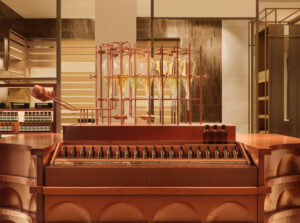
A standout feature of the new space is the "olfactory sculpture." This alchemist-style installation serves as the functional heart of the store. It features a series of glass vessels suspended by a delicate, organized structure of copper piping. Visitors interact with the scents through copper cones that deliver fragrance-infused air.
This installation is a continuation of Aesop’s broader experimentation with sensory retail. By isolating the scent in a dedicated, sculptural apparatus, the brand removes the visual clutter of bottles and labels, allowing the customer to focus purely on the olfactory profile of the product.
Official Responses and Philosophical Alignment
Aesop has maintained a consistent philosophy regarding its retail spaces: no two stores should be identical. By working with firms like Al-Jawad Pike, the brand ensures that each location acts as a site-specific installation.
“The colour palette was chosen in collaboration with the team at Aesop for its intensity and richness,” says Al-Jawad. “We felt it resonated with the olfactory experience of fragrance. We paired this with matte, brushed copper because of its connection to fragrance creation and distillation.”
This collaboration highlights a growing trend in high-end retail: the shift from "shopping" to "experience curation." The partnership between the architect and the brand is symbiotic; Al-Jawad Pike provides the technical rigor and historical context, while Aesop provides the experimental freedom to push the boundaries of what a retail environment can be.
Implications for the Retail Landscape
The Al-Jawad Pike renovation at Harrods carries significant implications for the future of luxury retail design.
The Decline of the "Pop-up" Aesthetic
For years, retail design in department stores was dominated by temporary, easily replaceable fixtures. The move toward permanent, architectural installations suggests a shift in brand strategy. Retailers are realizing that in an era of digital dominance, the physical store must offer an experience that is impossible to replicate online. By investing in high-quality materials like terracotta and copper, Aesop is signaling that their physical presence is a testament to the brand’s permanence and values.
The Return to "Slow Retail"
The design encourages a slower, more deliberate interaction with products. The "olfactory sculpture" and the alcove-based display system invite customers to linger, pause, and engage in a multisensory experience. This is a direct counter to the "fast-paced" environment of a large department store. It suggests that brands that prioritize atmosphere and education over inventory density will ultimately foster deeper customer loyalty.
Cross-Industry Influence
The success of this project is likely to influence other sectors. We are already seeing the spillover of this design philosophy into other domains; earlier this year, Aesop debuted its first lighting collection at Milan Design Week, proving that the brand’s design language is fluid and capable of moving beyond skincare into lifestyle and interior objects. As designers like Mesura (who won the 2024 Dezeen Award for their work on an Aesop store in Barcelona) and Al-Jawad Pike continue to push these boundaries, the lines between "commercial retail" and "exhibition design" continue to blur.
Conclusion: A New Standard for Retail
The redesign of the Aesop counter at Harrods is a masterclass in contextual architecture. By successfully weaving together the heritage of a British retail icon with the ancient history of Persian perfumery, Al-Jawad Pike has created something far more significant than a mere display stand.
The project stands as a firm rebuke to the idea that retail spaces must be transient or disposable. Instead, it offers a vision of the future where commerce and craftsmanship occupy the same space—where a visit to a perfume counter is not just a transaction, but an engagement with history, architecture, and the senses. As we look toward the future of brick-and-mortar retail, the "miniature building" at Harrods serves as a compelling blueprint: build with care, design with history, and engage with the customer on a level that transcends the product itself.