
 Muslim
 Raul Delapena Setiawan

 Layla Zulfa
 Laily UPN

 Asro
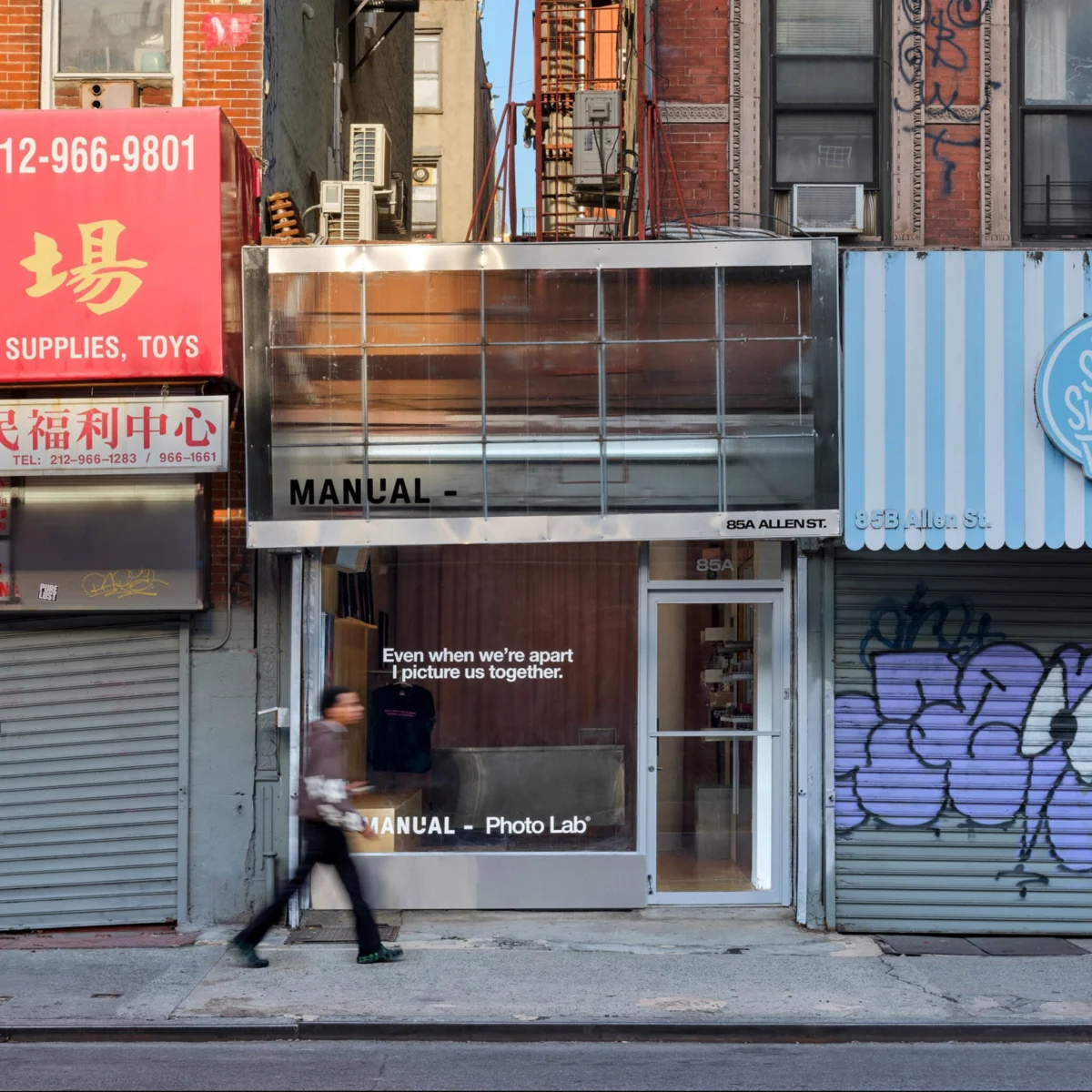
In the heart of Manhattan’s Chinatown, a quiet revolution in retail design and community engagement has taken root along Allen Street. Manual, the emerging camera company that has gained a cult following for its translucent, pocket-sized “Holo” digital cameras, has unveiled its first-ever permanent brick-and-mortar storefront. Designed in collaboration with the multidisciplinary studio Protean Practice, the Manual Photo Lab transcends the traditional retail model, functioning less like a store and more like a clubhouse for the digital-analog generation.
The space is a masterclass in adaptive reuse and material honesty, blending industrial grit with a soft, inviting aesthetic. By marrying the transparent, high-tech sensibilities of Manual’s product line with the architectural history of a former point-of-sale supply store, the design team has created an environment that feels both cutting-edge and deeply rooted in its neighborhood.
Main Facts: A New Chapter for Analog Enthusiasts
Manual’s entry into the physical retail landscape marks a significant pivot from its origins as a pop-up entity. Founded in 2017, the company has spent years cultivating a digital-first community of photographers who value the tactile, imperfect nature of film alongside the convenience of modern digital capture.
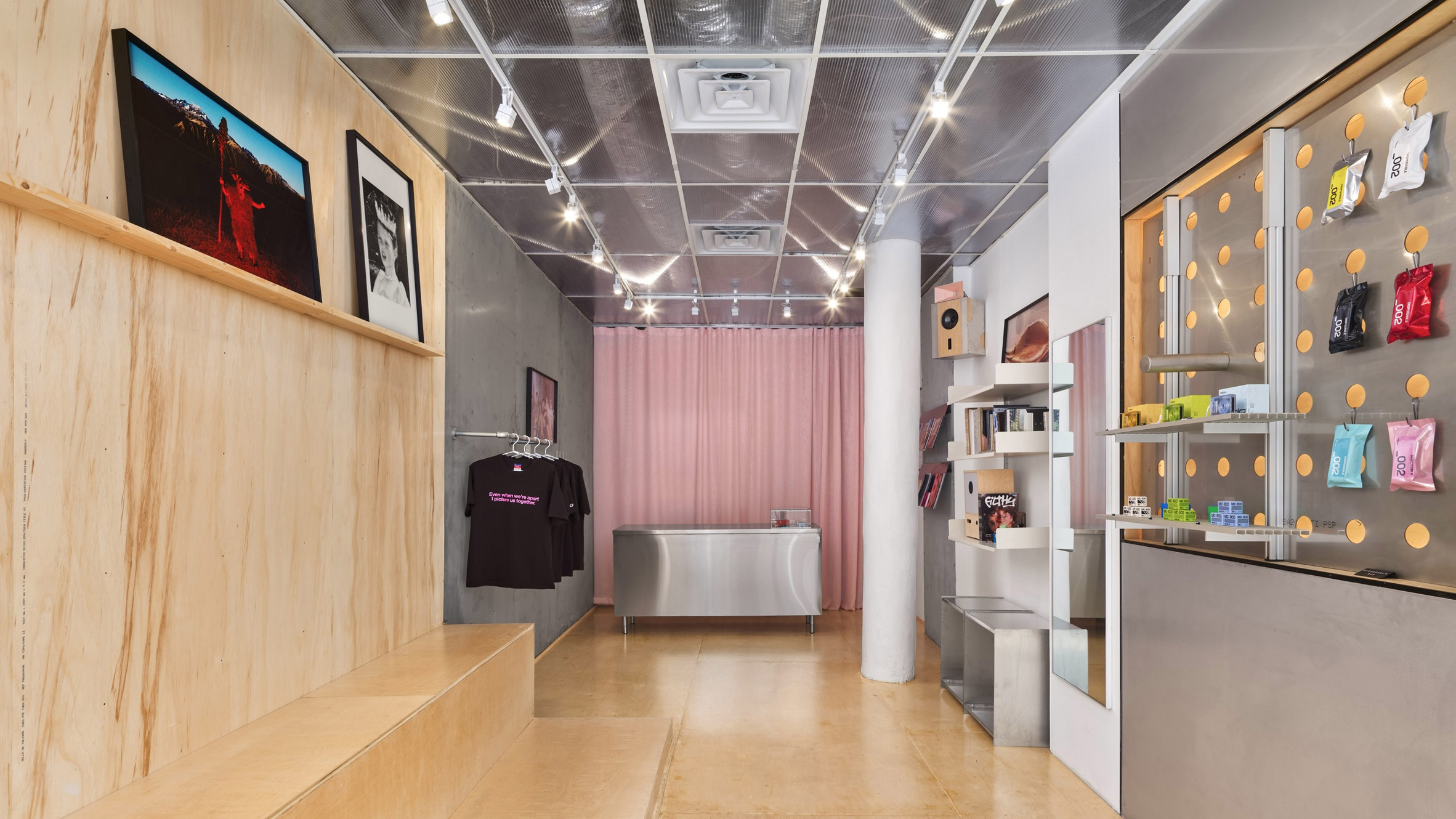
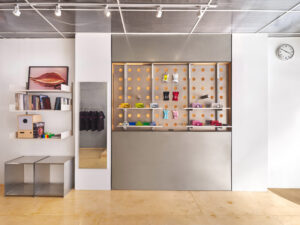
The new storefront is characterized by a deliberate material palette: raw plywood seating, cold-rolled steel wall panels, and strategic baby-pink accents that soften the harshness of the surrounding industrial materials. The front of the shop serves as a retail gallery for cameras, film, and zines, while the back, shielded by a minimalist pink curtain, houses the logistical operations for film processing.
Crucially, the lab does not process film on-site. Instead, it serves as a community hub where customers can drop off their rolls, which are then couriered to a long-standing, family-owned laboratory in Flatbush. This business model reinforces the brand’s philosophy of supporting the existing ecosystem of local photo labs rather than displacing them.
Chronology: From Pop-up to Permanent Fixture
The journey to the Allen Street storefront was not an overnight success but a calculated evolution of the Manual brand.
- 2017: Manual is founded, focusing on the development of the "Holo"—a translucent, pocket-sized digital camera designed to demystify photography. The brand operates exclusively online and through transient pop-up events.
- 2022: Protean Practice is established by apparel designer Saji Abu-Gold and photographer Steven Traylor, setting the stage for a future collaboration rooted in shared design sensibilities.
- 2025–2026: Manual identifies a former point-of-sale supply store in Chinatown as the ideal candidate for its flagship location.
- Late 2026: The design and construction phase concludes. The team spends months stripping back layers of signage and vinyl to reveal the underlying structural integrity of the 1800s storefront.
- October 2026: The Manual Photo Lab officially opens its doors to the public, marking the brand’s first permanent foray into brick-and-mortar commerce.
Supporting Data: Design Philosophy and Materiality
The architecture of the Manual Photo Lab is inextricably linked to the design of its products. Saji Abu-Gold of Protean Practice notes that the studio’s choice of polycarbonate—used for the shop’s ceiling and facade bulkhead—was a direct aesthetic nod to the transparent shells of the Holo camera. By exposing the "underworkings" of both the building and the cameras, the design reinforces a theme of radical transparency.
Structural Restoration
The facade project was particularly ambitious. Rather than opting for a total replacement of the storefront’s exterior, the team chose to honor the building’s history. After removing layers of modern vinyl, the designers discovered a structural skeleton that, while uneven, possessed an aesthetic quality that aligned with the brand’s ethos.
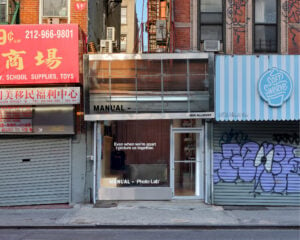
The integration of the original fluorescent lighting, paired with new polycarbonate sheathing, creates a refraction effect at night that mirrors the glow of a camera’s flash through a translucent plastic casing. This technical detail serves as an architectural metaphor for the product itself.
The "Skate Shop" Influence
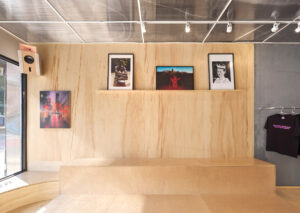
A defining feature of the interior is the large, multi-level Baltic birch seating unit. Drawing inspiration from the work of mid-century designers Ward Bennett and Joe D’Urso, the unit is designed to encourage loitering in the best sense of the word.
"We thought of it as making a home base for photographers," says Manual founder Malcolm Dia. "It’s a wall of product and ways to inspire yourself, ways to interact, and then the other half is an area to hang out and chill. It’s kind of like the philosophy of a skate shop."
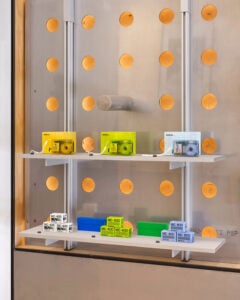
The seating is multi-tiered: a lower "lip" allows visitors to sit at ground level without being on the floor, while the upper tiers are designed for longer stays. This arrangement is complemented by an oversized, backlit steel pegboard designed by Ian Chapin, which serves as the primary retail display, further emphasizing the industrial, modular nature of the space.
Official Responses: The Vision for the Next Generation
For Malcolm Dia, the success of the storefront is not measured in sales figures alone, but in its utility as a gathering point.
"We want to be that for them—the next generation," Dia explains. "The kids who come down the street and pick up their digital camera or roll of film for the very first time. We want to be a space where they can pull up in the morning, grab a camera, go live their life, and then come back, get it developed, and hang out."
Saji Abu-Gold emphasizes the collaborative nature of the project and the importance of sustainability in the design process. Protean Practice’s approach—prioritizing low-emission, locally sourced materials and maintaining existing site conditions—is central to the store’s identity. "We realized that the frame, while a bit uneven, had a really nice structural skeletal shape to it," Abu-Gold reflects. "It ended up working out really well."
The brand has been careful to position itself as a collaborator, not a competitor, within the local photography scene. By partnering with local labs like Sammy Photo Lab and Elize Digital, Manual is effectively expanding the market for film photography in New York City rather than carving out a narrow slice of an existing pie.
Implications: The Future of Niche Retail
The opening of the Manual Photo Lab signals a broader shift in how digital-native brands are approaching physical retail. As the "experience economy" matures, brands that rely on online sales are finding that a physical space is not just a showroom, but a community anchor.
A Community-Centric Model
By incorporating seating and art, such as the commissioned painting by Leon Xu and prints curated by the Silvertooth Agency, the space invites non-transactional engagement. In an era where many retail spaces are increasingly sanitized and efficiency-driven, Manual’s commitment to the "skate shop" model is a radical act of community building.
The Sustainability of Adaptive Reuse
Protean Practice’s methodology serves as a case study for future retail architecture. In a city like New York, where construction costs are high and environmental concerns are paramount, the decision to strip back layers of historical facade rather than demolishing them is both economically and ecologically sound. This approach retains the "soul" of the building while modernizing it for a new generation of consumers.
Chinatown in Transition
The shop exists in a state of flux, situated in a neighborhood that is seeing rapid changes, from the recent expansion of the historic restaurant Wo Hop to the construction of a controversial new jail in the area. Manual’s presence is a reminder that Chinatown remains a nexus of cultural, creative, and commercial innovation.
Ultimately, the Manual Photo Lab stands as a testament to the enduring appeal of physical photography. By providing a home base for creators, the brand has created something that the internet, for all its convenience, cannot replicate: a tangible, shared space where the process of photography is celebrated, supported, and practiced in real-time. Whether it is a seasoned pro or a teenager picking up their first roll of film, the lab offers a sanctuary that bridges the gap between the digital image and the lived experience.

 Pevita Pearce

