Layla Zulfa
 Laily UPN
 Asro

 Sagoh
 Rifan Muazin
Introduction: A Paradigm Shift in Global Healthcare
For billions of people across the globe, traditional medicine—ranging from Ayurveda and traditional Chinese medicine to indigenous herbal remedies—is not merely an alternative; it is the primary source of healthcare. Recognizing the profound impact and untapped potential of these practices, the Government of India has solidified its commitment to the future of global health by pledging US$ 85 million over the next decade (2022–2032) to the World Health Organization (WHO) Global Traditional Medicine Centre.
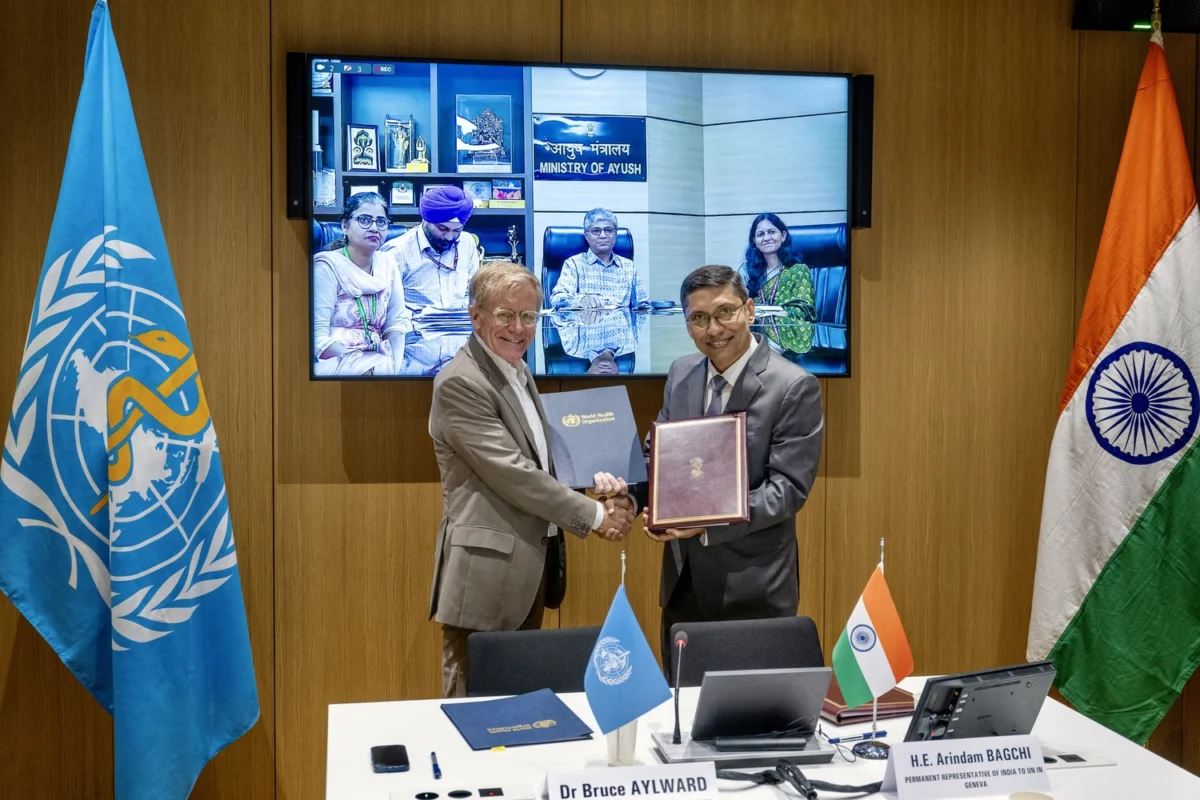
This strategic financial injection, formalized at a signing ceremony in Geneva, marks a watershed moment in the integration of ancient medical wisdom with modern, evidence-based clinical practices. By bolstering the WHO’s capacity to research, regulate, and standardize traditional medicine, this partnership aims to bridge the gap between cultural heritage and the rigorous demands of 21st-century healthcare.
The Core Facts: A Decade of Commitment
The US$ 85 million agreement is part of a larger, broader vision. Since the inception of the WHO Global Centre for Traditional Medicine in 2022, India has committed a total of US$ 250 million to the initiative. This investment covers the establishment of the Centre’s physical infrastructure—including interim and permanent premises in Jamnagar, Gujarat—as well as the programmatic workplan that guides the Centre’s operations.
Key Pillars of the Investment:
- Strengthening the Evidence Base: A significant portion of the funding is earmarked for creating robust data repositories. This includes gathering evidence on traditional medicine policies, clinical practices, product safety, and public usage patterns.
- Operational Scaling: The funds will scale up WHO’s internal capacity, allowing technical divisions and regional offices to incorporate traditional medicine into their broader health strategies.
- Core Resource Integration: A segment of India’s contribution will feed directly into the WHO’s Investment Round for 2025–2028, ensuring that traditional medicine is woven into the organization’s core biennial mission.
Chronology: From Concept to Global Strategy
The journey toward a centralized, WHO-led hub for traditional medicine has been methodical, reflecting the growing international interest in holistic healthcare.
- 2022: Establishment of the Centre: The WHO Global Centre for Traditional Medicine was officially launched in Jamnagar, India, following a vision shared by Indian Prime Minister Narendra Modi and WHO Director-General Dr. Tedros Adhanom Ghebreyesus.
- August 2023: The First Global Summit: The inaugural WHO Traditional Medicine Global Summit was held in Gujarat, serving as a catalyst for global discourse. The summit concluded with the adoption of the Gujarat Declaration, a landmark document emphasizing the need for rigorous evidence and equitable access.
- 2023: Technical Support Expansion: India signed a separate five-year agreement to bolster the WHO’s Traditional, Complementary and Integrative Medicine (TCI) unit, focusing on technical benchmarks and standardized terminologies.
- May 2025 (Anticipated): Global Strategy Launch: The 78th World Health Assembly is set to launch the 2025–2034 Global Strategy for Traditional Medicine, providing a roadmap for the next decade of integration.
- November 2025: Second Global Summit: A follow-up summit will be convened to assess progress and refine the implementation of the new global strategy.
The Five Pillars of the Global Centre
The WHO Global Traditional Medicine Centre, led by Director a.i. Dr. Shyama Kuruvilla, operates as a sophisticated knowledge hub. Its work is categorized into five interconnected domains:
- Research and Evidence: Validating the efficacy and safety of traditional practices through scientific inquiry.
- Primary Health Care (PHC): Ensuring that traditional medicine is effectively integrated into PHC systems to achieve universal health coverage (UHC).
- Indigenous Knowledge and Biodiversity: Protecting the intellectual property of indigenous communities while promoting the sustainable use of natural resources.
- Digital Health: Leveraging artificial intelligence and big data to map trends in traditional medicine and improve service delivery.
- Global Collaboration: Coordinating the biennial Global Summit and fostering a “One WHO” approach across all levels of the organization.
Official Perspectives: Aligning Global and National Agendas
The investment has been met with optimism by both international health leaders and Indian officials, who view the partnership as a catalyst for global health equity.
Dr. Bruce Aylward, Assistant Director-General of the Universal Health Coverage and Life Course division at WHO, noted the strategic importance of the timing:
"India’s commitment and leadership in expanding the evidence-based contribution of traditional medicine… comes at an opportune moment. Traditional medicine, supported within national health systems, can allow us to reach those most often left behind. Integration of traditional practice and knowledge is critical to achieving health for all."
Vaidya Rajesh Kotecha, Secretary of the Ministry of Ayush, Government of India, underscored the collaborative nature of the project:
"The signing of this donor agreement is a major milestone towards achieving the shared vision of Honourable Prime Minister Shri Narendra Modi and WHO Director-General Tedros for the development of the WHO Global Traditional Medicine Centre at Jamnagar."
Ambassador Arindam Bagchi, Permanent Representative of India to the UN in Geneva, highlighted the global scope of the mission:
"India remains committed to supporting WHO in its work to strengthen traditional medicine systems globally for achieving universal health coverage and serving the entire humanity, especially through this Global Centre in Jamnagar."
Implications: The Road to Universal Health Coverage
The integration of traditional medicine into national health systems is not merely a cultural initiative; it is a necessity for achieving Universal Health Coverage (UHC). As populations grow and the burden of non-communicable diseases rises, healthcare systems are under immense pressure.
1. Reaching the "Left Behind"
In many low- and middle-income countries, traditional healers are often the first, and sometimes the only, point of contact for patients. By providing these practitioners with standardized training and evidence-based protocols, the WHO aims to improve the safety and quality of care for underserved populations.
2. Standardization and Safety
One of the primary criticisms of traditional medicine has been the lack of standardized benchmarks. The TCI unit’s work in developing global terminology and safety guidelines will protect consumers from sub-standard products and ensure that practitioners are held to high, albeit context-sensitive, standards.
3. Sustainability and Biodiversity
The Centre plays a critical role in the conservation of medicinal plants. By formalizing the trade and use of traditional medicine products, the initiative encourages sustainable harvesting and protects the indigenous knowledge systems that have preserved this biodiversity for centuries.
4. A "One WHO" Approach
The collaboration between the Centre and the TCI unit creates a unified, multisectoral agenda. Through the WHO Technical Expert Network, experts from headquarters, regional offices, and individual country offices are working in lockstep to ensure that traditional medicine is not treated as a siloed interest, but as an essential component of the global health architecture.
Conclusion: A New Era of Integrative Medicine
As the world looks toward the 2025–2034 Global Strategy, the partnership between India and the WHO serves as a blueprint for international cooperation. By prioritizing evidence, policy, and human-centric care, this $85 million investment does more than fund research—it validates a diverse spectrum of medical heritage.
In an era where health challenges are increasingly complex, the convergence of ancient wisdom and modern scientific rigor offers a promising path forward. The WHO Global Traditional Medicine Centre stands at the epicenter of this transformation, proving that when nations collaborate with a shared vision, they can redefine the boundaries of what is possible in global health, ultimately moving the world closer to the goal of "Health for All."

 Lina Hope