 Raul Delapena Setiawan
 Ammar Sabilarrohman
 Lina Irawan
 Suro Senen
 Azzam Bilal Chamdy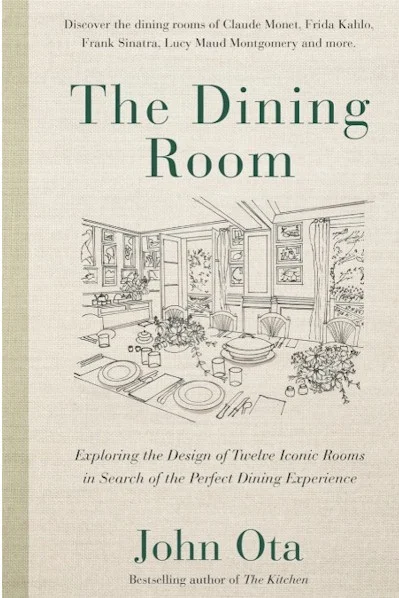
Date: May 13, 2026
Event: Culinary Historians Virtual Lecture Series
Featured Speaker: John Ota, Author of The Dining Room
I. Main Facts: A Journey Through Iconic Spaces
On Wednesday, May 13, 2026, the Culinary Historians will host a special virtual event featuring acclaimed architectural writer and author John Ota. Commencing at 7:00 PM Central Time via Zoom, the presentation will center on Ota’s latest literary contribution, The Dining Room, published by Penguin Random House.
The lecture promises to be an immersive exploration of twelve of history’s most significant dining spaces. Ota does not merely view these rooms as static architectural features; he treats them as the "social stage" of the home. Through a series of video presentations and historical analysis, Ota will transport attendees into the intimate environments of cultural titans, including the residences of Claude Monet, Frida Kahlo, Frank Sinatra, Jackie Kennedy, and Dr. Martin Luther King Jr. The presentation will bridge the gap between architectural design and culinary history, offering a rare look at how the physical constraints and aesthetics of these rooms shaped the lives—and legacies—of their occupants.
II. Chronology: The Evolution of a Design Expert
To understand the depth of Ota’s forthcoming presentation, one must examine his trajectory within the fields of architecture and design. His career, spanning nearly five decades, provides the foundation for his current investigations into the domestic sphere.
- 1978–1985: Foundational Education and Early Practice: Ota began his formal journey into the built environment, earning degrees from three prestigious institutions: Columbia University, the University of Toronto, and the University of British Columbia. These formative years established his dual interest in the technical aspects of architecture and the sociological impact of design.
- 1985–2020: The Professional Architect: Following his education, Ota practiced architecture in major metropolitan hubs, including Toronto, New York, and Vancouver. This tenure provided him with a practitioner’s understanding of structural integrity and spatial flow.
- 2021: Critical Acclaim: Ota pivoted toward writing, producing his bestselling book The Kitchen. The work received significant international recognition, becoming a finalist for the 2021 Taste Canada Awards and securing a spot as a finalist in the book design category for the 2021 Paris Gourmand Cookbook Awards.
- 2026: The Dining Room Era: With the release of The Dining Room, Ota continues his trajectory of examining the intersection of architecture, history, and food, moving from the utilitarian heart of the home (the kitchen) to the symbolic center of social life (the dining room).
III. Supporting Data: The Architecture of Intimacy
John Ota’s research for The Dining Room is not merely a coffee-table aesthetic survey; it is an investigation into the "era-accurate" conditions that defined daily life for history’s most influential figures.
The Methodology of Spatial Analysis
Ota’s approach involves analyzing the "social architecture" of the room. He considers factors such as:
- Light and Orientation: How the dining rooms of impressionist painters like Monet utilized natural light to influence the atmosphere of the midday meal.
- Acoustics and Formality: The design of dining rooms frequented by celebrities like Frank Sinatra, which served as hubs for entertainment and high-stakes social networking.
- Political and Social Context: The dining environments of figures like Dr. Martin Luther King Jr., where the table became a site of strategic discussion and community organizing.
The Role of Recipes
A unique feature of Ota’s work is his integration of era-accurate recipes. He argues that a dining room cannot be fully understood without the food served within it. By recreating the culinary experiences of these historical figures, Ota provides a sensory dimension to his architectural analysis. This data-driven approach—pairing floor plans with menus—allows for a holistic understanding of how domestic design influenced the diet, conversation, and mood of the 20th century’s most important figures.
IV. Official Responses and Industry Impact
The architectural and culinary communities have lauded Ota’s shift from technical design to cultural journalism. According to industry peers, Ota’s work fills a significant gap in architectural literature, which has historically focused on exterior facades or public monuments rather than the private, domestic rituals of the dining room.

"John Ota possesses a rare ability to translate architectural jargon into a compelling narrative for the general public," noted a representative from the Culinary Historians. "By focusing on the dining room, he touches upon the very essence of human connection."
The publication of The Dining Room by Penguin Random House is expected to spark renewed interest in historical preservation and the domestic arts. Ota himself notes that his travels to historic homes around the world have taught him that the dining room is the most resilient space in a home. "It is where we negotiate our relationships with our family, our guests, and our culture," Ota has stated.
V. Implications: Why the Dining Room Matters in 2026
As we navigate an era increasingly defined by digital interaction and the atomization of the home, Ota’s work invites a necessary reflection on the "analog" nature of dining.
The Decline and Resurgence of the Dining Room
In modern architectural trends, the "open-concept" floor plan has often marginalized the formal dining room in favor of kitchen islands and multi-purpose living spaces. Ota’s work serves as a reminder of the psychological and social benefits of dedicated dining spaces. By showcasing how figures like Jackie Kennedy or Frida Kahlo used their dining rooms as deliberate environments for curated social experiences, Ota challenges modern homeowners to rethink how they use their square footage.
Accessibility and Legacy
The decision by the Culinary Historians to host this event via Zoom—and subsequently upload the recording to their YouTube channel—highlights a commitment to making architectural education accessible to a global audience. The availability of the recording within 24 hours of the program ensures that students, design enthusiasts, and history buffs can revisit the material, further cementing Ota’s work as a standard reference in the field.
A Call to Action
The upcoming event is more than a book talk; it is an invitation to look at our own dining spaces with a fresh, historical lens. Ota’s presentation asks attendees to consider: What does our own dining room say about our time, our values, and our relationships?
For those wishing to attend, registration is now open. Interested parties should email the Culinary Historians at [email protected] to secure a link. As the session will be recorded and shared publicly, the dialogue initiated on May 13th is expected to ripple throughout the architectural design community for the remainder of the year.
Summary of Event Logistics
- Event: Virtual Lecture with John Ota
- Platform: Zoom (Link provided via email)
- Date: Wednesday, May 13, 2026
- Time: 7:00 PM Central Time
- Archive: Available on the Culinary Historians YouTube channel 24 hours post-event.
- Inquiries: [email protected]
By connecting the past with the present, John Ota’s work reminds us that while architectural styles may fade, the fundamental human need for a shared table remains a constant pillar of civilization. Whether analyzing the light-drenched walls of a French farmhouse or the polished surfaces of a celebrity residence, Ota’s insights provide a roadmap for understanding the spaces where history is truly written—one meal at a time.

 Lina Hope