

 Azzam Bilal Chamdy
 Neng Nana
 Nana Muazin
 Dwi Wanna
 Raul Delapena Setiawan
 Nana Wu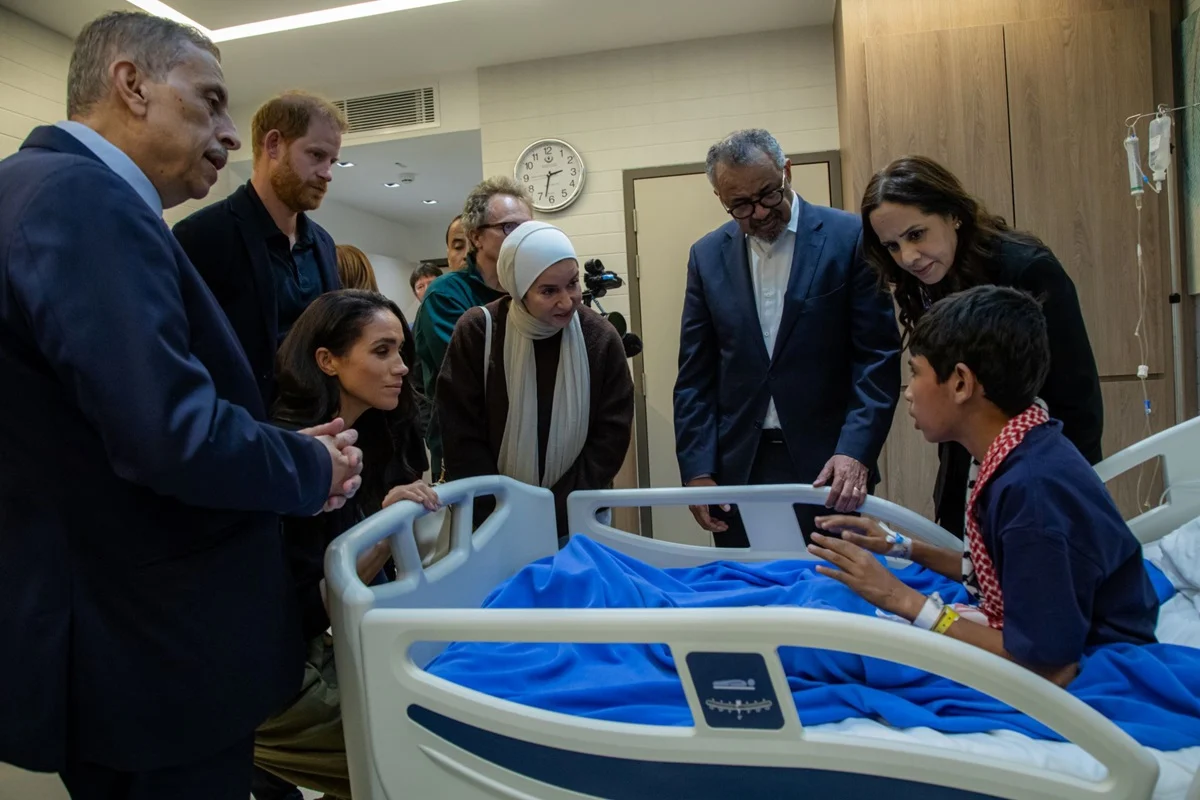
AMMAN, Jordan – Dr. Tedros Adhanom Ghebreyesus, the Director-General of the World Health Organization (WHO), concluded the first day of a pivotal two-day State visit to the Hashemite Kingdom of Jordan this week. The visit serves as a powerful testament to the enduring alliance between the United Nations’ global health body and Jordan, a nation that has consistently positioned itself as a beacon of stability, medical excellence, and humanitarian resolve in an increasingly volatile region.
The high-profile visit, marked by engagements with senior government officials and international humanitarian partners, focused on the tripartite pillars of universal health coverage (UHC), the integration of mental health services, and the scaling of humanitarian medical interventions for displaced populations.
A Diplomatic Milestone: The Royal Audience
The cornerstone of the visit was a high-level audience with His Majesty King Abdullah II. The meeting underscored Jordan’s leadership in placing health equity at the center of both national policy and global geopolitical discourse.
During the discussions, the two leaders addressed the urgent necessity of bolstering health systems capable of weathering systemic shocks. Central to the dialogue was the sustainability of emergency health responses in the Middle East. With Jordan acting as a critical medical corridor for the region, King Abdullah II and Dr. Tedros discussed the logistical and clinical challenges of treating patients evacuated from Gaza and the ongoing integration of millions of refugees into Jordan’s national health framework.
"I wish to express my appreciation to His Majesty King Abdullah II for his unwavering commitment to advancing universal health coverage," Dr. Tedros stated following the meeting. "I also extend my thanks to His Majesty and the people of Jordan for their solidarity and extraordinary generosity in providing health services to more than three million refugees, primarily from Gaza and Syria, who now call Jordan home."
The Medical Corridor: Life-Saving Diplomacy
A poignant moment of the visit occurred when Dr. Tedros visited a WHO-supported hospital facility dedicated to treating children evacuated from Gaza. The facility serves as a testament to the "Medical Corridor" initiative—a vital, specialized logistics channel championed by King Abdullah II to ensure that critically ill and injured children receive life-saving oncology, trauma, and surgical care that is otherwise unavailable in their home territories.
During the visit, Dr. Tedros met with families whose lives have been fractured by conflict but who are now finding respite through Jordan’s medical infrastructure. The Director-General noted that the facility is a microcosm of what international cooperation can achieve when political barriers to health are removed. He emphasized that the survival of these children is not merely a medical triumph but a moral imperative that requires sustained international financial and logistical support.
Strengthening the Health Architecture: High-Level Consultations
Following the royal audience, Dr. Tedros convened a strategic summit with health partners, donor nations, UN agencies, and global philanthropies. The objective was to recalibrate financing priorities for Jordan’s health sector.
The discussion centered on the "financial burden of hospitality," acknowledging that countries like Jordan—which host significant refugee populations—require robust, long-term international investment to prevent the degradation of public services. The meeting also addressed the scaling up of mental health services, a sector that is increasingly prioritized under Dr. Tedros’s "Special Initiative for Mental Health."
In parallel, a bilateral meeting with the Jordanian Minister of Health focused on the technical nuances of UHC. Jordan has been recognized globally for its primary health care approach, which has successfully integrated mental health diagnostics and treatments into routine primary care settings. This model serves as a prototype for other middle-income countries struggling to manage the dual pressures of chronic disease and the mental health fallout of regional instability.
A Collaborative Presence: The Role of Archewell Philanthropies
A notable aspect of the visit was the participation of the Duke and Duchess of Sussex, Prince Harry and Meghan. As founders of Archewell Philanthropies and long-standing advocates for global health equity, the couple joined the Director-General to highlight the intersection of humanitarian aid and mental health advocacy.
Archewell has been an instrumental partner in WHO initiatives, ranging from the equitable distribution of COVID-19 vaccines to the support of trauma-informed care programs. Prince Harry, who has long campaigned for the destigmatization of mental health, participated in discussions regarding the psychological toll of displacement on men, youth, and children.
"It is an honour to join the Director-General of the World Health Organization in Jordan, a country that is leading by example in compassion, resilience, and innovation," said Prince Harry. "Mental health is fundamental to recovery, dignity, and long-term peace. We are proud to stand with the WHO and partners around the world to ensure that psychological well-being is not treated as a luxury, but as a global priority."
Dr. Tedros echoed this sentiment, praising the couple for their ability to bring visibility and resources to some of the world’s most vulnerable populations. "Their collaboration is helping to advance the WHO’s mission to ensure health for all, proving that advocacy is as essential as medicine in the healing process," he remarked.
Implications for Regional Stability
The visit carries significant geopolitical weight. By highlighting Jordan’s role as a medical hub, the WHO is signaling to the international community that health infrastructure must be viewed as a component of regional security. When health systems in host countries like Jordan are bolstered, the entire region benefits from increased resilience against pandemics, trauma, and the long-term psychological impacts of war.
The financial discussions held during the visit are expected to yield new funding commitments from major donors, aimed at bridging the gap between humanitarian emergency response and the development of sustainable, long-term health infrastructure.
Looking Ahead: The Second Day Agenda
As the visit progresses into its second day, the itinerary reflects a focus on specialized care and community-based health. Dr. Tedros is scheduled to visit the National Center for Rehabilitation of Addicts, a facility that underscores the shift toward integrated medical, psychological, and social services.
Furthermore, the Director-General will engage with the Jordanian Hashemite Fund for Human Development (JOHUD) to discuss the empowerment of women as drivers of health within their communities. The visit will conclude with a tour of the King Hussein Cancer Center, an institution that stands as a regional leader in oncology research and care. These final engagements are intended to reinforce Jordan’s status as a critical node in the global health network, capable of fostering innovation even under the immense pressure of humanitarian influxes.
Conclusion: A Model of Resilience
The ongoing state visit by Dr. Tedros Adhanom Ghebreyesus is more than a diplomatic courtesy; it is a strategic alignment of global health priorities with regional reality. Jordan’s willingness to shoulder the responsibility of hosting millions of refugees while simultaneously innovating its own healthcare delivery system serves as a powerful blueprint.
As the international community watches, the WHO’s message remains clear: the health of one is intrinsically linked to the health of all. In the halls of Amman’s hospitals and the boardrooms of international aid agencies, the work of rebuilding, healing, and protecting the most vulnerable continues—supported by a partnership that is as essential as it is enduring.
Reported by Paul Garwood, Communications Officer, World Health Organization.


