

 Azzam Bilal Chamdy
 Neng Nana
 Nana Muazin
 Dwi Wanna
 Raul Delapena Setiawan
 Rifan Muazin
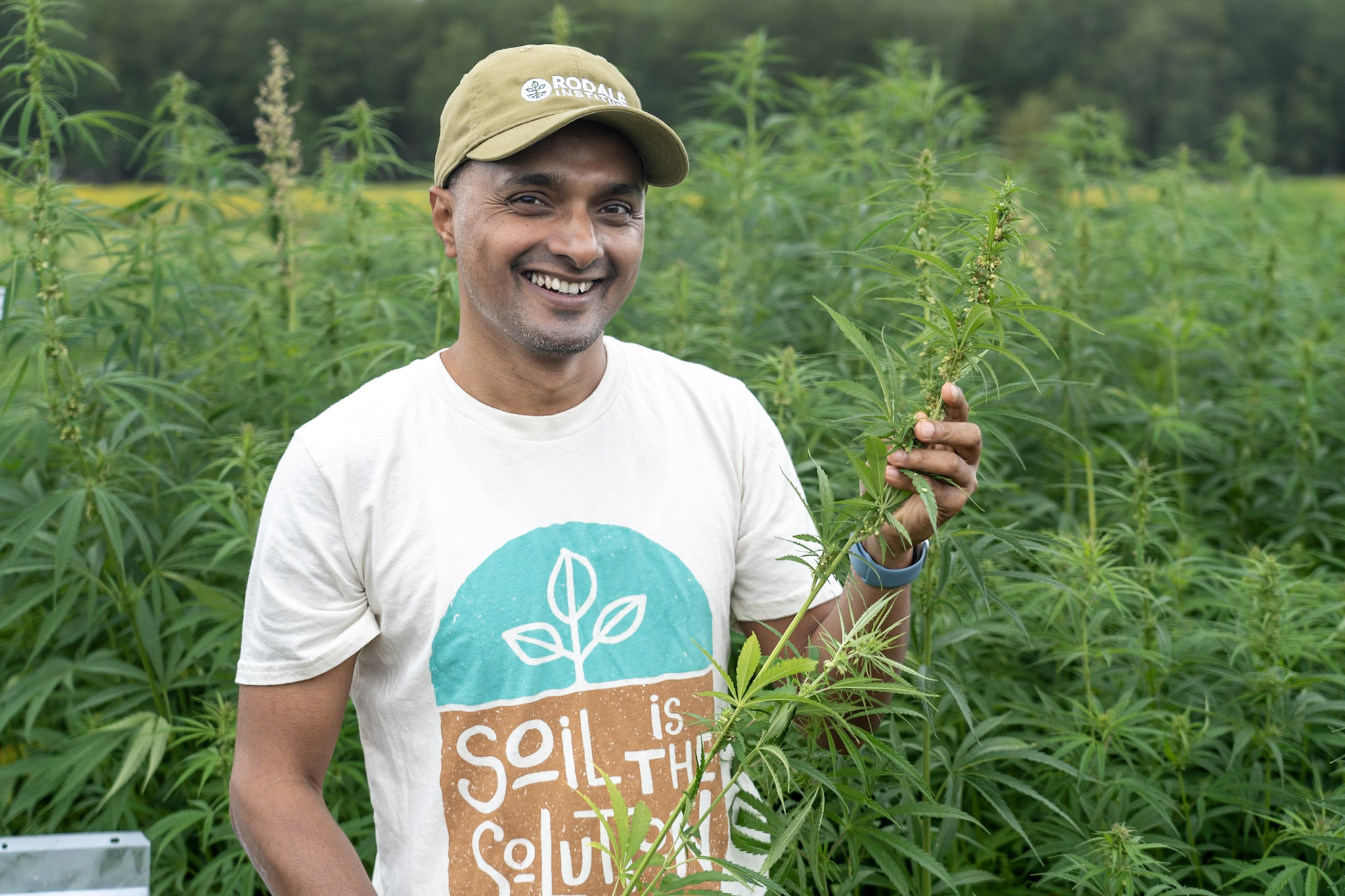
As global industries pivot toward sustainability, the demand for biobased textiles and renewable materials has reached a fever pitch. In Pennsylvania, a state with a rich agricultural heritage, farmers are increasingly looking to industrial hemp—not for its cannabinoid profile, but for its robust, versatile fiber. However, the path to a high-yielding, high-quality fiber crop is fraught with agronomic complexities. Recognizing that the success of this specialty crop hinges on decisions made long before the first stalk is harvested, the Rodale Institute has launched a pivotal research initiative aimed at perfecting the "soil-to-fiber" equation.
Main Facts: The Foundations of Fiber Success
The core of the challenge facing Pennsylvania hemp growers lies in the delicate balance of early-season conditions. While hemp is a hardy plant, its performance in the cooler, higher-elevation climates characteristic of much of the Northeast is dictated by soil temperature, moisture retention, and the physical state of the seedbed.
Rodale Institute’s research, funded by the Commonwealth Specialty Crop Block Grant Program through the Pennsylvania Department of Agriculture, focuses on two critical levers: the strategic use of winter cover crops and the optimization of planting windows. By comparing cereal rye, a cereal rye-hairy vetch mixture, and conventional tilled fallow systems, researchers are aiming to provide a roadmap for farmers to avoid the common pitfalls of poor seedling emergence and weak fiber development.
The ultimate goal is to move away from input-heavy, synthetic-dependent conventional farming toward regenerative systems that leverage soil biology to produce superior fiber quality.
Chronology of a Research Initiative
The current project, which officially began its field phase in 2026, is the culmination of years of foundational work conducted by the Rodale Institute. To understand the trajectory of this study, one must look at the timeline of innovation in the Northeast:
- 2023–2024 (Foundational Research): Rodale Institute researchers spent these years establishing the baseline for industrial hemp, investigating variables ranging from nitrogen management and row spacing to variety performance and mechanical fiber quality testing.
- 2025 (Scientific Recognition): The body of work conducted in previous years gained national attention through a feature in CSA News, which highlighted that early-season soil conditions—rather than simple nutrient application—are the primary drivers of hemp outcomes.
- 2026 (Published Evidence): A landmark study published in Crops & Soils solidified the hypothesis that no-till systems incorporating cover crops and minimal nitrogen inputs consistently outperformed conventionally tilled, heavily fertilized plots. This finding served as the catalyst for the current, more expansive project.
- 2026–2027 (The Current Trial): The present project is now underway at the Rodale Institute’s Main Campus in Kutztown, Pennsylvania. This phase focuses on the interaction between cover crop selection (cereal rye, rye-vetch mix, or fallow) and planting dates (mid-May vs. early-June).
- 2027 and Beyond (Dissemination): The project is scheduled to conclude with an extensive outreach campaign, translating years of complex data into field-ready recommendations for the Pennsylvania agricultural community.
Supporting Data: The Science of Soil and Seed
The technical challenge of fiber hemp in Pennsylvania is one of synchronization. If a grower plants too early into cold, wet soil, the seeds may rot or struggle with uneven emergence. If they plant too late, they risk missing the optimal window for canopy closure, which is essential for suppressing weeds and maximizing biomass production.
The Cover Crop Dilemma
Cover crops are a double-edged sword. Cereal rye is an excellent tool for suppressing weeds and protecting the soil from winter erosion, but its dense residue can act as a physical barrier. If not terminated at the correct time, the rye can "smother" delicate hemp seedlings. Conversely, hairy vetch, a nitrogen-fixing legume, offers biological fertilization but can be temperamental in Pennsylvania’s cold, heavy soils.
The current Rodale trials are specifically testing whether a mixture of cereal rye and hairy vetch can offer a synergistic benefit: the structural stability and weed suppression of the rye combined with the nitrogen-fixing capabilities of the vetch.
Metrics of Success
To ensure the data is robust, the research team is employing a multi-faceted monitoring approach. Over the course of two growing seasons, the researchers are tracking:
- Seedling Vigor: Monitoring emergence rates and early growth patterns.
- Plant Architecture: Measuring plant height and overall biomass accumulation, which correlates directly to fiber yield.
- Soil Health Indicators: This includes a comprehensive assessment of microbial activity, organic matter content, water-stable aggregates (which prevent erosion), and infiltration rates.
- Fiber Quality: Ultimately, the fiber is harvested and tested for tensile strength and processing quality, ensuring that the "regenerative" approach meets the stringent demands of the textile industry.
Official Perspectives and Implications
The implications of this research extend far beyond the borders of the Rodale Institute. For the Pennsylvania Department of Agriculture, this project represents a strategic investment in the state’s agricultural diversification. As traditional commodity crops face market volatility, specialty crops like fiber hemp offer a path to economic resilience for small-to-mid-sized family farms.
Bridging the Gap Between Science and Practice
The project’s principal investigators have emphasized that the "Bottom Line" is accessibility. "We aren’t just producing a peer-reviewed paper," a lead researcher noted during a recent briefing. "We are producing a manual for the grower."
This commitment to outreach is evidenced by the project’s design. By integrating field demonstrations at the Kutztown campus, online seminars, and grower-focused fact sheets, the team aims to reach at least 400 stakeholders across the state. This bottom-up approach is intended to build confidence among farmers who may be hesitant to shift away from conventional, high-input agricultural practices.
The Economic and Environmental Synergy
The shift toward no-till, cover-crop-integrated hemp production has dual benefits:
- Economic: By reducing the reliance on synthetic nitrogen fertilizers—a major overhead cost for modern farmers—growers can improve their profit margins while simultaneously achieving higher quality fiber that commands a premium price in the sustainable textile market.
- Environmental: Improved soil structure, carbon sequestration through cover cropping, and reduced nutrient runoff align with Pennsylvania’s broader goals of watershed protection and climate-smart agriculture.
The Path Forward: A Regenerative Future
As the field trials at Kutztown continue, the data collected will provide the first site-specific, science-based guidance for fiber hemp in the Northeastern U.S. The project underscores a fundamental shift in agricultural philosophy: the move from "controlling" the environment to "managing" the ecosystem.
For the Pennsylvania farmer, the findings of this project represent more than just better crop yields. They represent a transition toward a more sustainable, independent, and prosperous future. As the global textile industry continues to search for alternatives to synthetic and high-water-usage fibers, Pennsylvania is positioning itself to become a key supplier of high-quality, regeneratively grown hemp fiber.
Through the diligent work of the Rodale Institute and the support of state stakeholders, the future of fiber hemp in Pennsylvania looks not only promising but profoundly practical. By mastering the timing of the planting and the complexity of the soil, Pennsylvania farmers are ensuring that their legacy of land stewardship continues for generations to come.
This project is funded by the Commonwealth Specialty Crop Block Grant Program/ Pennsylvania Department of Agriculture. For further information on field days, upcoming seminars, or to view the latest research bulletins, interested parties are encouraged to visit the official Rodale Institute online portal or contact their local agricultural extension office.



 Siti Muinah
