Evan Lee Salim

 Asro
 Asep Darmawan

 Layla Zulfa
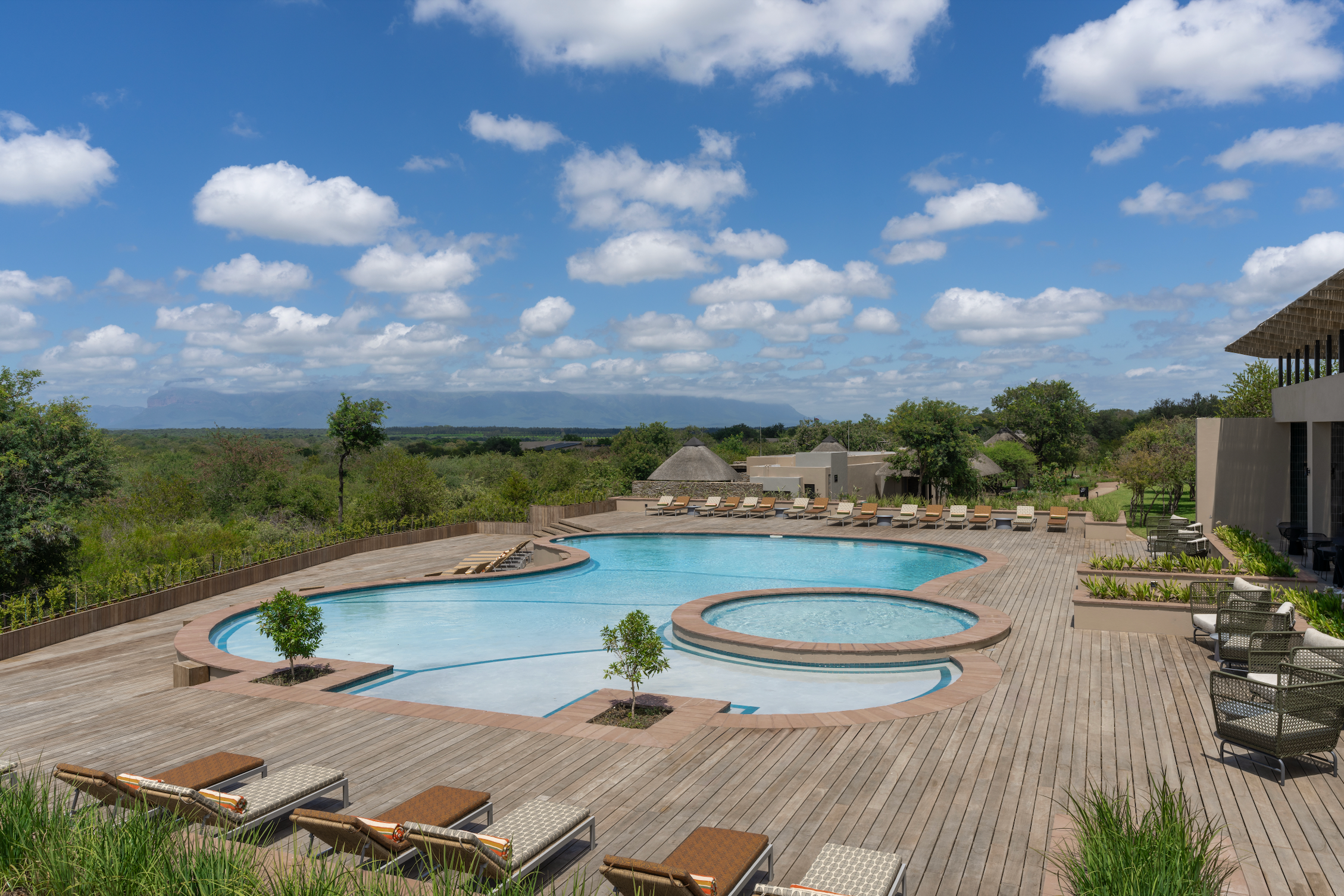
In a landmark move for the African hospitality sector, Radisson Hotel Group has officially unveiled its first net-zero property on the continent. The 138-room Radisson Safari Hoedspruit, situated in the ecologically sensitive landscape near South Africa’s iconic Kruger National Park, represents more than just a new hotel opening; it is a strategic experiment in the financial viability of sustainability.
Unlike previous iterations of Radisson’s net-zero initiatives, where the group absorbed the costs as the leaseholder, the Hoedspruit project marks a departure in investment philosophy. Here, the property owner has stepped forward to fund the transition, betting on the growing consumer demand for "guilt-free" luxury. The owner’s expectation is clear: the significant upfront capital expenditure required for carbon neutrality will be recouped through premium room rates and increased occupancy from eco-conscious travelers.
The Genesis of the Verified Net Zero Program
The Radisson Safari Hoedspruit is the 10th property to achieve the group’s "Verified Net Zero" status. This certification is not a self-congratulatory marketing label but a rigorous process independently audited by the global testing and certification organization TÜV Rheinland.
The criteria for the certification are stringent. To qualify, a property must:
- Decarbonize operations: Transition to full electrification, eliminating the reliance on fossil fuels for heating and cooking.
- Renewable Sourcing: Utilize 100% renewable energy, either through on-site generation or certified power purchase agreements (PPAs).
- Supply Chain Management: Actively work to reduce Scope 3 emissions, which encompass the entire value chain of the hotel’s procurement.
- Carbon Offsetting: For the residual emissions that cannot be eliminated through technical means, the hotel must invest in high-quality, verified carbon removal credits.
This initiative is the cornerstone of Radisson’s roadmap to reach 100 Verified Net Zero hotels by 2030, a goal that represents a massive undertaking in retrofitting and new-build standards across its global portfolio.
Chronology: From Concept to Carbon Neutrality
The journey to the opening of the Radisson Safari Hoedspruit did not happen in a vacuum. It is the culmination of years of internal policy shifts and external pressures within the tourism industry.
2020-2022: The Foundation Phase
During this period, Radisson established its internal sustainability framework, moving beyond standard ESG reporting to develop the specific metrics that would eventually become the "Verified Net Zero" standard. The group began by auditing its leased portfolio in Europe, identifying where electrification could be implemented with the least amount of operational friction.
2023: The Proof of Concept
Radisson announced its first wave of net-zero hotels. Initially, these were exclusively properties where Radisson held the lease, allowing the group full control over energy retrofits and operational protocols. By keeping these projects "on its own books," the company was able to master the technical challenges of carbon accounting without needing to convince third-party owners of the return on investment (ROI).
2024: Scaling to Managed Properties
Recognizing that 100 net-zero hotels by 2030 could not be achieved through leased properties alone, Radisson began courting its asset owners. The discussions centered on the "Green Premium"—the concept that the modern traveler is willing to pay a premium for a stay that aligns with their environmental values.
October 2026: The South African Milestone
The opening of the Radisson Safari Hoedspruit in October 2026 serves as the definitive test case for the program. It is one of the first managed properties to join the program, proving that Radisson’s sustainability model can be successfully exported to the franchise and management model, provided the owner is aligned with the long-term vision.
Supporting Data: The Economics of Sustainability
The hospitality industry has historically been wary of the high capital costs associated with "green" building standards. However, recent data suggests that the market is shifting.
The Cost of Entry
According to industry analysts, the capital expenditure (CapEx) required to build a net-zero hotel in a remote location like Hoedspruit—which requires significant investment in solar arrays and battery storage to ensure reliability—can be 15% to 20% higher than a traditional build.
The Revenue Premium
However, market research from Skift and other industry observers indicates that luxury and upscale travelers are increasingly filtering their hotel searches based on sustainability credentials. Properties with verified carbon-neutral status are seeing:
- Higher RevPAR (Revenue Per Available Room): A consistent 5-8% premium in average daily rates compared to non-certified competitors in the same region.
- Increased Loyalty: Higher repeat booking rates among corporate travelers whose companies have their own internal carbon-reduction targets.
- Operational Savings: While the upfront cost is high, the long-term volatility of fossil fuel prices is mitigated by the reliance on renewable energy, leading to more predictable utility costs over a 10-year horizon.
Official Responses and Corporate Strategy
The transition from a leased-model sustainability strategy to a managed-model strategy is a significant pivot.
"We are moving from a phase of demonstration to a phase of implementation," noted a Radisson executive during the unveiling. "The Hoedspruit property proves that our owners see the value in sustainability. They are not doing this purely for altruistic reasons; they are doing this because they understand that the future of hospitality is net-zero."
The partnership with TÜV Rheinland is critical here. By bringing in a third-party validator, Radisson is attempting to insulate itself from accusations of "greenwashing." The rigorous auditing process ensures that every carbon removal credit purchased is legitimate and that the renewable energy claims are backed by traceable certificates.
However, the path forward is not without hurdles. The group acknowledges that expanding this to franchised properties—where the brand has less direct control over daily operations—will be the "final frontier." Radisson plans to roll out specialized training modules for property managers starting in early 2027 to ensure that operational efficiency matches the architectural ambition.
The Broader Implications for African Hospitality
The Radisson Safari Hoedspruit project has ripple effects far beyond the borders of South Africa.
1. Setting a Regional Benchmark
Africa has often been perceived as a market where infrastructure challenges make sustainability difficult. By successfully deploying a net-zero property in a remote area, Radisson is challenging the narrative that green hospitality is a luxury reserved for European capitals or North American urban centers.
2. The Investor Shift
For investors in African hotel real estate, this project serves as a signal. It demonstrates that the "Green Premium" is not just a theoretical concept but a tangible revenue driver. As institutional investors and sovereign wealth funds increasingly mandate ESG compliance, properties like the Radisson Safari will become more attractive assets for acquisition and financing.
3. The Supply Chain Opportunity
To maintain its status, the hotel must ensure that its suppliers—from the local farmers providing food to the logistics companies handling waste—also adhere to strict emissions protocols. This is likely to catalyze a "green ripple" through the local economy, as suppliers upgrade their own practices to remain in the hotel’s procurement ecosystem.
4. Regulatory Pressures
As governments across Africa begin to align with international climate accords, the hotel industry will eventually face mandatory emissions reporting. By adopting the Verified Net Zero standard now, Radisson is essentially "future-proofing" its assets against the inevitable regulatory tightening that will follow in the next decade.
Challenges and Future Outlook
Despite the optimism, significant challenges remain. The reliance on carbon removal credits is a point of contention among environmentalists who argue that "removal" should be the last resort after "reduction." Critics point out that if a hotel cannot physically reduce its emissions, it should not rely on offsets to maintain a net-zero label.
Radisson’s response has been to emphasize that its program is "Verified Net Zero," meaning it prioritizes electrification and efficiency first. The use of carbon credits is restricted to the "residual" emissions that are currently unavoidable given the limitations of technology in the hospitality sector.
As Radisson pushes toward its 2030 goal, the company faces a logistical race. Retrofitting existing hotels is significantly more expensive and complex than building new ones from the ground up. The success of the Hoedspruit project provides the blueprint for this scale-up, but the coming years will require a level of capital investment that will test the patience of even the most climate-conscious investors.
Conclusion
The unveiling of the Radisson Safari Hoedspruit marks a turning point in the global hospitality sector. By successfully shifting the burden of sustainability from the brand to the property owner, Radisson has unlocked a scalable model for a net-zero future.
Whether this momentum can be maintained as the program expands to hundreds of disparate properties remains to be seen. However, one thing is clear: the hospitality industry has crossed the rubicon. Sustainability is no longer a peripheral marketing concern; it is now central to the asset value, operational strategy, and long-term viability of the world’s leading hotel brands. In the quiet plains of South Africa, Radisson has laid the groundwork for a new, cleaner, and ultimately more profitable future for the travel industry.

 Nana Muazin

 Laily UPN