Asep Darmawan

 Layla Zulfa

 Jia Lissa
 Raul Delapena Setiawan

 Asro
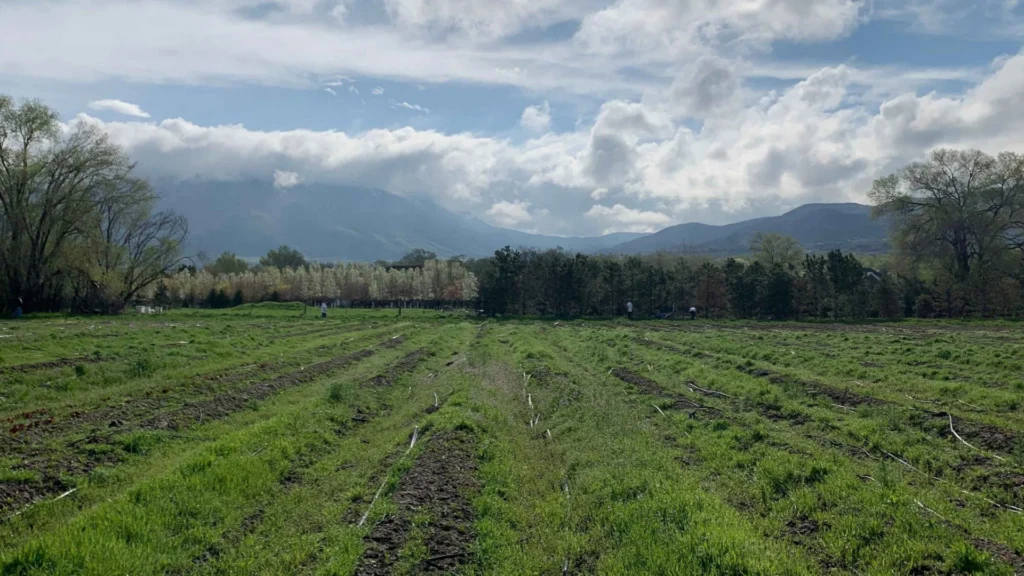
When Albert Betoudji’s family traveled from Chad to visit him in Utah, they were met with a sight that defied the arid, mountainous landscape of the American West: a lush, thriving plot of land brimming with maize, squash, and okra. For his mother and relatives, it was more than just a garden; it was a living bridge to the home they had left behind.
“My mom was very, very happy,” Betoudji recalls, his voice reflecting the deep emotional weight of the moment. “They showed me how to farm at a young age, and I continue doing the same thing here in the United States.”
Betoudji’s journey from the agricultural heartlands of Chad to the community gardens of Salt Lake County is a testament to the power of human endurance, the preservation of cultural heritage, and the transformative potential of urban agriculture. As part of the International Rescue Committee’s (IRC) "New Roots" program, Betoudji has not only reclaimed his ancestral skills but has helped foster a diverse, resilient network of refugee and immigrant farmers who are redefining what it means to put down roots in a new land.
A Legacy Planted in Childhood
Long before the geopolitical shifts that would eventually displace him, Betoudji’s life was defined by the rhythm of the seasons. Growing up in Chad, he was introduced to the soil at the age of five by his grandparents. In a culture where agricultural literacy was a cornerstone of survival and community, he learned the intricate art of timing—understanding how the climate dictated the planting cycles and how to read the earth to predict a bountiful harvest.
Throughout his school years, those lessons remained his touchstone. During every academic break, he returned to the fields, working alongside his parents and absorbing the ancestral wisdom that would later become his salvation. This early immersion provided him with a profound sense of identity, one that would sustain him through decades of instability and displacement.
The Path of Exile: From Chad to the American West
The trajectory of Betoudji’s life was irrevocably altered in 1979 when the onset of civil war in Chad forced him to flee his home. What followed was a long, arduous journey through West Africa in search of safety and stability. He eventually found sanctuary in Burkina Faso, a period he describes as one of intense intellectual and professional growth.
During his time in Burkina Faso, Betoudji focused on education, eventually earning his high school diploma and going on to study management accounting at the University of Ouagadougou. He built a career as an accounting instructor, applying the same precision he once used to calculate planting seasons to the world of finance.
In 1999, his journey led him to the United States. Arriving as a refugee, Betoudji faced the daunting task of navigating an entirely new society. For years, he dedicated his time to helping other refugee families settle in Utah, acting as a guide through the complexities of American life—from mastering public transportation to adapting to the standard functionalities of American kitchens and domestic spaces. However, the pull of the earth remained constant. By 2005, he returned to his roots, starting a small, modest garden in his backyard with corn, tomatoes, and peppers.
The Birth of "New Roots": A Framework for Sustainability
Betoudji’s return to farming coincided with the early stages of a movement in Salt Lake County that would eventually evolve into the International Rescue Committee’s "New Roots" program. This initiative was designed to address the specific needs of refugees and immigrants who often found themselves disconnected from their agricultural traditions upon arrival in the United States.
New Roots provides more than just access to land; it offers technical support, resource sharing, and a pathway to economic independence. For farmers like Betoudji, the program provided the infrastructure to scale up from a backyard hobby to a viable agricultural enterprise.
As he expanded his operations, Betoudji began experimenting with crops that were central to his heritage but difficult to grow in Utah’s unique climate. He successfully cultivated okra and roselle—a variety of hibiscus native to Africa. While the cooler high-desert climate of Utah prevents the roselle from producing fruit, Betoudji has mastered the cultivation of its edible leaves, a practice that mirrors the adaptability required of all refugee populations: finding ways to nourish oneself even when the environment changes.
Economic Integration and Storytelling
Beyond the harvest, the New Roots program emphasizes the commercial viability of refugee-grown produce. With the support of IRC staff, Betoudji began selling his crops at local farmers’ markets and supplying produce to local restaurants.
However, the transaction at these markets is never merely about commerce. For Betoudji, each sale is an opportunity for storytelling. “We sell food while sharing the stories behind it—where they come from, how they arrived in the United States, and how to eat the crops they grow,” he explains.
This model of "social enterprise farming" provides several key benefits:
- Cultural Preservation: It ensures that foodways—the culinary traditions associated with specific cultures—are passed down to the next generation and introduced to the broader American public.
- Economic Stability: By diversifying their sales channels, refugee farmers can supplement their income while gaining experience in the American business landscape.
- Community Building: The farmers’ market becomes a neutral, communal space where the barrier between the "newcomer" and the "local" is bridged through the universal language of food.
The Implications: Farming as Healing
While the financial returns of small-scale farming can be modest, Betoudji maintains that the true value of the work is measured in health and human connection. He speaks candidly about the physical and mental toll of the refugee experience and how returning to the soil served as a form of therapy.
“Working at the farm makes me happy, because it is a physical activity; you use all your body,” Betoudji says. He notes that the practice engages the mind as much as the limbs, providing a meditative space that helped him navigate the trauma of displacement.
Furthermore, the farm has become a microcosm of the global community. In the rows of the New Roots gardens, Betoudji works alongside people from diverse backgrounds, all of whom have left their homes to start over. This shared experience creates a unique, supportive social fabric. “I came to Utah as a refugee, and I met other refugee families with different backgrounds, different cultures, but we farm together,” he observes.
A Future Sown in Community
The philosophy behind "New Roots" is deeply symbolic. It recognizes that when people are forced to leave their homes, they carry their knowledge, traditions, and agricultural heritage with them. When those seeds are planted in new soil, they do not merely grow food; they grow community, resilience, and a new identity.
Betoudji’s story is a reminder that the American food system is strengthened by the diverse experiences of its farmers. As the United States continues to grapple with issues of food security and the need for more sustainable agricultural practices, the model established by programs like New Roots offers a blueprint for the future. By supporting independent, small-scale family farmers—many of whom bring centuries of traditional knowledge from abroad—the country can foster a more equitable and connected food system.
As for Betoudji, he remains committed to the work. “We come from different backgrounds, but we farm together in the same place, and we grow food for family and for community,” he says. For him, the garden is a permanent testament to the fact that while one may lose a home, the act of nurturing the earth can help build a new one, one seed at a time.
This article is part of Food Tank’s ongoing Farmer Friday series, produced in partnership with Niman Ranch, a champion for independent U.S. family farmers. The series highlights the stories of farmers working toward a more sustainable, equitable food system. Niman Ranch partners with over 500 small-scale U.S. family farmers and is committed to preserving rural agricultural communities and their way of life. For more information on these stories, visit Food Tank’s official channels.


 Nila Kartika Wati