

 Nana Wu

 Dwi Wanna

 Suro Senen

 Evan Lee Salim

 Laily UPN
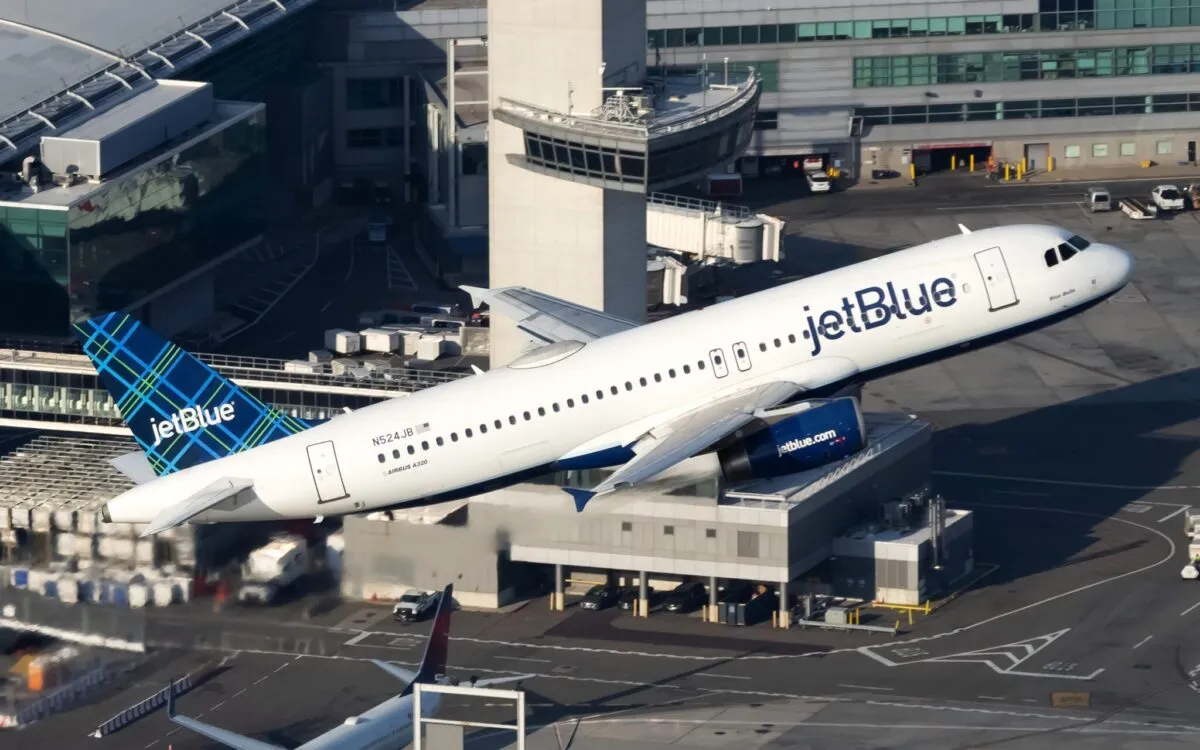
In a move that caught Wall Street by surprise, JetBlue Airways opted to pull forward its third-quarter earnings report, releasing the data late Monday afternoon rather than the originally scheduled Tuesday morning slot. The decision came against a backdrop of intense market anxiety, as speculation regarding a potential Chapter 11 bankruptcy filing had sent the airline’s stock into a downward spiral, erasing more than 20% of its value over the preceding week.
While the carrier reported a wider-than-expected third-quarter loss and issued a downward revision for its 2026 financial outlook, the immediate market reaction was unexpectedly positive. Shares surged more than 10% in after-hours trading, suggesting that investors found solace in management’s reaffirmed roadmap toward profitability. The company remains steadfast in its "JetForward" strategy, aiming for sustained operating profitability by 2027 and a target of at least $1 in earnings per share (EPS) by 2028.
The Chronology of a Crisis: From Speculation to Strategy
The recent volatility surrounding JetBlue is the culmination of a difficult period for the airline, which has struggled to find its footing in a post-pandemic travel landscape defined by shifting consumer demand, rising labor costs, and operational constraints.
The Week of Doubt
The week leading up to Monday’s report was defined by rumors. Financial analysts and market observers began questioning the carrier’s liquidity position, drawing parallels to other distressed airlines that have navigated bankruptcy proceedings. This chatter triggered a sell-off that dragged JetBlue’s share price down to $2.37 by the close of Monday’s session. The intensity of the speculation reached a fever pitch, forcing the airline to accelerate its reporting schedule to control the narrative. By moving the release forward, JetBlue sought to provide transparency before the opening bell, effectively "ripping the bandage off" to address the rumors head-on.
The Monday Pivot
When the results were finally released, the company did not shy away from the negative realities of its current fiscal health. The third-quarter loss deepened, reflecting the heavy lifting required to restructure the business. However, the tone of the communication was decidedly forward-looking. By emphasizing the "meaningful step-down" in unit costs—a key metric for airline efficiency—JetBlue provided a tangible sign of progress that the market had been desperate to see.
Supporting Data: Dissecting the Financials
To understand why JetBlue’s stock rebounded despite a "bad news" report, one must look at the granular details of their financial trajectory. The airline is currently balancing short-term pain against long-term structural adjustments.
Third-Quarter Performance Metrics
JetBlue’s third-quarter results underscore the challenges of the current environment. The wider loss reported reflects not just operational inefficiencies, but also the costs associated with the "JetForward" initiative—a comprehensive program designed to reorient the airline’s fleet, network, and revenue management.
- Unit Costs (CASM-ex): Excluding fuel, the airline reported that it is finally seeing the results of its cost-cutting measures. Management highlighted that the fourth quarter would see a significant reduction in these costs, a critical component of returning to profitability.
- Liquidity and Debt: While the bankruptcy fears were largely unfounded based on the company’s current cash reserves, the concern stems from the debt load incurred during the pandemic and the failed attempt to acquire Spirit Airlines. JetBlue is currently in the process of de-leveraging, a slow and painful process that requires disciplined capital allocation.
The 2026 Outlook Revision
The revision of the 2026 outlook is a concession to the reality that the airline’s recovery path is not linear. Economic headwinds, including higher labor rates following new pilot contracts and the lingering impact of Pratt & Whitney engine inspections, have created a drag on the company’s ability to scale. By adjusting these targets downward, management is essentially "resetting the clock" to ensure that the goals are realistic and achievable.
The "JetForward" Strategy: Official Responses and Vision
The leadership at JetBlue has consistently pointed to the "JetForward" initiative as the primary engine of their recovery. The strategy focuses on three pillars: revenue growth, cost discipline, and fleet optimization.
Management’s Stance
In an official statement accompanying the results, the executive team sought to reassure stakeholders that the company is not in a state of emergency. "Together with continued JetForward execution, this reinforces our confidence in achieving sustained operating profitability in 2027," the company stated.
The focus is clearly on efficiency. JetBlue is transitioning away from its previous aggressive growth posture—which defined much of the post-2020 era—and toward a more disciplined, high-margin model. This involves pruning unprofitable routes, optimizing the use of its Airbus fleet, and focusing on premium offerings like "Mint," which remains one of the most successful product differentiators in the domestic market.
Investor Sentiment and the "Short Squeeze"
The 10% jump in after-hours trading can be partly attributed to short-covering. Many investors who had bet against the company, anticipating a bankruptcy filing, were forced to buy back shares to close their positions once it became clear that the company had a clear, if difficult, path to 2027. This technical market movement, combined with the relief that the company’s cash position remains stable, provided the floor that JetBlue needed to stop the slide.
Implications for the Airline Industry
JetBlue’s current struggles are not unique; they are symptomatic of a broader consolidation and correction phase within the U.S. aviation sector.
The Burden of Higher Costs
The entire industry is grappling with a new cost baseline. Post-pandemic labor agreements have significantly increased the floor for operating expenses. Airlines that cannot offset these costs with premium pricing or increased efficiency are finding themselves in a precarious position. JetBlue’s struggle is a canary in the coal mine for other mid-tier carriers that lack the massive network scale of the "Big Four" (American, Delta, United, and Southwest).
Strategic Network Realignment
The industry is moving toward a model where airlines are more selective about where they fly. JetBlue’s move to cut its 2026 outlook reflects a broader trend of "pruning the network." By exiting markets that do not offer sufficient yield, the airline is attempting to improve its overall load factors and revenue per available seat mile (RASM). This, however, leaves a gap in the competitive landscape, potentially allowing regional carriers or ultra-low-cost competitors to swoop in, creating a dynamic of shifting market share.
The "Profitability at All Costs" Era
The era of "growth at any price" is over. Investors are now demanding that airlines prove they can generate free cash flow in an environment of high interest rates and volatile fuel prices. JetBlue’s pledge to reach $1 EPS by 2028 is a direct response to this shift in investor sentiment. The company is effectively saying: "We are no longer trying to be the biggest; we are trying to be the most efficient."
Conclusion: A Long Runway Ahead
The path forward for JetBlue is fraught with execution risk. While the stock market has offered a temporary vote of confidence, the underlying business remains in a fragile state. The next two years will be defined by the company’s ability to execute its cost-reduction targets while maintaining a customer experience that justifies its premium positioning.
The bankruptcy rumors, while hyperbolic, served a purpose: they forced the company to clearly communicate its survival plan to the public. By moving up its earnings report and setting clear, albeit sober, expectations for 2026, JetBlue has bought itself time. Whether that time is enough to successfully pivot the business model remains to be seen. However, for now, the airline has managed to pull itself back from the brink of a confidence crisis, providing a roadmap that at least points in the direction of stability.
As the industry watches, JetBlue will serve as a bellwether for whether a mid-sized, premium-focused carrier can survive the structural pressures of the modern aviation economy. The road to 2027 will be paved with operational challenges, but for the first time in months, the airline appears to have a coherent, focused, and—crucially—realistic plan to navigate the turbulence.

 Lina Irawan