
 Laily UPN
 Evan Lee Salim
 Asro
Asro
 Suro Senen
 Nila Kartika Wati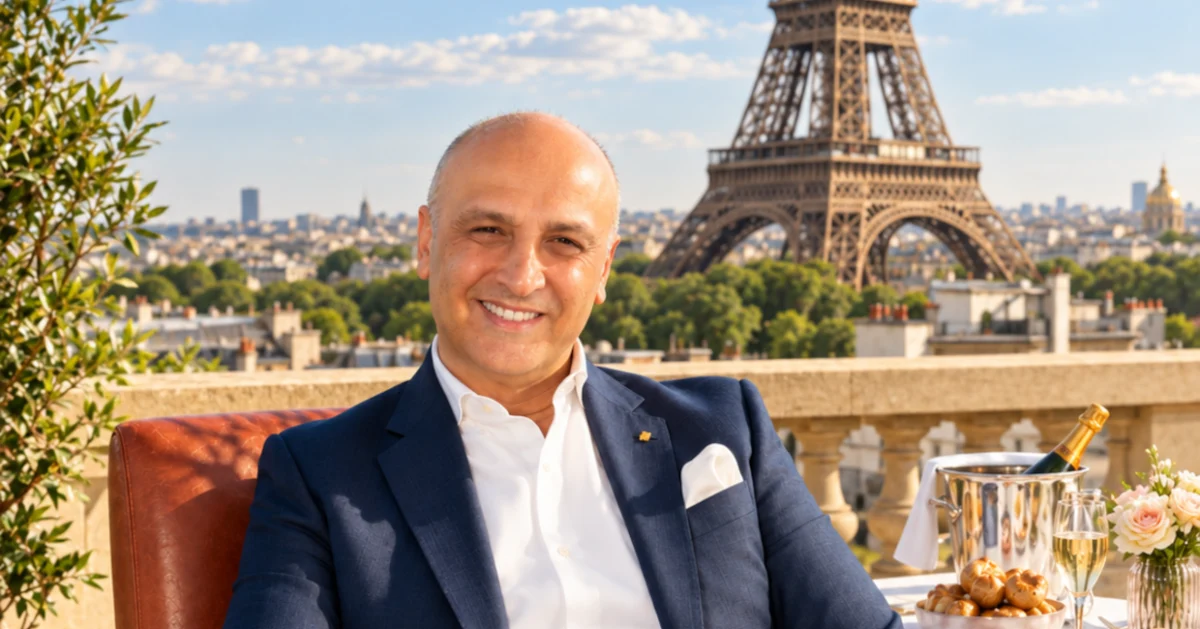
In a significant leadership realignment aimed at bolstering its presence within the high-stakes European luxury hospitality market, the Shangri-La Group has officially announced the appointment of industry veteran Hakan Ozel as Vice President, Operations. This strategic move places three of the group’s most prestigious and geographically iconic properties under his direct stewardship: Shangri-La The Shard, London; Shangri-La Paris; and Shangri-La Bosphorus, Istanbul.
As the global travel sector navigates a complex post-pandemic recovery characterized by shifting consumer demands and a heightened focus on experiential luxury, Ozel’s appointment signals a concerted effort by the Hong Kong-based hospitality giant to harmonize its operations across the EMEA (Europe, Middle East, and Africa) region. By consolidating the leadership of its flagship European assets, the Group intends to leverage Ozel’s extensive expertise in brand positioning and service excellence to drive both operational efficiency and guest satisfaction.
The Core Facts: A Strategic Pivot in European Operations
The appointment of Hakan Ozel is not merely an internal promotion; it is a calculated structural shift. By designating a single Vice President to oversee London, Paris, and Istanbul—three of the world’s most competitive hospitality markets—Shangri-La is signaling a unified vision for its European portfolio.
The properties under his purview represent the pinnacle of the Group’s international footprint:
- Shangri-La The Shard, London: Situated within the iconic Shard building, this hotel serves as a bastion of modern luxury with unparalleled views of the British capital.
- Shangri-La Paris: Housed in the former residence of Prince Roland Bonaparte, this property embodies the historical grandeur of the French capital.
- Shangri-La Bosphorus, Istanbul: A strategic bridge between the East and West, situated along the historic Bosphorus strait.
Ozel’s mandate is clear: to ensure that the "Asian hospitality" ethos—the cornerstone of the Shangri-La brand—is not only maintained but elevated to meet the bespoke expectations of the modern, ultra-high-net-worth European traveler.
A Career Defined: Chronology of a Hospitality Leader
Hakan Ozel’s ascent to this pivotal role is the result of a deliberate, 28-year trajectory through the global luxury hotel landscape. His career path demonstrates a consistent ability to manage complex operations across vastly different cultural and economic climates.
Early Foundations and International Exposure
Ozel’s career began over two decades ago with the Shangri-La Group. His early tenure provided him with a foundational understanding of the brand’s specific service DNA. By rotating through various senior leadership roles across Asia and the Middle East, Ozel developed a cross-cultural intelligence that is rare in the hospitality industry. His ability to adapt the Group’s core values to local markets—ensuring consistency while respecting regional nuance—became his professional hallmark.
The Middle Eastern Tenure: A Proving Ground
Before his move to Europe, Ozel served as Vice President, Operations for the Middle East and General Manager of the Shangri-La Dubai. During this period, he was credited with a significant turnaround in the hotel’s market positioning. By streamlining operations and sharpening the focus on service quality, Ozel transformed the Dubai property into a benchmark for performance within the Group’s regional network. This period was instrumental in demonstrating his capability to handle large-scale operations in a highly saturated market.
Transition to the European Landscape
His transition to the European theatre marks the culmination of this two-decade journey. The move from the dynamic, rapid-growth environment of the Middle East to the heritage-steeped markets of London, Paris, and Istanbul represents a new chapter that requires a shift from rapid expansion-style leadership to a model of heritage management and experiential luxury.
Supporting Data: The Complexity of the European Luxury Market
The appointment of Ozel comes at a critical juncture for the luxury hotel sector. According to recent industry reports, the European luxury travel market is experiencing a "flight to quality," where guests are increasingly prioritizing personalized, high-touch experiences over mere amenities.
- The Competitive Landscape: London, Paris, and Istanbul represent three distinct archetypes of luxury. Paris remains the global epicenter of high-fashion and classical luxury; London continues to define the intersection of business, finance, and elite tourism; and Istanbul serves as a vital gateway for emerging markets in Central Asia and the Middle East.
- Operational Synergies: By centralizing operations under one executive, Shangri-La can better synchronize its digital loyalty programs, such as the "Shangri-La Circle," across these three key hubs. Research indicates that loyalty program integration is the primary driver of repeat bookings among the luxury demographic.
- Economic Impact: The hospitality industry in these regions is currently facing dual challenges: inflationary pressures on operational costs and a labor shortage in the service sector. Ozel’s proven ability to optimize operational performance suggests that his primary task will be to increase margins without compromising the labor-intensive service standards that define the brand.
Official Responses: Vision for the Future
In a formal statement following the announcement, Hakan Ozel articulated his vision for his new role, emphasizing the human element of the hospitality business.
"Having the opportunity to lead three of Shangri-La’s flagship properties in Europe is both a privilege and an exciting new chapter," Ozel stated. He emphasized that while the properties are distinct, they are united by the brand’s overarching promise.
"London, Paris, and Istanbul are extraordinary destinations, each with its own unique character and opportunities," Ozel continued. "My focus will be on building on the strengths of our teams, creating truly memorable guest experiences, and welcoming more guests into our Shangri-La Circle community. Through the art and joy of Asian hospitality, we want every guest to feel a genuine sense of belonging, discover meaningful connections, and ultimately find their own Shangri-La."
This rhetoric highlights a shift in focus from the purely transactional nature of luxury hotel management to a more relationship-driven, community-centric model. By invoking the "Shangri-La Circle," Ozel is signaling that the Group’s digital and loyalty strategy will be a core pillar of his leadership.
Implications: What This Means for the Brand and the Industry
The appointment of Ozel has several profound implications for both the Shangri-La Group and the broader luxury hotel sector.
1. Strengthening the Brand Narrative
For years, Shangri-La has worked to balance its identity as an Asian-heritage brand with its global expansion. By placing an executive with deep, long-term tenure in the Group at the helm of its most important European properties, the company is ensuring that its brand identity remains consistent and authentic. There is no "translation error" here; Ozel is a guardian of the Group’s culture.
2. A Blueprint for Future Executive Appointments
If the centralized management of these three European flagships proves successful in terms of guest satisfaction scores and revenue growth, it is highly likely that the Shangri-La Group will adopt this "Regional Flagship Oversight" model in other markets, such as the Americas or Southeast Asia. This could mark a move away from individual property management toward a more regionalized, corporate-driven structure.
3. The Future of "Asian Hospitality" in Europe
The ultimate test for Ozel will be the reception of his management style by the European luxury consumer. The European market has historically favored traditional, often rigid, service standards. Ozel’s emphasis on the "art and joy of Asian hospitality"—which is often perceived as warmer and more intuitive than the traditional European "white-glove" service—will be a point of differentiation. Whether this approach captures a larger share of the ultra-luxury market remains to be seen, but it represents a bold commitment to the Group’s heritage.
4. Navigating Economic Headwinds
Ozel inherits properties that are highly exposed to macroeconomic volatility. Rising interest rates, energy costs, and the changing geopolitical landscape of the Bosphorus region all present challenges. His success will depend on his ability to maintain the high-end, premium pricing that these properties command while simultaneously finding efficiencies that protect the bottom line.
Conclusion: A New Era of Sophisticated Management
Hakan Ozel’s appointment is more than just a change in leadership; it is a strategic repositioning of the Shangri-La Group in the competitive European theater. With 28 years of experience, a deep-rooted knowledge of the Group’s ethos, and a track record of operational success, Ozel is uniquely positioned to steer these flagship hotels into a future defined by personalization, loyalty, and experiential luxury.
As the industry moves toward a model where technology and human touch must exist in perfect harmony, Ozel’s leadership will be closely watched by analysts and competitors alike. If he can successfully blend the historical weight of his European properties with the modern, community-focused vision of the Shangri-La Circle, the Group will be well-equipped to navigate the complexities of the next decade in luxury travel.
The task ahead is significant, but for a leader who has spent his career building bridges between cultures and markets, the role seems to be a natural, and perhaps inevitable, progression. Under Ozel’s guidance, Shangri-La’s European flagships are not just maintaining their status; they are setting the stage for a new, more integrated, and more guest-centric future.

 Lina Hope