

 Ali Ikhwan

 Iffa Jayyana

 Muslim

 Nana

 Dwi Wanna
 Lina Irawan
By Emily Saladino
October 14, 2026
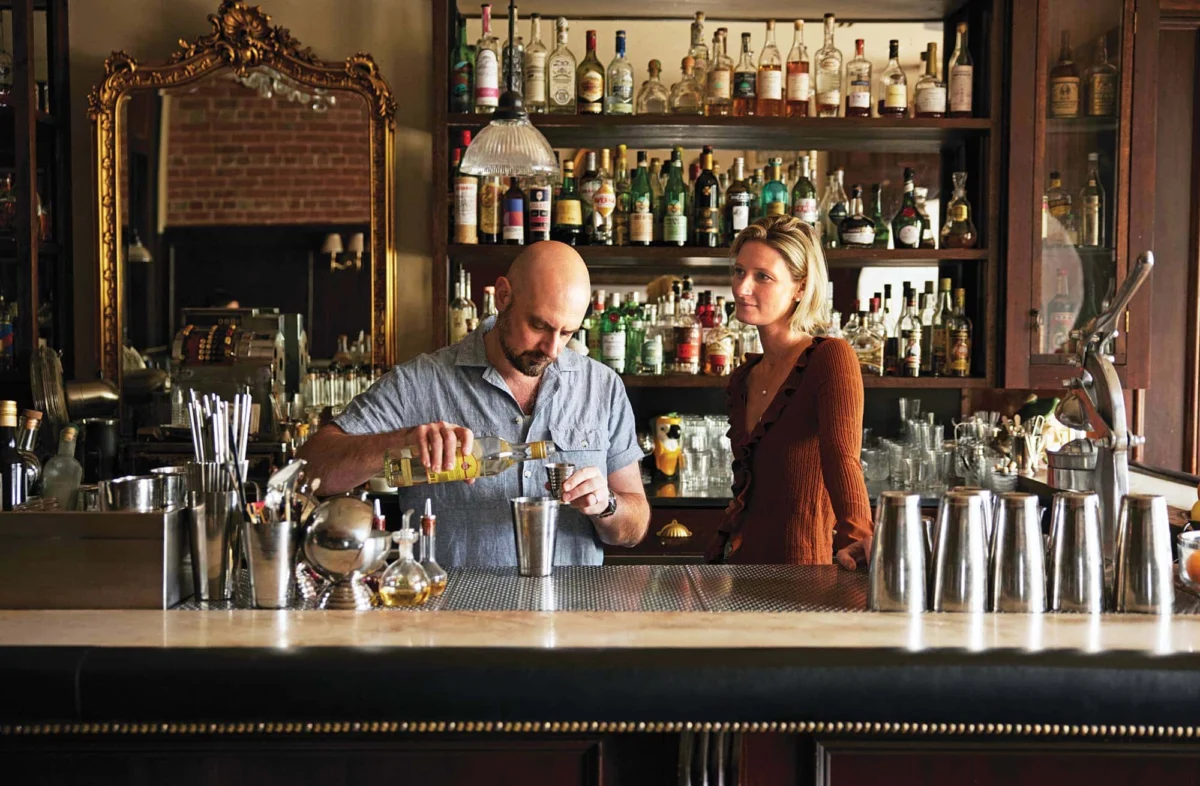
In the vast, swirling history of the cocktail, few figures have done as much to codify the chaos as Michael and Zara Madrusan. For the uninitiated, the history of the drink is a dizzying labyrinth of thousands of recipes, regional variations, and half-remembered lore. Attempting to synthesize centuries of liquid culture into a single volume is a task that borders on the quixotic. Yet, with their latest release, The Madrusan Cocktail Companion, the husband-and-wife duo has managed to build a comprehensive, functional, and deeply educational map of the modern drinking landscape.
Featuring over 2,800 recipes and contributions from 100 of the world’s most esteemed bartenders—including luminaries like Alex Day of Death & Co and Speed Rack co-founder Lynnette Marrero—the book is more than a mere collection of instructions. It is a structural analysis of how we drink, why we drink, and how the craft cocktail movement of the early 21st century continues to influence every glass poured today.
The Anatomy of the Drink: A Branching System
At the heart of The Madrusan Cocktail Companion is a revolutionary organizational system that Michael Madrusan began developing during his tenure at Milk & Honey, the legendary New York City speakeasy that effectively birthed the modern craft cocktail movement.
“It’s similar to the idea of a mother cocktail,” Zara Madrusan explains. “It’s the simplest formulation of a well-known drink that a number of other drinks are based on. It’s a step-by-step understanding of how cocktails fit together.”
This system categorizes the dizzying array of global drinks into “branches.” By tracing the lineage of a cocktail, the book allows readers to see how a Whiskey Sour serves as the bedrock for a myriad of fizzes, sours, and Collins-style drinks. For the professional bartender, this is a technical masterclass in efficiency and R&D. For the home enthusiast, it is a revelation.

“When bartenders see how many drinks are simply riffs on others—five variations on a Manhattan or a specific family of Collins—it blows their minds,” Zara says. “Education is a massive pillar for us. Whether you’re an enthusiast or a professional, being able to draw those ties gives you a deeper understanding of what you’re enjoying. It lights a fire in you to learn more.”
A Chronology of Craft: The Early 2000s in New York
To understand the scope of the Madrusans’ work, one must look back at the era that shaped them. Michael Madrusan entered the scene at Milk & Honey in New York City just as the craft cocktail movement was shifting from a niche obsession into a global phenomenon.
“It was such an exciting time,” Michael recalls. “There was so much exploration. When I joined Milk & Honey, there were only a small group of bars—in New York or anywhere—that cared deeply about quality ingredients and classic cocktails.”
In those days, information was scarce. The digital age had not yet democratized the cocktail recipe; there were no Instagram feeds or instant search engines to cross-reference a spec. “The internet wasn’t what it is today,” Michael notes. “When you found a rare recipe, you’d tell everyone about it. You’d bring a copy of The Fine Art of Mixing Drinks by David Embury to a peer’s bar, and it was almost like they’d put white gloves on to touch it. The excitement around classic cocktails and exploring these books was all really romantic.”
This scarcity created a tight-knit, collaborative community. Because the network was small, the culture was defined by mutual support rather than competition. This period saw the birth of modern classics like the Paper Plane and the Naked & Famous—drinks that didn’t just appear, but were the result of rigorous, iterative experimentation.
Implications: The Evolution of Service
The legacy of that era is not just in the recipes, but in the service model. Michael emphasizes that the hallmark of the early 21st-century movement was a shift in philosophy.
“When I think about the service model at Milk & Honey, and then at The Everleigh, especially with something like ‘Bartender’s Choice’ [where guests provide their preferred flavors and let the bartender create the drink], it’s not about showing somebody how much you know,” Michael says. “It’s about showing somebody how much you care.”
This ethos is central to the book. By demystifying the cocktail, the Madrusans aren’t looking to create a rigid set of rules; they are looking to empower the individual. The book serves as both a manual for technical precision and a guide to hospitality. As the industry has matured, the “tree” of influence has spread globally. From Enzo Errico’s work in Ischia to the influence of The Varnish in Los Angeles and the global success of alumni from the original New York cohort, the impact of those early, quiet nights at the bar continues to be felt in every pub and high-end hotel lobby across the globe.
Supporting Data: Why "By Popular Demand" Matters
While the "branching" system offers a technical taxonomy of drinks, the Madrusans recognize that human thirst is often less academic. Sometimes, a guest simply wants a drink with coffee or a tropical-style refresher.
“That’s why the ‘By Popular Demand’ section of the book was really important to us,” Zara explains. “We don’t want to hide drinks in some obscure style or a branch of cocktails you’ve never heard of. If you’re looking for a specific flavor profile, we want you to find it immediately.”
This dual approach—the academic rigor of the branches and the user-friendly accessibility of popular categories—is what makes the book a standard-bearer for the next generation. It also leaves room for growth. The authors are the first to admit that the landscape is fluid. “Defining the branches is an ongoing process,” Zara notes. “New drink styles are evolving all the time. I imagine in a second edition, these branches might look different.”
The Future of the Craft
As the cocktail industry moves deeper into the late 2020s, the Madrusan Cocktail Companion arrives as both a retrospective and a forward-looking guide. It acknowledges that while we now have access to more information than at any point in history, the fundamental challenge remains: how to distill that information into a meaningful experience for the guest.
Michael’s reflection on his peers—people like Sam Ross, Eric Alperin, and Richard Boccato—highlights a culture that has successfully scaled without losing its soul. “The tree just keeps on growing,” he says.
For the reader, the book provides the tools to climb that tree. By understanding the parentage of a drink, the logic of its construction, and the philosophy behind its service, the consumer is transformed from a passive drinker into an informed participant in the cocktail’s ongoing evolution.
The Madrusans have not just written a book; they have archived a cultural moment. The Madrusan Cocktail Companion stands as a testament to the fact that, while trends in spirits and mixers may come and go, the core tenets of the craft—care, curiosity, and community—remain the most vital ingredients of all. Whether you are a professional behind the stick or a hobbyist in your home kitchen, the book serves as a vital compass in a world where the search for the perfect drink never truly ends.

 Asro

 Sagoh

