

 Dwi Wanna
 Nana Wu
 Muslim
 Reynand Wu
 Ammar Sabilarrohman
 Nana
Nana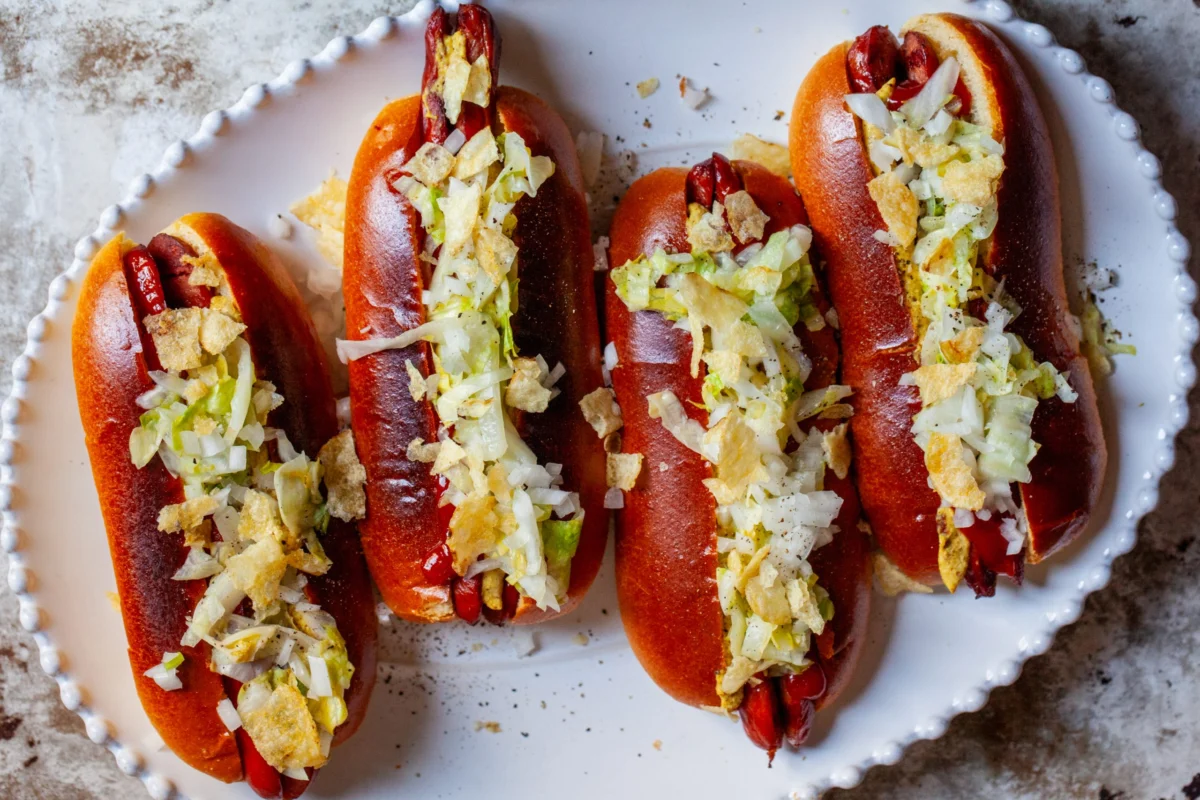
For the home cook who finds joy in the granular details of culinary craft, the humble hot dog has long been viewed as a static object—a pre-cooked staple to be boiled or charred until it reaches a state of edible indifference. However, Deb Perelman, the culinary mind behind Smitten Kitchen, is challenging the conventional approach to the backyard classic. In a recent disclosure, Perelman clarifies that while her kitchen is known for the meticulous recreation of pantry staples—from homemade bagels to almond extract—she draws a distinct line at the industrial process of meat emulsion and curing. Instead, she argues that the path to a superior hot dog lies not in the manufacturing, but in the structural and textural assembly.
Main Facts: The Methodology of the Elevated Frank
The Smitten Kitchen approach to the hot dog is defined by two primary pillars: the "butterflied" preparation method and a deliberate, high-contrast approach to topping profiles.

The butterflied technique involves slicing the frankfurter lengthwise, leaving the bottom edge intact to create a hinge. This allows the meat to be flattened, maximizing surface area. When placed on a grill or a hot griddle, this increased contact with the heat source promotes a Maillard reaction—a browning and crisping process that standard, cylindrical cooking cannot achieve. Beyond the aesthetic and flavor benefits of a crispier exterior, the butterflied frank provides a stable, "open" platform for toppings, preventing the notorious rolling effect that often plagues the traditional hot dog experience.
Accompanying this structural shift is a departure from standard condiment monotony. Perelman advocates for the integration of "vinegared iceberg," a simple yet transformative preparation of shredded lettuce tossed in a brine of water, vinegar, salt, and sugar. This element introduces a sharp, acidic crunch that cuts through the fat of the processed meat, providing a cooling counterpoint to the heat of the cooking process. To complete the assembly, the recipe incorporates crushed potato chips, a texture-heavy inclusion that bridges the gap between the soft, yielding bun and the crisp, browned meat.

Chronology: From School Lunch Hacks to Global Inspiration
The evolution of the hot dog as a culinary focal point for the home cook has been a gradual process of discovery. For many, the association between hot dogs and potato chips began as a childhood curiosity—a lunchroom improvisation where crisps were wedged into sandwiches for a salty, crunchy contrast.
However, the refinement of this concept occurred later. Perelman notes that her interest in the "chip-topped" frank was solidified by exposure to global street food culture, specifically through travel programming documenting Venezuelan culinary traditions. This discovery highlighted that the concept of adding starchy, crispy textures to a frankfurter is not an American anomaly, but a celebrated practice across Latin America.

In the contemporary context, the rise of the "heat dome" phenomenon across the United States has further forced a re-evaluation of the American grill tradition. As temperatures soar into the triple digits, the feasibility of standing over an open flame becomes less of a celebratory ritual and more of a hazard. This has led to the domestication of the hot dog experience: moving the cooking process from the charcoal grill to the climate-controlled environment of the indoor kitchen, utilizing heavy-duty presses to achieve that signature char without the necessity of extreme outdoor heat.
Supporting Data: The Science of Texture and Temperature
The success of the "vinegared iceberg" and the butterflied frank is rooted in the interplay of temperature and acidity. According to culinary sensory research, the "mouthfeel" of a hot dog—which is essentially a soft, emulsified protein—benefits significantly from the addition of high-acidity, high-crunch elements.

- Structural Stability: By butterflying the frank, the home cook increases the surface-area-to-volume ratio by approximately 40%. This results in a faster, more uniform distribution of heat, ensuring that the internal temperature reaches safe levels while the exterior develops a robust, caramelized crust.
- Acidic Equilibrium: The vinegared iceberg acts as a palate cleanser. In a standard hot dog, the flavor profile is dominated by salt and fat. The vinegar solution (typically 5% acidity) acts as a solvent, breaking down the residual grease on the tongue and enhancing the perceived "freshness" of the dish.
- Texture Modulation: The inclusion of kettle-cooked potato chips serves a dual purpose. First, it provides a high-decibel crunch, which triggers a psychological perception of freshness. Second, the salt content of the chips reinforces the savory notes of the meat, creating a cohesive flavor profile that links the bun, the meat, and the topping.
Official Responses and Culinary Advocacy
The discourse surrounding these unconventional toppings has garnered significant attention from the culinary community, serving as a reminder that food can be both a creative outlet and a vehicle for social awareness.
Beyond the kitchen, the discussion of international culinary staples has provided a platform for humanitarian outreach. Following the recent 4.8 magnitude earthquake in Venezuela—the very region that inspired the potato-chip-topped hot dog—the conversation shifted from preparation methods to urgent relief. Organizations like World Central Kitchen (WCK), which maintains a high degree of credibility for its rapid-response food delivery in disaster zones, have been highlighted as the primary mechanism for those looking to support the communities that influence global food culture.

The integration of humanitarian aid into a food-based discussion is increasingly common in the modern culinary landscape. It acknowledges that the "Great American Tradition" of backyard cooking does not exist in a vacuum; it is part of a global exchange of ideas, and by extension, a global responsibility to those in need.
Implications: The Future of Home Cooking
The implications of this shift in hot dog preparation are clear: the future of home cooking is less about the "recipe" as a rigid set of rules and more about the "methodology" of refinement.

As more home cooks move away from the expectation that they must recreate the industrial process (such as grinding meat) and toward the expectation that they can master the finishing process, the definition of a "scratch-made" meal changes. It becomes an act of assembly and optimization.
Furthermore, the adaptation of indoor cooking methods—using cast-iron presses to simulate the effects of a grill—signals a shift in how we perceive seasonal traditions. We are entering an era where the "summer vibe" of a hot dog is no longer tethered to the constraints of the outdoor climate. By utilizing the modern kitchen, the cook can replicate the experience of the ball-park or the backyard cookout regardless of weather conditions or geographical location.

Ultimately, the elevation of the hot dog serves as a case study for modern culinary philosophy. It suggests that even the most "common" foods—the items we have taken for granted as static or low-effort—are ripe for experimentation. Whether through the addition of a vinegared garnish or a clever structural modification, the home cook is empowered to reclaim the narrative of the meal. The goal, as Perelman suggests, is simple: to cultivate a kitchen environment where the cook is happy, the process is sustainable, and the final product brings a heightened level of satisfaction to the table. In this new paradigm, the hot dog is no longer just a hot dog; it is a platform for innovation, a bridge between cultures, and an opportunity for a perfectly balanced bite.

 Nana Muazin
 Evan Lee Salim