Ali Ikhwan

 Iffa Jayyana

 Muslim

 Nana

 Dwi Wanna
For many high school graduates, the period immediately following commencement is marked by a frantic, often overwhelming pressure to commit to a collegiate path. For those with a passion for the culinary arts, the question is often binary: Do you head straight to culinary school, or do you dive headfirst into the high-intensity environment of a professional kitchen?
While the traditional academic track remains a viable route for many, a growing number of students are choosing to leverage a "gap year" to bridge the transition between high school and formal culinary training. Far from being a period of aimless wandering, a well-structured gap year can serve as a powerful launchpad, allowing aspiring chefs to test their resolve, build financial stability, and enter their professional programs with a level of maturity and focus that their peers may lack.
The Reality of the Industry: A Strategic Approach to Time
The culinary world is notoriously demanding. It requires physical stamina, creative problem-solving, and a high tolerance for stress. When a student chooses to take a year off before enrolling in an institution like the Auguste Escoffier School of Culinary Arts, they are effectively conducting a professional "soft launch."
The goal is not to delay the inevitable, but to accelerate the learning curve. By approaching these twelve months with a clear, intentional plan, students can transform a gap year into a competitive advantage. This period allows for the exploration of various culinary niches—from the fast-paced world of catering to the precise, delicate work of pastry arts—ensuring that when they finally do enroll in a formal program, their choice of study is informed by real-world experience rather than idealized conjecture.
Chronology: Building a Foundation for Success
To ensure that a gap year yields professional dividends, it is essential to follow a structured approach. Without a roadmap, the time can easily slip away. Below is a suggested chronology for maximizing the potential of this year.
Phase 1: The Initial Assessment (Months 1–3)
The first few months of a gap year should be dedicated to exploration and self-reflection. If you are uncertain about which culinary path to take, this is the time to gather data.
- The Career Interests Survey: Utilize resources like the Escoffier 20-question career survey to determine your natural inclinations. Do you thrive in the collaborative, loud environment of a line kitchen, or are you better suited for the meticulous, quiet focus required in a bakery?
- Shadowing and Observation: Reach out to local professionals. Most chefs are willing to allow a curious student to shadow them for a shift or two. This is your chance to see the "back of house" without the pressure of employment. Observe the workflow, the communication styles, and the physical toll the work takes.
Phase 2: Professional Integration (Months 4–8)
Once you have identified an area of interest, it is time to gain hands-on experience.
- Entry-Level Employment: Securing a position as a dishwasher, prep cook, or commis is the most effective way to test your interest. These roles are the "boots on the ground" of the culinary world.
- Building Good Habits: A critical warning from industry veterans is the danger of developing bad habits early. As Shai Fernandez, a sous chef at Sheraton Hotels and Resorts and an Escoffier graduate, notes, experience in a kitchen can be a double-edged sword if you aren’t being mentored correctly. Seek out chefs who are willing to critique your knife skills and sanitation practices.
Phase 3: Financial and Educational Alignment (Months 9–12)
As your confidence grows, shift your focus to the administrative side of your future career.
- Financial Planning: Use this time to establish a budget. Research scholarships, grants, and federal financial aid options. Understanding the cost of tuition and the potential for financial aid early on prevents "sticker shock" later.
- Setting the Stage: If you plan to attend an on-campus program, consider moving to your school’s city a few months early. This allows you to secure housing, find part-time work, and get accustomed to the rhythm of a new city before the academic rigor of culinary school begins.
Supporting Data: Why Experience Matters
The decision to wait is often backed by data regarding student success. Statistics show that students who enter culinary school with a baseline understanding of kitchen operations—such as the importance of "mise en place," the reality of long hours, and the necessity of teamwork—often perform at a higher level during their practical assessments.
Furthermore, the diversity of the industry is vast. A student who spends their gap year working in a corporate R&D kitchen will have a fundamentally different, and often more specialized, skillset than one who spends their time in a high-volume hotel banquet kitchen. By sampling these different environments, students are better equipped to select the right academic program—whether it be Culinary Arts, Plant-Based Culinary Arts, or Hospitality and Restaurant Operations Management.
Official Responses and Industry Perspectives
Culinary educators are increasingly supportive of the gap year model. Admissions departments at schools like Escoffier frequently emphasize that the "perfect" time to start is when a student is fully prepared to commit.
"You can make a timeline that works for you," says Chris Marhevka, a Boulder Culinary Arts graduate. "You can figure out a budget that works for you. You can pick a program, and you can mold it to that passion."
Industry experts note that while formal education provides the theoretical framework, the gap year provides the emotional and physical preparation. The transition from high school to an intensive culinary program is a significant lifestyle shift. It involves managing personal finances, balancing health and nutrition, and maintaining a high level of performance in a physically demanding environment. Those who have spent a year managing their own schedule—even if just to juggle a part-time job and a home-cooking project—are statistically more likely to successfully navigate the complexities of professional training.
Implications: The Path Forward
The implications of taking a gap year are profound. For the student, it is a period of "de-risking" their investment. Culinary school is a significant financial and time commitment; entering that commitment with the certainty that this is, indeed, your calling, is invaluable.
For the industry, this trend results in more prepared, focused, and resilient graduates. Employers in the hospitality sector are constantly looking for staff who understand the reality of the work. A student who has spent a year in a kitchen environment, who knows the value of a sharp knife, the importance of a clean station, and the necessity of reliability, is an immediate asset to any kitchen brigade.
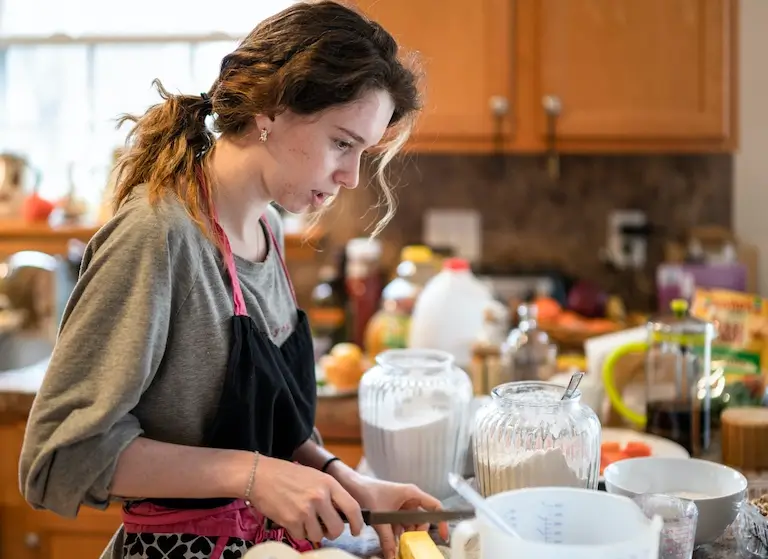
Practical Tips for the Aspiring Chef During the Gap Year:
- The "Julie & Julia" Challenge: Adopt a disciplined, long-term cooking project. Whether it’s mastering every sauce in a classic textbook or exploring the nuances of regional cuisines, the practice of consistent, high-quality production is essential.
- Portfolio Development: Document your progress. Keep a journal of your successes and, more importantly, your failures. A portfolio of your work can be a powerful tool when applying for jobs or seeking internships during your school years.
- Physical Conditioning: The culinary arts are a physical profession. Use your gap year to develop the stamina required for 10-hour shifts. This includes investing in proper footwear, learning about ergonomic safety, and maintaining a fitness routine.
- Financial Literacy: Treat your savings for tuition like a business plan. Automate your savings, eliminate unnecessary expenses, and become familiar with the FAFSA process.
Conclusion: Defining Your Culinary Identity
Ultimately, the decision to take a gap year is a deeply personal one. There is no singular "right" way to enter the culinary arts. For some, the traditional path of immediate enrollment is the correct choice. For others, the gap year is the missing piece of the puzzle—a time to mature, to save, to explore, and to confirm that the heat of the kitchen is where they truly belong.
When you are ready to move forward, the most important step is to engage with your potential school. Whether you are ready to enroll today or are simply looking for guidance on how to structure your next twelve months, admissions advisors can help you map out a strategy that honors your goals, your budget, and your unique timeline.
A culinary career is a marathon, not a sprint. Taking the time to prepare yourself for the journey is not a delay; it is a declaration of intent. By treating your gap year as a professional training ground, you are not just waiting to start school—you are starting your career on your own terms.

 Lina Irawan