

 Ammar Sabilarrohman
 Dwi Wanna
 Nana Wu
 Neng Nana
 Nana
Nana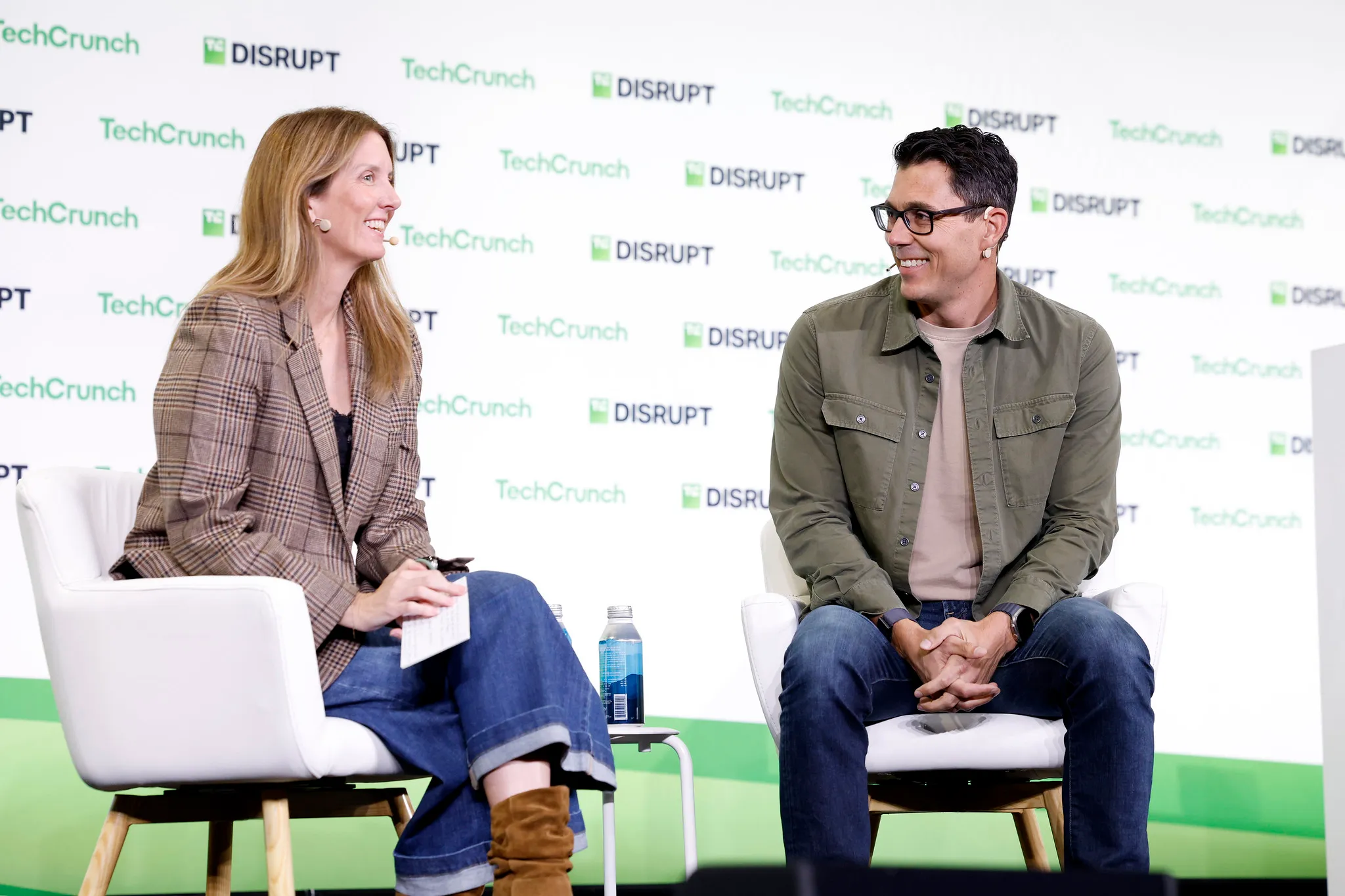
In the rapidly evolving landscape of automotive technology, the definition of a "connected vehicle" is undergoing a profound transformation. While early iterations of in-car tech focused on basic smartphone mirroring and rudimentary voice commands, Rivian Automotive is setting its sights on a far more ambitious horizon: turning the vehicle into a sophisticated, agent-driven companion.
At the recent TechCrunch Disrupt conference, Rivian founder and CEO RJ Scaringe unveiled a strategic roadmap that goes beyond the company’s recently launched in-house AI assistant. The long-term vision involves transforming Rivian vehicles into modular platforms capable of running third-party AI agents from industry giants like Anthropic, OpenAI, and Meta. By integrating these advanced "frontier" models, Rivian hopes to move from simple command-execution to truly contextual, conversational intelligence.
Main Facts: A New Tier of In-Car Intelligence
Rivian’s current AI assistant, which has already begun rolling out to its fleet, allows occupants to interact with the vehicle’s hardware using natural language. Drivers can request climate adjustments, activate seat warmers, or ask for news summaries without navigating complex touchscreen menus. However, the architecture behind this system is what truly sets it apart.
The vehicle operates on a proprietary "agentic framework" designed to intelligently route requests. Scaringe described this as a "traffic light" system: when a user speaks, the car’s software determines the most appropriate model to handle the task. Simple, safety-adjacent, or high-latency tasks are processed locally on the vehicle’s edge computing hardware, while more complex queries—such as generating creative content or analyzing deep data—are routed to the cloud.
Crucially, Rivian has built its software stack from the ground up, eschewing the common reliance on Apple CarPlay or Android Auto. This "vertical integration" gives Rivian total control over the user interface and data flow, enabling a seamless marriage between the vehicle’s mechanical functions and the digital world.
Chronology of Development
The path to this "magical" experience has been methodical, rooted in Rivian’s philosophy of internal software control:
- Foundation (Pre-2024): Rivian commits to building a proprietary software stack rather than outsourcing to big tech platforms. This allows for deep integration between hardware and software.
- May 2024: The company announces that its internal agent has gained the ability to interface with external productivity tools, most notably Google Calendar, marking the first real-world step toward "agentic" functionality.
- Late 2024: Rivian rolls out its new voice-activated AI assistant to current vehicle owners, establishing the base-level conversational infrastructure.
- September 2024: At TechCrunch Disrupt, CEO RJ Scaringe officially outlines the intent to open the platform to third-party AI agents, such as Anthropic’s Claude, as a future capability.
- December 2024 (Upcoming): Rivian is scheduled to host an "AI & Autonomy Day," where the company is expected to provide deeper technical insights into its AI strategy and the hardware/software architecture supporting it.
Supporting Data and the "Plumbing" Challenge
The transition from a simple voice assistant to an integrated AI agent platform is not merely a software update; it is an engineering feat. Scaringe emphasized that the "plumbing" required to make this work is immense. It requires not only internal development but also deep coordination with the labs creating these frontier models.
The technical hurdles are threefold:
- Latency and Connectivity: To maintain a "magical" user experience, the system must handle seamless hand-offs between edge and cloud computing. If the car loses cellular connectivity, the agent must be robust enough to continue functioning at a base level.
- Context Synchronization: For an AI to be truly useful, it must understand the user’s history across multiple devices. As Scaringe illustrated, a user might ask the car to set the temperature, then follow up with a request to plan a dinner party based on a conversation held earlier that day on a phone or laptop. Bridging this data gap requires secure, cross-platform synchronization.
- Safety and Reliability: Perhaps the most significant hurdle is the separation of concerns. Rivian must ensure that an AI agent, which might be "hallucinating" or misinterpreting a request, never gains access to safety-critical systems.
Official Responses and Strategic Guardrails
Rivian’s stance on safety is uncompromising. During his discussion at TechCrunch Disrupt, Scaringe was categorical regarding the limits of AI control. "You wouldn’t want an agent to determine, ‘hey, it’s time to apply the brakes, or time to steer the vehicle,’" he stated.
By maintaining a strict "air gap" between the AI agent and the vehicle’s physical control modules, Rivian aims to leverage the creative and analytical power of frontier AI while ensuring that the vehicle remains a predictable, safe transportation device. This strategy positions the vehicle as a "smart environment" rather than a "smart machine" that makes driving decisions.
The company is currently keeping the specific timeline for the integration of third-party agents under wraps, preferring to save the technical deep dives for their December "AI & Autonomy Day." This event is expected to clarify how Rivian plans to handle user privacy, data security, and the potential revenue-sharing models that might emerge from hosting third-party AI providers in a vehicle.
Implications for the Industry
Rivian’s pivot toward an open-agent architecture signals a broader shift in the automotive industry. As cars become software-defined, the competitive advantage is moving away from horsepower and torque toward user experience and digital ecosystem integration.
1. The Death of the "Dumb" Dashboard
For years, automakers struggled to keep up with the rapid pace of consumer electronics. By building their own stacks, companies like Rivian and Tesla are effectively challenging the dominance of Apple and Google in the dashboard. By eventually hosting agents like Claude or ChatGPT, Rivian could theoretically offer a more customized experience than a standard smartphone mirroring interface ever could.
2. A New Competitive Landscape
Tesla has already begun experimenting with its own AI integrations, such as the Grok chatbot. However, Rivian’s approach of potentially being "model agnostic"—allowing the user to choose or allowing the car to pick the best model for the task—could provide a point of differentiation. It transforms the vehicle from a single-brand product into a multi-purpose digital platform.
3. Ethical and Security Concerns
With increased connectivity comes increased risk. The more context an AI agent collects about a user’s schedule, preferences, and conversations, the more vulnerable that data becomes. Rivian’s ability to secure this data will be a significant factor in consumer trust. Furthermore, the industry will need to grapple with "agentic risk"—the possibility that a third-party agent might inadvertently provide bad advice or interfere with a user’s focus while driving.
Conclusion: The Path Ahead
The vision RJ Scaringe painted at TechCrunch Disrupt is one of the vehicle as an extension of the self—a space that knows your schedule, your preferences, and your intent. Whether this vision translates into a truly helpful co-pilot or a complex, distracting gadget remains to be seen.
As Rivian prepares for its December "AI & Autonomy Day," the automotive world will be watching closely. If the company can successfully navigate the "plumbing" of cross-platform AI integration while maintaining its high standards for vehicle safety, it may well have created the blueprint for the next decade of personal mobility. The future of the car, it seems, is not just about where it can take us, but how well it can understand us along the way.

 Reynand Wu
 Raul Delapena Setiawan
