Ammar Sabilarrohman
 Dwi Wanna
 Nana Wu
 Neng Nana
 Nana
Nana Reynand Wu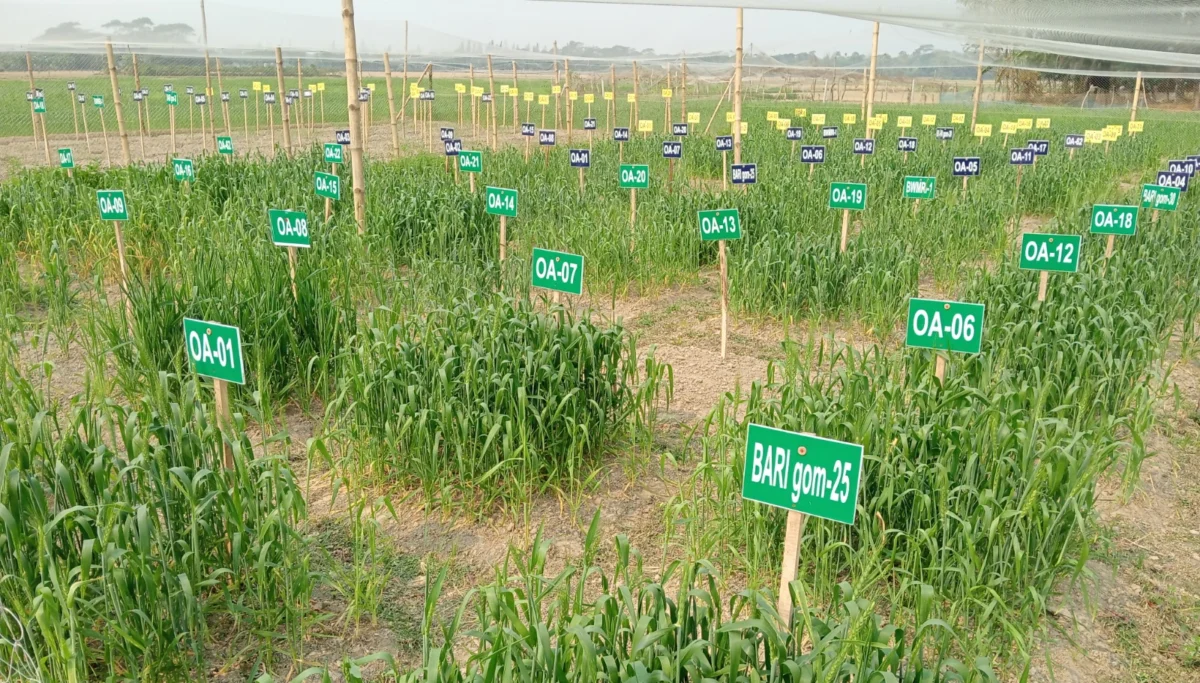
As climate change accelerates the degradation of arable land, a Swedish biotechnology startup is carving out a niche that promises to reshape the economics of global food production. OlsAro, a pioneer in developing crops capable of thriving under extreme environmental stress, has successfully closed a €5 million ($5.5 million) seed funding round. This latest injection of capital brings the company’s total funding to €7.5 million ($8.3 million), providing the runway necessary to scale its proprietary SeedAX platform ahead of a highly anticipated commercial launch in 2027.
The investment round was co-led by Industrifonden and Nordic Foodtech VC, with strategic participation from Future Food Fund, PINC (the venture arm of Paulig Group), GU Ventures, and AgFunder. This financial backing signals a growing consensus among institutional investors that the next frontier in food security lies not just in yield optimization, but in the genetic fortification of staple crops against the harsh realities of a warming, increasingly saline world.
The Global Imperative: Why Salt and Heat Matter
The urgency behind OlsAro’s mission is dictated by a sobering statistic: approximately 10% of the world’s agricultural land is currently compromised by salinity. This figure is rising annually due to a convergence of factors—rising sea levels causing saltwater intrusion, flooding, and the widespread practice of irrigating crops with brackish or saline water in regions where freshwater is scarce.
When soil salinity crosses specific thresholds, traditional wheat varieties experience a catastrophic drop in performance. In many instances, the soil becomes entirely barren, forcing farmers to abandon fields or settle for minimal, subsistence-level harvests. For countries like Bangladesh, where wheat is a vital dietary staple, this land degradation threatens both national food security and the livelihoods of millions of smallholder farmers.
Elén Faxö, CEO of OlsAro, characterizes the situation as a massive, underserved market. "We are witnessing a steady, systematic reduction in the amount of cultivatable land due to soil salinity," Faxö explains. "Our mission is to enable farming on otherwise unfarmable land, providing a lifeline to regions where conventional breeding has failed to keep pace with the changing environment."
A Chronology of Innovation: From Lab to Field
OlsAro’s trajectory from a research-intensive startup to a commercial-ready biotech firm has been defined by a rapid, iterative approach to plant breeding.
- Foundation and R&D: The company spent its early years establishing the fundamental science behind its SeedAX platform, focusing on identifying genetic markers that allow plants to maintain osmotic balance and metabolic function in the presence of high salt concentrations.
- The Bangladesh Breakthrough: The most significant milestone for the firm arrived with successful field trials in Bangladesh. Partnering with Lal Teer Seed, the nation’s largest private biotech firm, OlsAro tested its proprietary wheat lines against elite local varieties. The results were striking: a 41% yield increase under saline conditions.
- Expansion of Scope: Building on its initial success with wheat, the company began diversifying its research, initiating programs aimed at heat tolerance and nitrogen-use efficiency.
- Global Trial Network: Today, OlsAro operates in a diverse range of geographies. Its salt-tolerant wheat is currently in advanced trials in Kenya and Pakistan, while the company has expanded its field testing to include Egypt, Italy, Canada, and Australia—nations with vastly different climatic profiles but shared concerns over drought and heat stress.
- The Path to 2027: With the current seed round secured, the company is shifting its focus toward commercialization. The goal is to finalize regulatory preparations and scale distribution networks to reach farmers by 2027.
The SeedAX Platform: The Engine of Resilience
At the heart of OlsAro’s operation is the SeedAX platform, a technology suite that leverages both artificial intelligence and traditional, non-GMO breeding techniques to identify and introduce climate-resilient traits into local varieties.
The platform operates on two distinct development paths, allowing OlsAro to navigate the complex and varied regulatory frameworks of global agricultural markets:
- The Population-Based Approach: Utilizing EMS (Ethyl Methanesulfonate) mutagenesis, the company induces high-level genetic diversity in its crops. By screening these populations for specific traits, they can develop highly resilient varieties that are classified as non-GMO globally. This is a critical advantage, as it bypasses the often-prohibitive regulatory barriers and public resistance associated with transgenic crops.
- AI-Driven Gene Editing: For markets where gene editing is permitted, OlsAro employs an AI-powered system that analyzes vast datasets—including genomics, transcriptomics, and field performance data—to pinpoint specific single nucleotide polymorphisms (SNPs) associated with stress tolerance. This allows for precision integration of traits into elite, localized wheat varieties.
"The strength of our AI is that we have an abundance of proprietary data that we can feed into the system," says Faxö. "We are effectively shortening the breeding cycle, which traditionally takes a decade or more, into a much more rapid, data-backed process."
Official Perspectives: Industry Validation
The investment from major venture capital firms underscores the confidence in OlsAro’s technological approach. Sara Frykstrand Ängström, Investment Manager and Head of Intelligence at Industrifonden, noted that the decision to invest was rooted in the company’s proven scientific foundation.
"What convinced us about OlsAro was the scientific work behind the company, together with its field-trial results and existing seed-company partnerships," Ängström stated. "With SeedAX, OlsAro has the opportunity to turn this into a scalable platform for seed companies looking to develop climate-resilient varieties across multiple traits and markets."
Industry partners, such as India’s DCM Shriram, have also echoed this sentiment. By testing OlsAro’s wheat in the challenging soil conditions of Uttar Pradesh and Bihar, these partners are validating the company’s ability to scale its technology across the massive, varied agricultural landscape of the Indian subcontinent.
Implications for the Future of Agriculture
The emergence of companies like OlsAro signals a fundamental shift in how the agricultural industry addresses climate change. For decades, the focus was primarily on chemical inputs—fertilizers, pesticides, and soil amendments—to maximize yield. However, these methods are increasingly ineffective against abiotic stressors like heat, drought, and salt.
OlsAro’s approach shifts the solution to the "source code" of the crop itself. The implications are profound:
- Economic Stabilization: By enabling higher yields on land that was previously considered unproductive, OlsAro offers a potential revenue boost for farmers in some of the world’s most vulnerable regions.
- Reduced Resource Dependency: Crops that are naturally more resilient to heat and drought require less water and fewer supplemental inputs, potentially lowering the cost of production and reducing the environmental footprint of farming.
- Global Food Security: As global population growth continues to exert pressure on food supplies, the ability to maintain consistent production despite volatile weather patterns is not merely a competitive advantage—it is a global necessity.
- Regulatory Flexibility: By focusing on non-GMO and precision-breeding techniques, OlsAro ensures its technology can be deployed in the European Union, Africa, and Asia without the significant "GM-label" hurdle, allowing for faster adoption rates.
As OlsAro moves toward its 2027 commercial launch, the eyes of the agricultural sector will be on its performance in large-scale, real-world conditions. If the company can consistently replicate the 41% yield increases seen in its initial trials, it will solidify its position as a key player in the effort to feed a planet under pressure.
In the words of CEO Elén Faxö: "We have spent years proving that we can identify and develop genetics that perform under some of the conditions putting the greatest pressure on agriculture. This round is about turning that capability into a platform that seed companies can use repeatedly."
The challenge ahead is immense, but with a robust technological platform and strong financial backing, OlsAro appears well-positioned to turn the tide on land degradation, proving that with the right science, even the most challenging landscapes can become engines of productivity.


 Raul Delapena Setiawan