 Suro Senen
 Nila Kartika Wati
 Asro
Asro
 Layla Zulfa
 Evan Lee Salim
 Lina Hope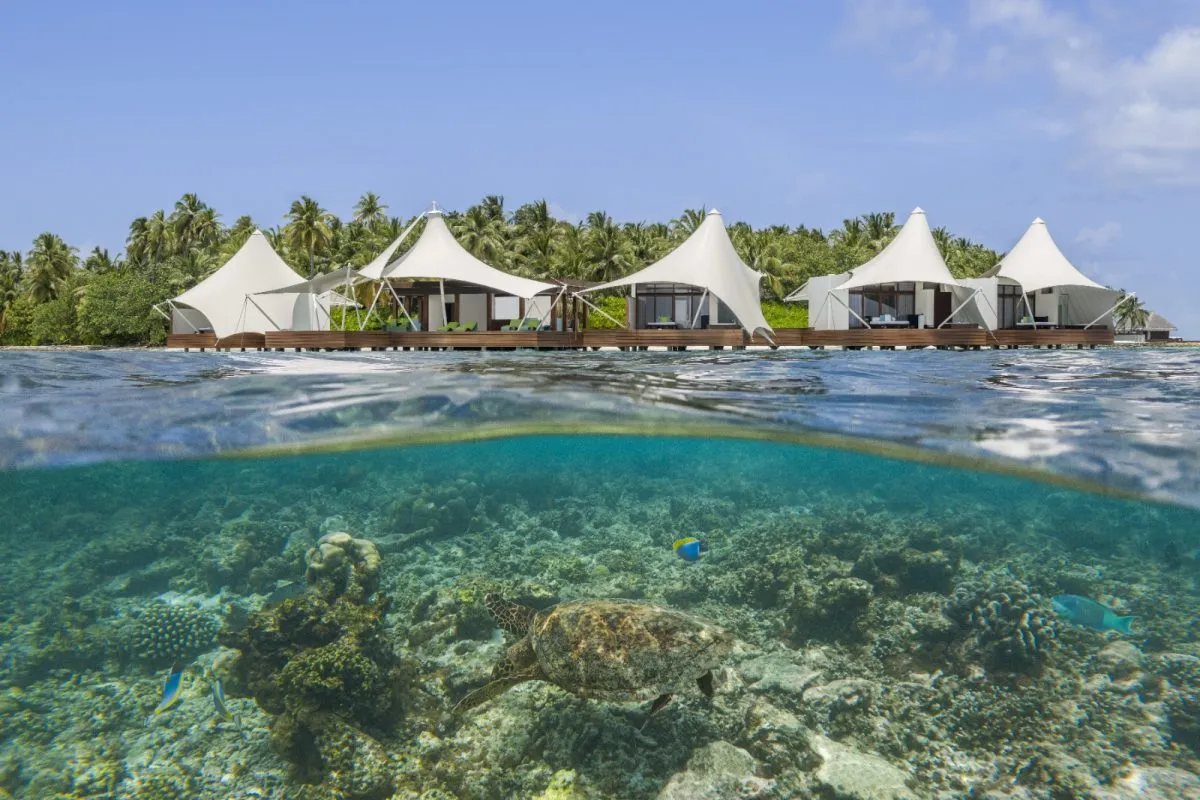
The Indian Ocean archipelago of the Maldives, long regarded as the world’s ultimate sanctuary for luxury travel, has faced a period of profound turbulence over the past eighteen months. As global geopolitical tensions rippled outward from the Middle East in early 2024, the Maldives found itself uniquely vulnerable. Relying heavily on connectivity through major Gulf hubs—the primary transit arteries for European and North American tourists—the nation experienced an immediate, chilling contraction in visitor numbers.
However, the subsequent recovery tells a story not of stagnation, but of strategic agility. Through a significant realignment of its source markets and a robust expansion of its luxury hospitality footprint, the Maldives has managed to stabilize its tourism sector. Data from industry giants like Marriott International suggest that while the visitor demographic has fundamentally shifted, the total volume of arrivals is nearing pre-crisis equilibrium, with India emerging as a pivotal pillar of this new economic architecture.
Chronology of a Crisis and Recovery
Phase I: The March Contraction (Q1 2024)
When the crisis in the Middle East escalated in March 2024, the impact on Maldivian tourism was instantaneous. Because a significant portion of long-haul flights from Europe and the United States relies on transit through hubs like Dubai, Doha, and Abu Dhabi, the regional instability caused a "traveler’s paralysis." Prospective guests, wary of potential airspace closures or regional volatility, canceled bookings in droves. By the end of the first quarter, the hospitality sector in the Maldives was reporting double-digit dips in occupancy, triggering concerns about a prolonged slump for an economy that relies on tourism for nearly 30% of its GDP.
Phase II: The Tactical Pivot (Q2–Q3 2024)
By mid-year, hoteliers and government tourism officials began a concerted effort to diversify their outreach. Recognizing that Western demand was softening, the focus shifted toward closer regional markets. Marketing budgets were recalibrated to appeal to the burgeoning middle and upper-middle classes in South Asia and Southeast Asia. The narrative shifted from "exotic isolation" to "accessible luxury," emphasizing the short flight times and cultural synergies for regional travelers.
Phase III: The New Normal (Q4 2024–Present)
As of the current reporting period, the Maldives has effectively bridged the gap. While the mix of nationalities on the islands has evolved, the aggregate arrival numbers have largely stabilized. This transition has been bolstered by a steady increase in direct flight connectivity from non-Gulf hubs and a resurgence in interest from the Indian outbound travel market, which has effectively acted as a shock absorber for the industry.
Supporting Data: A Market in Transition
The resilience of the Maldivian market is best reflected in the shifting statistics of its source countries. For years, the Maldives was a playground predominantly for Western Europeans and high-net-worth individuals from the United States.
According to data analyzed by Marriott International, the 2025 fiscal year saw Indian arrivals plateau at approximately 112,229 visitors, holding the sixth position among all source markets. While this represented a period of relative stagnation, the momentum gained in the first eight months of 2026 paints a different picture. By August 2026, arrivals from India had already reached 76,000, signaling an upward trajectory that is expected to close the year at record highs.
This shift is not merely coincidental; it is structural. The Maldives is increasingly viewing India not just as a neighbor, but as its primary growth engine. As India’s middle class expands and its appetite for luxury international travel grows, the geographical proximity—combined with improved direct flight links—makes the Maldives a natural first-choice destination for Indian luxury travelers.
Official Responses: Navigating the "New Mix"
Silvio Rosenberger, Market Vice President for the Maldives at Marriott International and Vice President of Operations for Asia Pacific (excluding China), offers a pragmatic perspective on these developments.
"We had an immediate drop in arrivals, but now we’re almost back to normal in terms of numbers, maybe not from the same markets," Rosenberger stated during a recent industry briefing. His assessment underscores the operational reality of global hospitality: when one channel closes, the successful operator does not wait for it to reopen; they build new channels.
Rosenberger emphasizes that while the "mix" of guests has changed, the brand’s commitment to the Maldivian market remains unwavering. "India has become a critical anchor for our growth," he noted, highlighting that the expansion of the hospitality portfolio is moving forward at an aggressive pace. Despite the regional uncertainty, Marriott is moving ahead with significant investments, including the highly anticipated opening of the Bulgari Resort in the coming year. This development is symbolic of a broader trend: luxury brands are betting on the long-term viability of the Maldives as a multi-market destination, rather than one dependent on a single geographic source.
Strategic Implications for the Hospitality Sector
The recent volatility has taught the Maldives—and the global travel industry—three vital lessons that will dictate future policy and investment.
1. The Death of Single-Source Dependency
The reliance on Gulf hubs was once seen as a competitive advantage due to connectivity. However, the 2024 crisis proved that this reliance is a strategic bottleneck. Moving forward, the Maldives is likely to incentivize direct flights from secondary cities in Asia and the Middle East, effectively "de-risking" their connectivity model.
2. The Rise of the "Regional Hub" Strategy
The Maldives is shifting from being a destination for the "Western elite" to a pan-Asian luxury hub. By catering to the Indian, Chinese, and Middle Eastern markets with tailored service offerings—such as curated culinary experiences and localized language services—resorts are ensuring that they are insulated from political instability in any one specific region.
3. Institutionalizing Luxury
The planned opening of the Bulgari Resort and other high-end properties indicates that the Maldives is moving up-market. In times of economic uncertainty, the ultra-luxury segment is often the most resilient. By focusing on ultra-high-net-worth individuals (UHNWIs) who are less sensitive to short-term economic fluctuations, the Maldivian government and hospitality operators are creating a "recession-proof" layer of the economy.
The Path Forward: Beyond 2026
As the Maldives looks toward the remainder of the decade, the outlook is one of cautious optimism. The challenges of 2024 served as a stress test for the nation’s tourism infrastructure. The fact that the sector did not collapse, but rather reinvented its demographic composition, is a testament to the archipelago’s enduring appeal.
The rise of India as a dominant source market is expected to persist. With the Indian government’s focus on infrastructure development and the increasing global footprint of Indian travelers, the symbiosis between the two nations is likely to deepen. For Marriott International and other major players, the focus will now turn to service refinement. How do you host a diverse clientele from vastly different cultural backgrounds while maintaining the quintessential "Maldivian experience"?
The answer lies in the flexibility of the hospitality model. Resorts are now offering more personalized services, from varied dining options that cater to specific dietary requirements to bespoke experiences that resonate with different cultural expectations.
In conclusion, the Maldives has successfully navigated a period of intense geopolitical pressure by leaning into its versatility. The "new mix" of arrivals is not a temporary anomaly but a permanent evolution. By embracing this change, the Maldives has secured its position not only as a luxury destination but as a resilient global hub capable of absorbing shocks and emerging stronger. The arrival numbers may have dipped in the spring of 2024, but the narrative for the years to come is one of growth, diversification, and a new, more robust identity in the global travel landscape.



 Neng Nana