

 Azzam Bilal Chamdy
 Neng Nana
 Nana Muazin
 Dwi Wanna
 Raul Delapena Setiawan
 Basiran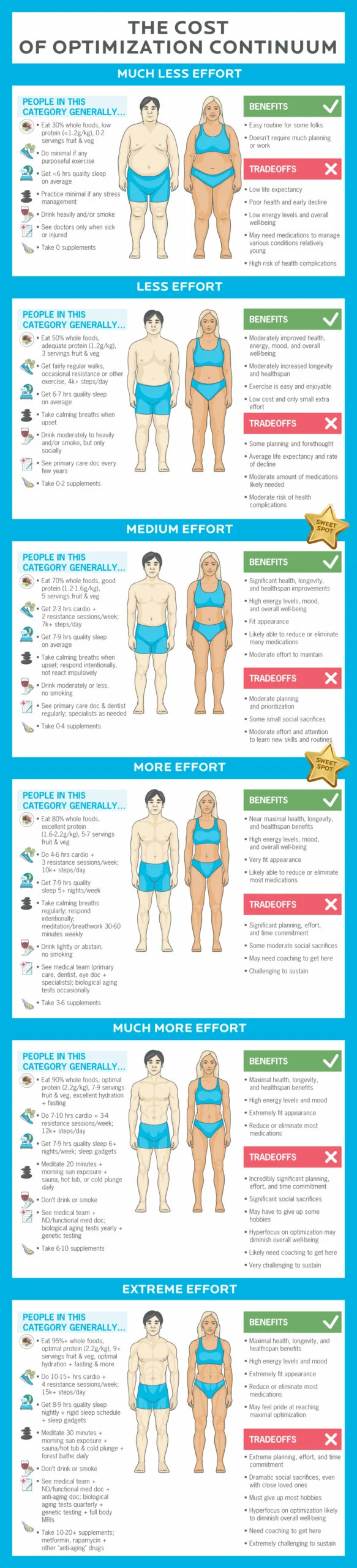
In an era defined by the pursuit of the "perfect" human, the message has become deafening: if you aren’t biohacking your way to 120, you’re failing. From viral podcasts hosted by health gurus like Peter Attia and Andrew Huberman to the extreme, data-driven experiments of figures like Bryan Johnson, the cultural zeitgeist is obsessed with the idea that aging is a disease to be cured through expensive protocols, advanced tracking, and obsessive optimization.

But for the vast majority of people, this "optimization culture" is not just unattainable—it is counterproductive. As we navigate the complex landscape of modern longevity advice, a startling reality emerges: the path to a long, healthy life isn’t paved with experimental supplements or daily ice baths. It is built on the unglamorous, consistent application of the basics.

The Myth of Optimization
The current health movement often frames longevity as an engineering problem. If we can just optimize our biomarkers, we can prevent decline. While the intent is noble, it creates a dangerous "all-or-nothing" mentality.

At Precision Nutrition, where we have coached hundreds of thousands of individuals, we have found that "optimal" is rarely realistic. More importantly, it isn’t necessary. The data suggests that making modest, consistent efforts toward health yields significantly better long-term results than an intense, high-stress protocol that is abandoned after three months.

The Diminishing Returns of Complexity
There is a fundamental law of diminishing returns in human biology. If you are sedentary, adding 30 minutes of walking to your day provides a massive boost to your health span. However, the difference between an "extremely healthy" person and a "biohacked" person is often marginal, yet the effort required to bridge that gap is exponential.

When health efforts become too complex, they often interfere with the very things that make life worth living: social connection, stress management, and genuine enjoyment. If your "optimized" life prevents you from sharing a meal with your family or getting enough sleep because you are too busy monitoring your wearable data, you have arguably sacrificed your health in the name of optimization.

The Pillars of Longevity: Back to Basics
If we strip away the marketing, the science of longevity remains remarkably consistent. The most effective behaviors for extending your health span are the "boring" ones.

1. The Power of Movement
Exercise is the single most potent medicine we have. Research from Harvard alumni studies to massive population meta-analyses confirms that any physical activity reduces the risk of all-cause mortality.

- The Sweet Spot: The greatest health dividends are paid when you accumulate 7.5 to 15 MET-hours of activity per week.
- Beyond Cardio: Resistance training is the unsung hero of aging. It preserves muscle mass, stabilizes blood sugar, and—crucially—prevents the falls that lead to significant morbidity in older adults.
- The Extreme Exercise Hypothesis: There is a U-shaped curve to exercise. While being sedentary is lethal, extreme, high-volume endurance training can potentially cause cardiac issues like atrial fibrillation. The goal is "high," not "highest."
2. Nourishing the Body
Nutrition is often the most over-complicated pillar. The evidence is overwhelming: the most effective diet is one rich in whole, minimally processed foods.

- The Processed Food Penalty: Data from nearly 10 million participants shows that ultra-processed foods (UPFs) are linked to 32 distinct health harms, including obesity and cardiovascular disease.
- The "Five-a-Day" Rule: Five servings of fruits and vegetables remains the gold standard. Benefits plateau after this point, meaning eating 15 servings is unlikely to provide significant additional longevity benefits compared to five.
- The Protein Imperative: As we age, protein becomes our insurance policy against sarcopenia (muscle loss). For most, 1.2 grams per kilogram of body weight is an ideal target, with higher amounts reserved for those actively building muscle.
3. The Forgotten Pillars: Sleep, Stress, and Socialization
Modern health culture often ignores the "soft" factors, but they are statistically the most significant predictors of survival.

- Sleep: A one-hour decrease in sleep duration is associated with an 11% increased risk of cardiovascular disease. Sleep is the brain’s cleaning cycle; it is non-negotiable.
- Stress Management: Stress isn’t inherently bad—it is a signal of engagement. The goal is not to eliminate stress, but to build a "recovery jug" that is large enough to handle the stressors of daily life.
- Social Connection: The Harvard Study of Adult Development, spanning over 87 years, identified strong social relationships as the single greatest predictor of life satisfaction and longevity. Loneliness is as damaging to your health as smoking 15 cigarettes a day.
The Financial and Temporal Cost of Optimization
The "optimizer" lifestyle is a luxury product. When we calculate the time and money spent on specialized supplements, wearable tech, longevity clinics, and boutique fitness, the "optimizer" invests 3 to 4 times more than the "healthy" individual.

Yet, that 300% increase in investment does not equate to a 300% increase in lifespan. Often, the extra effort buys only a fraction of a percent in risk reduction, while significantly increasing the "cognitive load" of the individual.

Implications for the Future
The most critical takeaway for the individual is to tune out the noise. Your health is not a software update; it is a life-long process of adaptation.

A Framework for Informed Decision-Making
- Clarify Your Goals: Do you want to be a professional athlete, or do you want to play with your grandchildren in your 90s? The protocols differ vastly.
- Audit Your Basics: Before purchasing the latest longevity supplement, ask: Am I sleeping 7–9 hours? Am I eating five servings of produce? Am I moving daily? If the answer is no, start there.
- Evaluate Tradeoffs: Understand that for every "optimizer" habit you add, you are likely taking time or energy away from something else. Is it worth it?
- Embrace "Deep Health": True health includes social, emotional, and existential well-being. A person with perfect blood panels who is socially isolated and profoundly unhappy is not "optimized."
Conclusion
The pursuit of longevity is a marathon, not a sprint. The "optimization culture" often encourages us to sprint until we collapse, only to realize we’ve missed the finish line.

True longevity is not found in the fringe or the expensive; it is found in the sustainable. It is found in the simple, consistent, and intentional choices we make every day. By prioritizing the foundational behaviors—movement, whole foods, adequate rest, stress management, and meaningful relationships—you are not just adding years to your life; you are adding life to your years.

Reference Summary
The insights provided in this article are synthesized from global longitudinal studies, including the Harvard Study of Adult Development, WHO health guidelines, and internal data points from over 100,000 coaching clients. For a full breakdown of the academic literature, including studies on MET-hours, protein synthesis, and the impact of ultra-processed foods, readers are encouraged to consult our comprehensive [References Database].

Are you a coach looking to help others find sustainable health? Consider the PN Level 1 Nutrition Coaching Certification to learn how to guide clients toward lasting change.


 Nila Kartika Wati
 Iffa Jayyana
