

 Ali Ikhwan

 Iffa Jayyana

 Muslim

 Nana

 Dwi Wanna
In 2017, when semaglutide—the active ingredient in Ozempic—first gained regulatory approval, few health and fitness professionals viewed it as a seismic shift. For years, the medication remained a footnote in the fitness industry, a "theoretical" medical intervention that existed primarily in the periphery. Fast forward to 2026, and the landscape has fundamentally transformed. With over 1 in 10 U.S. adults now utilizing GLP-1 receptor agonists, the conversation within the coaching community has shifted from existential dread to a more pragmatic question: How do we effectively support this massive, rapidly growing population?
The initial fear that these medications would "steal the jobs" of trainers and nutrition coaches has largely dissipated, replaced by a nuanced understanding of the coach’s role as an essential, additive partner in the medical journey. As the industry evolves, the most successful professionals are realizing that their target market is no longer just "people who want to lose weight"—it is specifically "people on GLP-1s who want the support to do it well."
The Chronology of a Shift: From Threat to Tool
The adoption of GLP-1 medications followed a clear, three-stage trajectory over the last decade:
- The Inception Phase (2017–2020): The medication was reserved for clinical populations with severe metabolic dysfunction. Coaches rarely encountered these clients, and when they did, it was usually in a medical weight-loss clinical setting.
- The Visibility Phase (2021–2024): As prescription rates surged, the social stigma began to fracture. Fitness influencers and everyday clients alike began openly discussing their use of the medication, moving it from a medical secret to a mainstream lifestyle tool.
- The Integration Phase (2025–Present): We are now in the era of "coaching as a complement." Coaches have recognized that while GLP-1s can manage hunger and blood sugar, they cannot build muscle, optimize nutrient density, or establish the lifelong psychological habits necessary for long-term health.
The Data: Why Coaching Matters More Than Ever
The clinical reality of GLP-1 usage presents both opportunities and significant risks. Data indicates that without deliberate intervention, up to 40 percent of weight lost via GLP-1 medication can be attributed to lean body mass reduction—primarily muscle. This "hidden" loss of muscle creates a metabolic trap: while the scale goes down, the client’s metabolic rate also plummets, making future weight maintenance increasingly difficult.
Furthermore, statistics show that nearly 50 percent of GLP-1 users discontinue the medication within the first 12 months. Whether due to side effects, cost barriers, or personal choice, this high rate of attrition leaves millions of individuals in a state of vulnerability. Those who have not developed robust, non-reliant habits during their time on the medication are statistically far more likely to experience rapid weight regain. Conversely, research suggests that individuals who pair medication with structured resistance training and strategic protein intake are four times more likely to maintain their weight loss if they choose to transition off the drug.
Categorizing the Modern Client: 7 Profiles of Readiness
Recognizing that "readiness" is fluid, coaches must adapt their approach based on the specific stage of the client’s journey.
1. The Honeymooner (Low Readiness)
This client is experiencing rapid, "effortless" weight loss. They are thrilled and typically resistant to changing their diet or exercise habits.
- Coaching Strategy: Avoid the "righting reflex." Do not lecture them on muscle loss. Instead, validate their success and plant a seed: "I’m so happy to hear things are going well. If you ever feel like you want to optimize your results with some training, I’m here."
2. The Ambivalent Candidate (Low-to-Moderate Readiness)
This individual is struggling with the decision to start. They often face internal conflict regarding whether the medication is a "shortcut" or a sign of weakness.
- Coaching Strategy: Use the "4 Crazy Questions" framework to explore the risks of both action and inaction. Focus on their values and the foundational habits that remain necessary regardless of their medical decision.
3. The Ready-to-Quitter (Moderate Readiness)
The medication is working for weight loss, but the side effects—nausea, fatigue, and malaise—are making life unbearable.

- Coaching Strategy: Normalize the experience. Educate them on the necessity of looping in a doctor for dose adjustments and guide them toward "experimenting" with smaller, more frequent, nutrient-dense meals.
4. The Muscle-Loss Risk (Moderate Readiness)
The scale is dropping, but the client is losing muscle tissue due to high inactivity and insufficient protein.
- Coaching Strategy: Use objective data like a DEXA scan or strength-testing to "make the invisible visible." Prioritize 25-40g of protein per meal and low-threshold, sustainable resistance training.
5. The Under-Fueler (Moderate-to-High Readiness)
The medication has suppressed appetite so effectively that the client has stopped eating almost entirely, leading to energy depletion and hair loss.
- Coaching Strategy: This is a red flag for potential disordered eating. Implement a structured eating schedule rather than relying on hunger cues. If the client resists, refer to a medical professional immediately.
6. The Graduate (High Readiness)
The client has decided to wean off the medication. They are often anxious about the "rebound" effect.
- Coaching Strategy: This is the critical transition period. Focus on maintaining the "ruts" in the road—the habits built while on the medication—to ensure they don’t lose ground when appetite cues return.
7. The Priced-Out (High Readiness)
The client was thriving on the medication but is forced off due to insurance changes or costs.
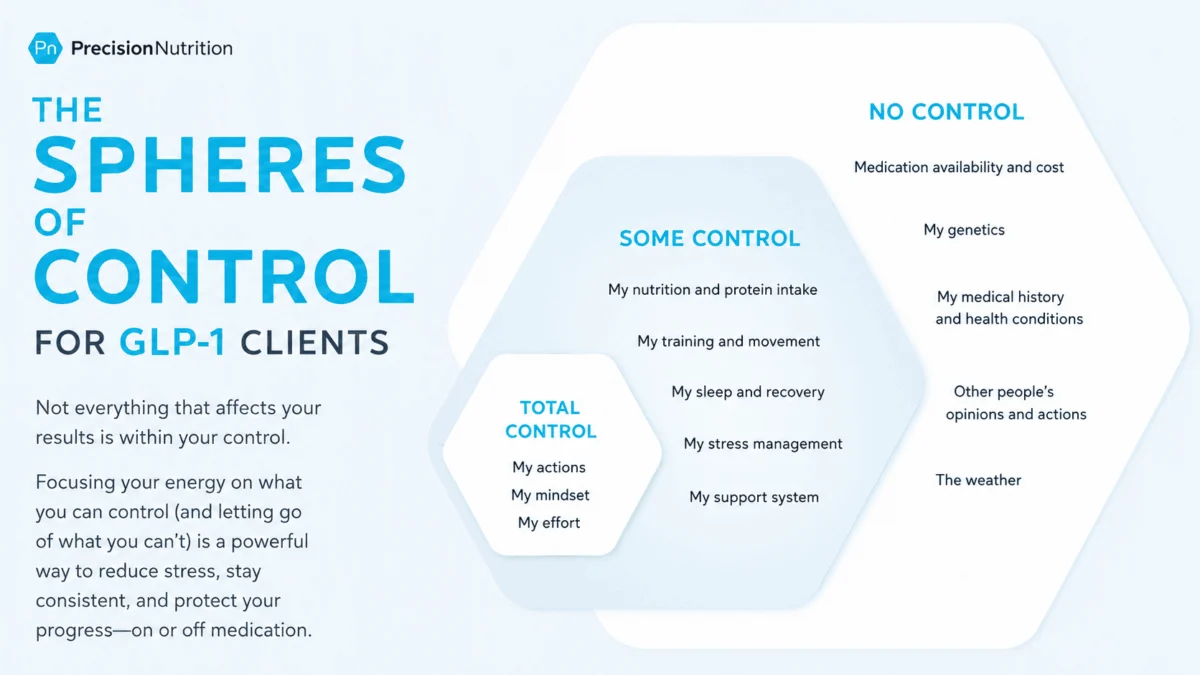
- Coaching Strategy: Emphasize the "Spheres of Control." Redirect their frustration with the healthcare system toward the aspects of their health they can control: training, protein intake, sleep, and stress management.
Official Responses and Ethical Implications
Professional organizations in the health and fitness space have largely pivoted to a "supportive, not prescriptive" stance. Coaches are reminded that while they can help clients navigate the lifestyle side of GLP-1 use, medical decisions—dosage, frequency, and prescription—remain strictly under the purview of licensed medical practitioners.
The ethical imperative for a coach is to prioritize the client’s long-term autonomy. As Coach Toni Bauer of Precision Nutrition emphasizes, "I can’t promise anyone they’ll never regain weight, but I can promise that the habits we build while the medication is doing its work are the ones that will still stand when it isn’t."
Implications for the Future of the Industry
The rise of GLP-1s has not rendered the health coach obsolete; rather, it has demanded a higher level of professional rigor. The future of the industry lies in the "GLP-1 support world." This requires a shift in how we measure success. Moving forward, a coach’s value will be defined by their ability to:
- Bridge the Gap: Helping clients maintain physical function and muscle mass during the "chemical assistance" phase.
- Ensure Continuity: Creating behavioral "ruts" that prevent the pendulum from swinging back when the medication is removed.
- Manage Identity: Guiding the client to view themselves as someone who takes ownership of their health, regardless of the pharmacological tools they may be using.
As the industry moves toward formal certifications like the GLP Coaching Institute, the baseline for professionalism will rise. Coaches who can synthesize scientific understanding of metabolic health with deep, empathetic coaching frameworks will not only survive the GLP-1 era—they will define it. The medication may change the chemistry of the body, but the core work of human behavior change remains, now more vital and complex than ever.

 Nana Muazin

 Evan Lee Salim

