

 Ali Ikhwan

 Iffa Jayyana

 Muslim

 Nana

 Dwi Wanna
 Basiran
It is a familiar, if unwelcome, annual phenomenon: the calendar turns to September, the temperature remains stubbornly in the 80s, yet the retail world begins its aggressive pivot. Suddenly, the airwaves and storefronts are saturated with the scent of synthetic pumpkin spice and the aesthetic of decaying leaves. For those who find this premature transition jarring—who feel there is still a significant stretch of sunshine left to savor before the inevitable onset of winter’s grey chill—there is a quiet, culinary act of rebellion to be found in the kitchen.
We are not ready to abandon the garden just yet. While the world demands we prepare for wool coats and heavy stews, there is a case to be made for the "tomato holdout." By leaning into the final, peak-season bounty of late summer, we can extend the season of light, preserving the memory of heat through dishes that rely on the purity of fresh produce.

Main Facts: The Tomato Risotto Manifesto
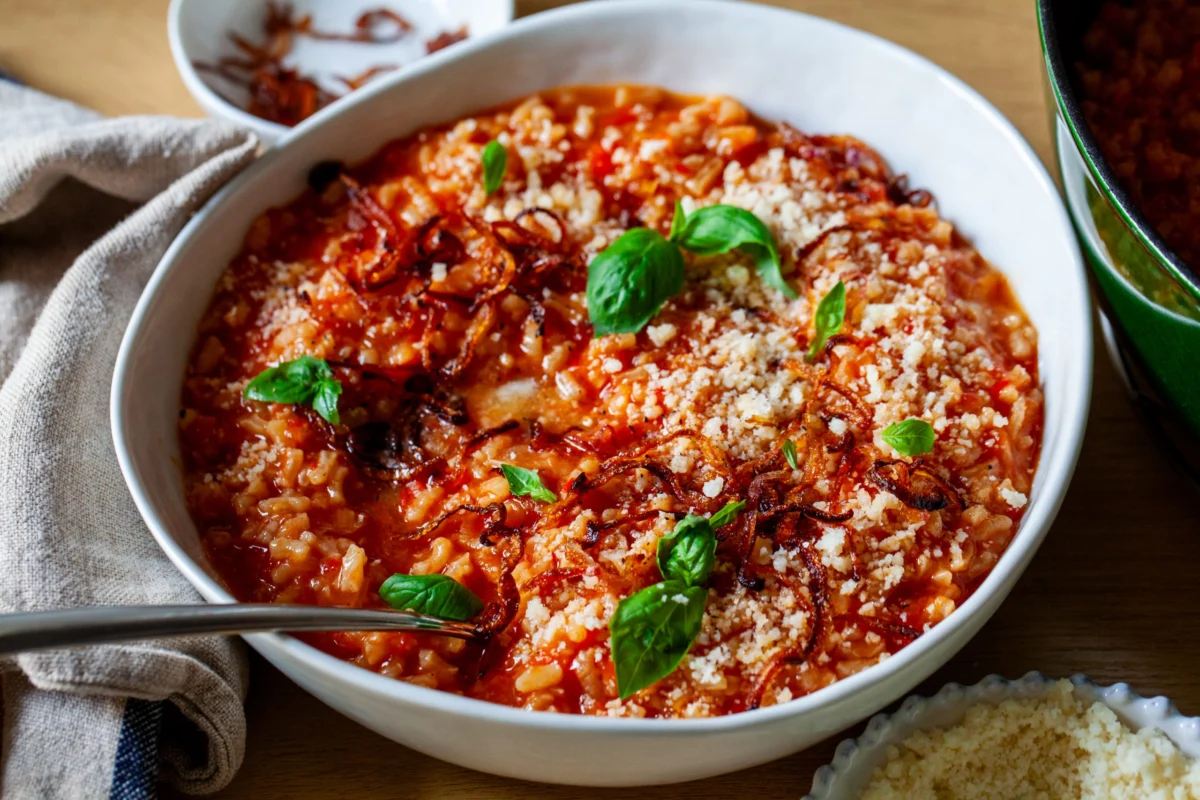
At the center of this seasonal resistance is a dish that defies the traditional, labor-intensive dogma of Italian cooking: the Oven-Baked Tomato Risotto with Frizzled Red Onions. This recipe serves as an antidote to the "hurry-up-and-wait" culture of modern autumn marketing.
The philosophy behind this dish is simple: simplicity is the highest form of sophistication. By utilizing the grated pulp of fresh, ripe tomatoes—discarding the skins and reserving the essence—one creates a risotto base that is vibrant, uncluttered, and deeply expressive of the vine. By opting for water rather than a complex stock, the chef allows the "clear-noted" acidity of the tomato to take center stage. It is a dish that refuses to be weighed down by the heavy, dairy-laden preparations often associated with traditional risotto, proving that a "less is more" approach yields a more honest result.

Chronology: A Culinary Evolution
The journey toward this specific recipe began over a decade ago, with the development of traditional rice-stuffed tomatoes. In that original iteration, the short-grain rice acted as a sponge, absorbing the pure, concentrated juices released by the fruit during the baking process. It was a revelation in texture and flavor balance that lingered in the memory long after the tomatoes were gone.
- 2013: The initial exploration of rice-stuffed tomatoes highlighted the compatibility of tomato juice and starchy grains.
- 2021: A re-evaluation of risotto techniques challenged the "sacred" rules of the dish, specifically the necessity of constant stirring and the reliance on heavy butter-mounting. This paved the way for the "oven-bake" method.
- 2025 (Present Day): The synthesis of these two concepts—the tomato-heavy flavor profile and the low-maintenance baking method—culminates in this latest recipe. The addition of "frizzled" red onions introduces a textural contrast that bridges the gap between the soft, creamy rice and the crisp, lingering warmth of late summer.
Supporting Data: Deconstructing Risotto Dogma
For decades, home cooks have been told that risotto is a temperamental beast requiring forty minutes of constant, meditative stirring. However, empirical testing in modern home kitchens suggests that the "stirring mandate" is largely a culinary myth.

When placed in a 350°F oven with the correct ratio of liquid to grain, rice undergoes a controlled hydration process that results in a perfectly al dente texture without the need for manual agitation. By utilizing a Dutch oven, the heat is distributed evenly, mimicking the environment of a stovetop pan while freeing the cook to attend to other matters—or simply to enjoy the remaining summer daylight.
Furthermore, the "frizzled" onion component adds a critical sensory layer. By thinly slicing red onions and frying them until deeply golden brown, the cook introduces a concentrated sweetness and a subtle, savory crunch. Dividing these onions into two batches—one to meld with the rice during the bake and one to provide a crisp finish at the table—ensures that the flavor profile remains dynamic throughout the meal.

Official Perspectives on Seasonal Transition
While there is no "official" governing body of home cooking, the collective sentiment of food historians and cultural observers suggests that our fixation on "seasonal creep" is a psychological defense mechanism. By ushering in fall prematurely, we attempt to exert control over the passage of time.
Psychologists suggest that the "pumpkin spice phenomenon" acts as a comfort signal, promising a predictable cycle of holidays and cozy traditions. However, culinary experts argue that this creates a "flavor deficit." By forcing ourselves into squash and sage before the tomatoes have finished their final, sun-drenched surge, we miss out on the peak potential of the agricultural calendar. The decision to cook with fresh tomatoes in September is, therefore, not merely a recipe choice—it is a conscious psychological stance against the erasure of summer.

Implications: The Social and Personal Cost of the Calendar
The refusal to abandon summer produce also speaks to the personal lives of those navigating the changing of the seasons. Whether one is watching children transition from middle school to high school or simply witnessing the cycle of the year, there is a temptation to rush toward the next phase.
Cooking, in this context, becomes an exercise in mindfulness. By grating a tomato, listening to the sizzle of an onion, and waiting for the oven to do the heavy lifting, the cook is anchored in the present. This risotto is a tactile reminder that there is value in the "dwindling" phase.

Why the "Frizzled" Onion Matters
The addition of the frizzled red onion serves a dual purpose:
- Aromatic Depth: It provides a sharp, savory backbone that balances the inherent sweetness of the tomato pulp.
- Structural Integrity: It replaces the need for fatty proteins like bacon or prosciutto, keeping the dish light enough for a warm September evening while maintaining a sense of luxury.
The Vegan Potential
The recipe is inherently versatile. By finishing with olive oil and fresh basil rather than Parmesan and butter, the dish transforms into a vegan-friendly centerpiece that sacrifices none of its complexity. This flexibility is the hallmark of a recipe designed for the modern table, where dietary needs vary but the desire for high-quality, seasonal food remains constant.

Conclusion: Savoring the Final Act
As we look toward the inevitable arrival of autumn, we do not have to abandon the kitchen’s potential for joy. The Tomato Risotto with Frizzled Red Onions serves as a reminder that the transition between seasons is not a binary switch. It is a slow, gradual fading of light and heat.
By holding onto the tomato, we hold onto the sun. We ignore the premature advertisements for winter coats, we disregard the pressure to move on, and we focus instead on the immediate, tangible pleasure of a meal cooked in real-time. Whether you are seeking a quiet moment of reflection or a delicious way to utilize the last of the garden’s harvest, this dish provides the perfect vessel.

Summer may be coming to a close, but as long as the tomatoes are ripe and the onions are frying, there is still time to sit down, enjoy a glass of wine, and celebrate the season exactly as it is—not as the calendar demands it to be.


