

 Azzam Bilal Chamdy
 Neng Nana
 Nana Muazin
 Dwi Wanna
 Raul Delapena Setiawan
 Pevita Pearce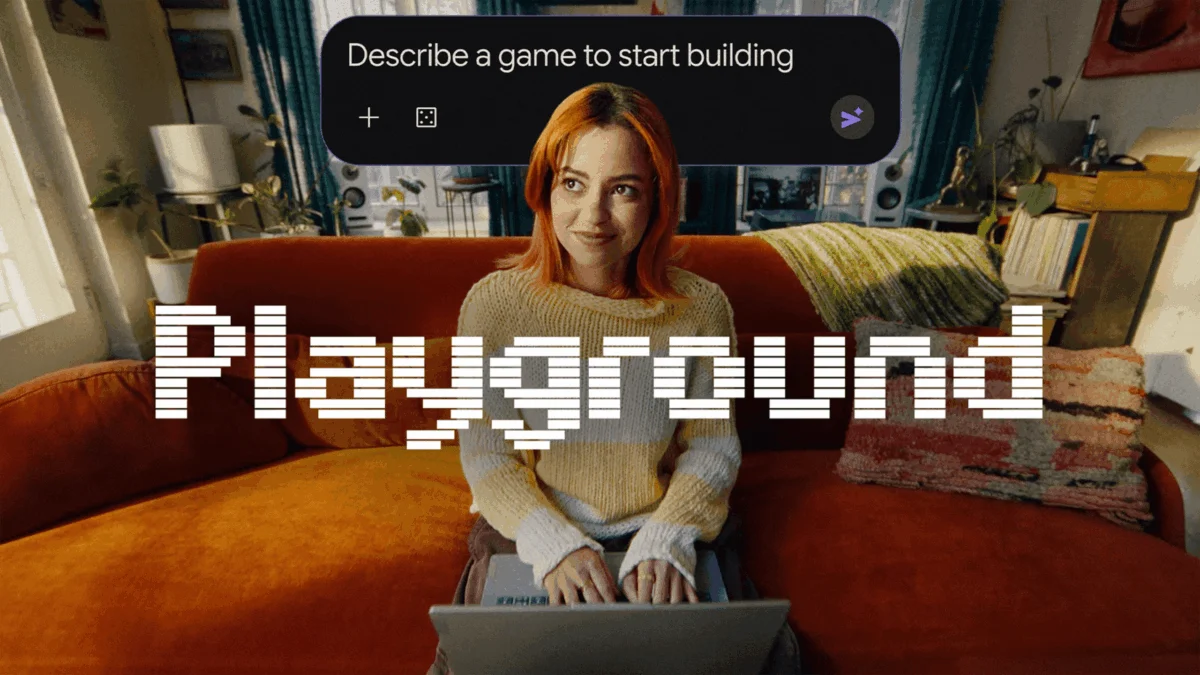
In the rapidly evolving landscape of generative artificial intelligence, the barrier to entry for creative production has never been lower. This week, Google unveiled its latest experimental platform, Playground, a service housed within the Google Labs ecosystem that allows users to conjure functional, browser-based video games through simple, natural language prompts. Much like the “vibe coding” phenomenon that has recently swept through software development, Playground enables users with zero traditional programming experience to act as lead designers, iterating on game mechanics, assets, and narrative flair through a conversational interface.
However, as the excitement surrounding this democratization of game development settles, a more complex reality emerges. While the technology is undeniably impressive, it also highlights the inherent limitations of AI-generated content—often resulting in a polished yet repetitive aesthetic that critics are increasingly labeling as “AI slop.”
The Mechanics of Creation: How Playground Works
At its core, Google Playground functions as a sophisticated abstraction layer between human intent and machine code. Users enter a chatbot-like interface where they describe the game they envision. The platform then utilizes Google’s backend models to build a playable version of that game in real-time. If a user wishes to make adjustments—such as changing a character’s speed, altering the art style, or adding specific win conditions—they simply issue further commands.
The system is remarkably responsive. Users can upload reference materials, including photos, videos, or 3D models, to guide the AI’s aesthetic choices. For those without reference assets, the platform defaults to AI-generated visuals, which often lean toward a clean, vector-based, or retro-cyberpunk aesthetic. This process mirrors Meta’s Horizon Create, announced earlier this year, signaling a broader industry push to make game creation as ubiquitous as writing a document or creating a slideshow.
A Chronology of Discovery: Building Through Conversation
To test the capabilities of the platform, we spent a day experimenting with various prompts to gauge the platform’s agility. The results were immediate, stable, and occasionally surreal.
.png)
1. The Prototyping Phase: "Pork Drop"
The initial experiment was a straightforward attempt to recreate a classic: "Tetris, but with cute pigs instead of blocks." Within seconds, the AI generated a functional puzzle game where the falling blocks were stylized pigs. A follow-up instruction—requesting that the pigs be "distorted to fit the shape of the blocks while remaining cute"—resulted in a playable version of the game, though the AI’s interpretation occasionally resulted in somewhat uncanny, sprawling pig-shapes that gave the game an unintentionally surreal edge.
2. Narrative and Social Dynamics: "Dinner Darling"
Moving from mechanics to narrative, a second experiment involved the prompt: "Gay dinner party." The AI generated Dinner Darling, a 2D, Flash-style simulation game reminiscent of early 2000s web gaming. Players act as a host named Julian, tasked with managing a hectic dinner party. The challenge lies in multitasking: preparing artisanal bruschetta and espresso martinis for guests who refuse to sit. While the game lacked explicit narrative depth regarding the requested theme, its frantic pace and "Bitmoji-esque" art style provided a surprisingly cohesive, albeit chaotic, experience.
3. The "Masterpiece": "Neon Don"
The most complex project was "Neon Don," a top-down, cyberpunk-themed shooter. By iteratively refining the prompts, the game evolved from a simple rhythm-based title into a Hotline Miami-inspired arcade shooter. Through a series of follow-up requests, the AI added specific enemy archetypes—characterized by "prominent beer bellies" and "tough-guy swagger"—and implemented a snarky, text-based dialogue system. The protagonist, a jaded ex-cop, would deliver quips like, "Brenda took everything else away!" during combat, adding a layer of darkly humorous narrative that the user did not explicitly script.
Supporting Data and User Limitations
While the ease of use is staggering, the platform is not without its bottlenecks. Google currently enforces a strict usage allowance, likely to manage server load for these resource-intensive AI computations. Once a user hits their limit, they are barred from further iterations until their credits refresh.
Furthermore, the platform exhibits a persistent "sameness." Because the AI draws from a finite set of training patterns, the menu designs, background music, and combat systems across different user-created games often feel identical. This homogenization is the primary hurdle preventing Playground from being a truly transformative creative tool. When every game feels like a variation of the same template, the "creative" input from the human user begins to feel more like choosing options from a dropdown menu than actual game design.

Official Responses and Industry Context
Google has positioned Playground as a key pillar of its Google Labs initiative, following in the footsteps of previous experimental tools like its music production AI. The company’s strategy is clear: by lowering the barriers to entry, they are gathering massive amounts of data on how non-coders conceptualize software.
In broader industry terms, this represents a shift in the "creator economy." If the cost of building a game drops to near zero, the value of the final product changes. Industry experts suggest that while platforms like Playground are excellent for rapid prototyping or educational purposes, they lack the "soul" of bespoke, handcrafted development. The reliance on AI to bridge the gap between idea and execution means that, currently, the AI does the heavy lifting, and the human provides the "vibe."
The Implications: Is This the Future of Gaming?
The long-term implications of services like Playground are profound. If the ability to generate a game becomes as simple as sending a text message, we are likely to see a deluge of "micro-games" hitting the internet. This could lead to a renaissance of hyper-niche, personal games that might never have been made in a traditional development environment.
However, there is a significant risk of platform fatigue. If the market is flooded with thousands of games that all share the same underlying physics, aesthetic, and menu structure, the novelty will wear off quickly. The term "AI slop" has gained traction precisely because of this—the fear that we are trading human ingenuity and intentionality for an endless stream of algorithmically generated "content."
As we look toward the future, the question is not whether AI can make a game, but whether it can make a meaningful one. My experience with "Neon Don" highlights both the promise and the peril: I was able to build a functional, funny, and playable game in an afternoon, but I was also limited by the AI’s inability to understand the "soul" of the project. When I asked for a "backflip" mechanic, the AI insisted on a "Doge flip," a quirk I couldn’t override without waiting for my usage credits to reset.

Conclusion
Google Playground is a fascinating experiment in the democratization of creativity. It provides a playground for the imagination, allowing users to see their ideas manifest in pixels and code in a matter of minutes. Yet, it remains an experimental service, constrained by its own technological limitations and the repetitive nature of its output.
For now, the platform is a perfect mirror of our current moment in the AI revolution: it is capable of impressive feats, yet it remains tethered to the rigid patterns of its training data. It is a powerful tool for those who want to experiment with the concept of game design, but for those seeking to create something truly original, the "vibe" might not be enough to carry the game to greatness. As the technology matures, it will be fascinating to see if Google can move beyond the "slop" and provide tools that empower, rather than just automate, the creative spirit. Until then, we are left with a collection of fun, fleeting experiences—perfect for a quick distraction, but perhaps not the next industry-defining hit.


 Laily UPN
 Rifan Muazin
