

 Raul Delapena Setiawan

 Ammar Sabilarrohman
 Lina Irawan
 Suro Senen
 Siti Muinah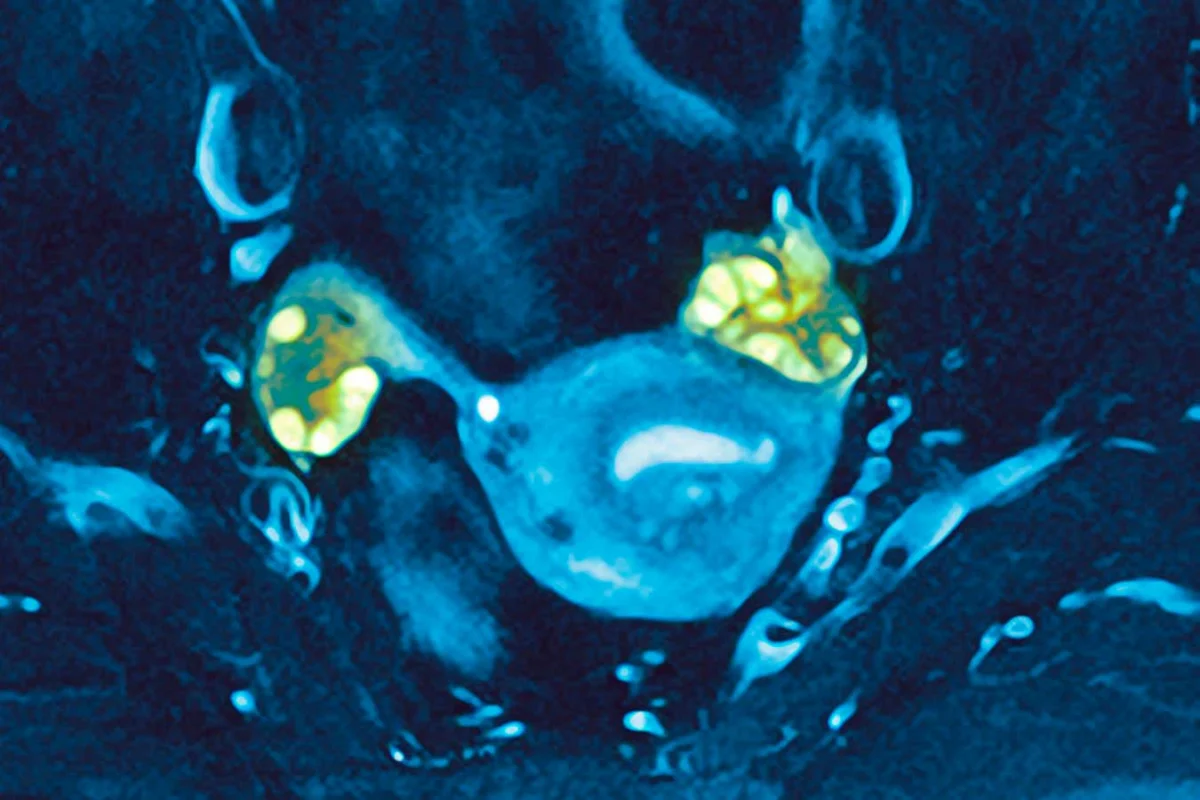
For decades, Polycystic Ovary Syndrome (PCOS) has been framed primarily as a condition of biological adversity. Characterized by hormonal imbalances, metabolic disruptions, and often significant challenges with fertility, it has long been associated with the frustration of irregular cycles and the clinical anxiety of trying to conceive. However, emerging research is shifting the narrative, suggesting that for many women, the biological landscape of PCOS undergoes a profound—and surprisingly beneficial—transformation after the age of 40.
New findings from the Northern Finland Birth Cohort study indicate that the very mechanisms that complicate fertility in young adulthood may pave the way for a healthier, more extended reproductive window, leading researchers to describe late-life pregnancies in these women as “evening stars.”
The Shifting Landscape of Reproductive Health
PCOS is historically known for its triad of clinical markers: irregular or absent ovulation, hyperandrogenism (elevated testosterone), and the presence of small, underdeveloped follicles within the ovaries. For years, these follicles were misidentified as cysts, leading to the condition’s misleading moniker. As clinical understanding deepens, the medical community is moving toward a formal rebranding of the syndrome to better reflect its nature as a complex endocrine and metabolic condition rather than a simple gynecological disorder.
In young adulthood, the hallmark of PCOS is a "crowded" ovary. Women with the condition often possess a higher-than-average reserve of follicles. While a high ovarian reserve is generally considered a sign of robust fertility, in the context of PCOS, these follicles struggle to reach full maturity. They compete for hormonal cues, get stuck in a state of arrested development, and crowd the ovary, which prevents the successful release of a mature egg. This mechanical and hormonal congestion leads to the hallmark symptom of infrequent or absent ovulation.
However, as a woman reaches her late 30s and early 40s, the natural, age-related decline in egg supply—which occurs in all women—acts as a paradoxical relief for those with PCOS. As the total number of follicles diminishes, the overcrowding eases. The ovaries become "uncluttered," allowing the remaining eggs to mature and be released with greater ease and regularity.
Chronology: From Diagnosis to the "Evening Star" Years
The journey of a woman with PCOS is often one of medical vigilance. According to data from the Northern Finland Birth Cohort, which tracked 1,849 women born in 1966, the progression of the condition follows a distinct timeline:
- Age 31: Among the study participants, 380 women met the clinical criteria for PCOS. At this stage, these women experienced the classic hurdles of the syndrome: metabolic sensitivity, weight management challenges, and the psychological burden of irregular fertility.
- Ages 35–40: During this window, many women with PCOS begin to notice a stabilization in their cycles. While their peers may be experiencing the initial signs of perimenopause, the biological "cushion" provided by their higher initial egg reserve keeps their hormonal profile more stable.
- Age 46 and Beyond: The disparity between those with and without PCOS becomes stark. While 18 per cent of the women in the control group had entered late perimenopause or menopause by age 46, only 3 per cent of those with PCOS had reached that milestone.
This delay is not merely a statistical curiosity; it represents a significant shift in the biological clock. Research from Sweden has corroborated these findings, noting that women with PCOS reach menopause, on average, four years later than their counterparts.
Supporting Data and the Evolutionary Perspective
The medical implications of delayed menopause are significant. Menopause is characterized by a systemic drop in oestrogen, a hormone that serves as a protective agent for bone density, cardiovascular health, and skin integrity. By extending the reproductive window, women with PCOS may effectively delay the onset of these age-related declines.
Dr. Terhi Piltonen of Oulu University Hospital, a lead researcher in the field, emphasizes that this delay could be a critical evolutionary adaptation. "PCOS is so common that I think it must have had some benefits," she posits. In ancestral environments where food security was intermittent and the physical demands of early motherhood were extreme, the metabolic profile associated with PCOS—the ability to efficiently store energy—combined with the ability to reproduce later in life, may have provided a selective advantage.
Furthermore, studies suggest that reaching menopause after age 55 is linked to an average increase in lifespan of two years compared to those who transition before age 40. By extending the period of hormonal activity, PCOS might, in effect, act as a biological safeguard against the rapid aging effects associated with the sudden cessation of ovarian function.
Official Responses and Clinical Implications
The medical community is now tasked with re-evaluating how they counsel patients with PCOS. For years, the narrative focused exclusively on the "problem" of infertility. Dr. Piltonen and her team are advocating for a more nuanced approach, one that prepares women for the possibility of later-life fertility and recognizes the long-term health advantages of the condition.
"We have had so many women with PCOS telling us how they thought they would never be able to get pregnant without assisted reproductive technology (ART), and then they were so surprised because it happened in their 40s," says Piltonen.
This creates a new clinical responsibility: doctors must ensure that women with PCOS do not inadvertently abandon contraceptive measures in their 40s under the mistaken assumption that their previous infertility remains a permanent state. Conversely, it offers a message of profound hope for those who have spent years navigating the challenges of the condition, only to find that their biology has shifted in their favor precisely when they least expected it.
The Future of PCOS Treatment and Perception
As the medical community moves toward renaming the syndrome, the focus is shifting from "fixing a broken ovary" to "managing a complex metabolism." The historical view of PCOS as a disorder of "cysts" ignored the reality that these follicles are simply waiting for the right hormonal environment.
Current research is not only confirming the "evening star" phenomenon but is also prompting a wider investigation into the protective benefits of the PCOS phenotype. As researchers continue to analyze the long-term health outcomes of the Northern Finland cohort, the focus will likely expand to include how to best support the metabolic health of these women throughout their extended reproductive years.
Ultimately, the story of PCOS is being rewritten. It is no longer just a narrative of hormonal struggle, but one of biological endurance. By understanding the natural evolution of the condition, clinicians can provide better care, and women can approach their 40s with a renewed sense of potential. The "evening star" is not just a poetic term for a late pregnancy; it is a symbol of a biological reality that defies the conventional, often limited, medical expectations of what a woman’s reproductive life should look like.
In conclusion, while the metabolic and hormonal challenges of PCOS are real and require medical attention, they do not tell the whole story. The delayed menopause and the potential for late-life fertility underscore the complexity of the human reproductive system and highlight that what is often perceived as a deficiency in youth can, with the passage of time, evolve into a significant physiological asset.


 Ali Ikhwan
 Iffa Jayyana