
 Raul Delapena Setiawan

 Ammar Sabilarrohman
 Lina Irawan
 Suro Senen
 Evan Lee Salim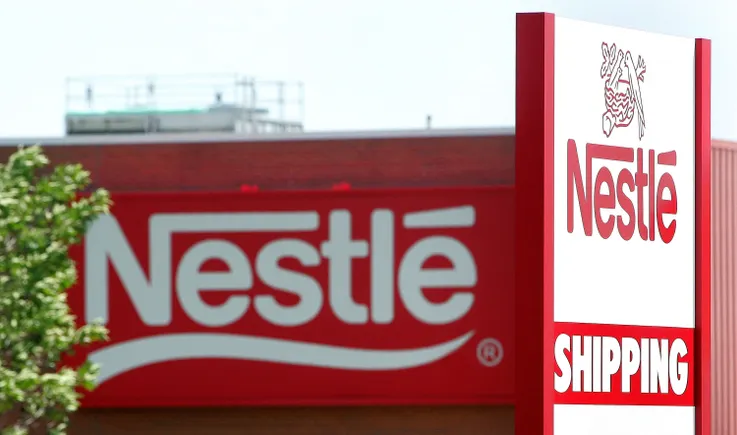
In the rapidly evolving digital landscape, CPG (Consumer Packaged Goods) giants are navigating a complex transition: shifting from the polished, high-production-value advertising of the past toward the raw, authentic storytelling of the creator economy. Nestlé, the global powerhouse behind household names like Nescafé, Coffee Mate, and Purina, is taking a significant step to standardize this transition. By integrating the workflow of two industry titans—CreatorIQ and CreativeX—Nestlé is aiming to bring corporate-grade rigor to the often-chaotic world of social media influencer content.
This technological marriage allows the brand to automatically identify, grade, and optimize creator-led content, transforming high-performing organic social posts into robust paid media assets. As creator marketing matures from a peripheral experimental tactic into a core pillar of the media mix, Nestlé’s move signals a broader industry trend toward institutionalizing influence.
The Convergence of Creativity and Data: The Core Facts
At its heart, the new integration serves as a bridge between the management of influencer relationships and the science of creative performance. Previously, the workflow for a major brand like Nestlé was fragmented. Influencer management platforms, like CreatorIQ, handled the talent—onboarding creators, managing contracts, and reviewing drafts. Separately, creative analytics platforms, like CreativeX, used AI to audit brand assets for adherence to global standards regarding branding, storytelling, and visual effectiveness.
By connecting these two platforms via an API, Nestlé has created a seamless feedback loop. When a creator submits content through CreatorIQ, it is automatically routed to CreativeX. The AI-powered engine then evaluates the content against Nestlé’s specific brand guidelines. If a piece of content aligns with the company’s "creative hygiene" standards, it is flagged as a candidate for paid media amplification.
This process eliminates the guesswork that has historically plagued the "whitelisting" or "sparking" of creator content. Instead of relying on gut feeling, marketing managers at Nestlé can now see an objective score for every piece of content, ensuring that before a single dollar of media spend is committed, the creative is primed for success.
A Chronology of the Social-First Shift
To understand why this integration is significant, one must look at the trajectory of social media advertising over the past decade.
- 2015–2018: The Era of Experimentation: Brands viewed influencers primarily as a way to generate "buzz" or social proof. Budgets were small, often siloed in PR or social media departments, and measurement was limited to vanity metrics like "likes" and "shares."
- 2019–2021: The Rise of Performance Marketing: As TikTok’s algorithm prioritized interest-based discovery over follower counts, brands realized that organic content could be used as high-performing creative for paid ads. TikTok’s introduction of "Spark Ads" formalized this, allowing brands to put paid spend behind creator posts.
- 2022–2023: The Institutionalization Phase: Major CPGs began moving budgets from traditional digital display and TV into creator-led strategies. However, they faced a "quality gap." Creators produced content that looked great in a feed but often lacked the specific branding elements (logos, calls-to-action) required for paid media success.
- 2024–Present: The Integration Era: With the launch of the CreatorIQ and CreativeX partnership, Nestlé is now focusing on scale. The goal is to move beyond one-off influencer activations toward a systematic, automated pipeline where creator content is treated with the same scrutiny and precision as traditional studio-produced commercials.
Supporting Data: The Economic Case for Creator Integration
The numbers driving this change are compelling. According to recent research from the Interactive Advertising Bureau (IAB), creator ad revenue is projected to reach $44 billion this year. This is no longer "experimental" marketing; it is a fundamental media channel.
Crucially, an analysis by CreatorIQ suggests that approximately two-thirds of the growth in creator budgets is now being driven by paid media. This indicates that brands are not just paying for the influencer’s audience; they are paying for the creative asset itself.
The rationale is clear: Consumers are increasingly resistant to over-produced, "perfect" ads. They crave the narrative-driven, human-centric approach that creators master. However, a creator-made video without a clear brand hook is a wasted investment in a paid media environment. By using AI to audit these assets, Nestlé can ensure that their media spend is not just buying reach, but buying impact. As the volume of social content explodes, the ability to filter for the "top 1% of quality output" becomes not just a luxury, but a necessity for maintaining a competitive ROAS (Return on Ad Spend).
Official Responses and Executive Vision
The collaboration between these three entities—Nestlé, CreatorIQ, and CreativeX—is built on a foundation of long-term partnership.
Daniele Tundo, Head of Digital Content, Social Media, and Influencer Marketing at Nestlé, emphasized the need for standardization. "Including creator content in our paid approach means creators need to play within the same framework of paid media advertising, especially when it comes to our standards on creative hygiene and effectiveness," Tundo noted. For a company managing a sprawling portfolio of thousands of products, consistency is the ultimate challenge. The new tool provides the "guardrails" that allow Nestlé to maintain brand integrity while embracing the diverse, fragmented nature of creator content.
Tim Sovay, Chief Partnerships Officer at CreatorIQ, underscored the simplicity of the goal: "You are starting to see now the real desire to convert that organic content that inherently performs better in feeds over to the paid ecosystem. What we’re trying to do is really help simplify that."
Anastasia Leng, CEO of CreativeX, highlighted the synergistic potential. "You have that combination of creator and brand ads working together, amplifying a similar message, but having a lot of creative diversity and variety within them—that’s when you really see the campaign performance shoot up."
Implications for the Future of Marketing
The implications of this integration extend far beyond Nestlé’s internal operations.
1. The Death of the "One-Off" Campaign
The era of the "one-off" influencer campaign is effectively ending. Marketers are moving toward a "content factory" model, where creator content is constantly being generated, audited, and tested. Brands that fail to integrate their influencer management with their paid media workflow will find themselves at a disadvantage, paying more for less effective assets.
2. AI as the Arbiter of Quality
The reliance on AI to score creative is a watershed moment for the industry. While creative work is often viewed as subjective, the data-driven approach taken by CreativeX treats creative as a measurable, improvable asset. This creates a new expectation for creators: they must not only be charismatic and creative, but they must also understand the "rules of the road" for paid advertising if they wish to become long-term partners for major CPG brands.
3. The Democratization of Professionalism
By providing creators with feedback through a structured platform, Nestlé is effectively coaching its influencer partners. If a video is rejected for poor lighting or lack of branding, the creator receives actionable feedback. This elevates the standard of the entire creator ecosystem, as influencers learn how to produce content that performs well for both their audience and the brand’s bottom line.
4. A New Model for Brand Safety
For years, brand safety in the influencer space was about avoiding controversial creators. Now, brand safety also includes "brand effectiveness." Brands are increasingly concerned with whether their advertising investment is actually being seen and whether the brand identity is being effectively communicated. This new toolset provides a layer of assurance that the creative investment is aligned with the broader corporate strategy.
Conclusion
Nestlé’s decision to integrate CreatorIQ and CreativeX represents a critical pivot point in the evolution of modern advertising. By applying the rigor of traditional media to the fluid, fast-paced world of the creator economy, the company is positioning itself to capture the best of both worlds: the high conversion rates of creator-led storytelling and the structural efficiency of data-driven media buying.
As other major CPGs observe this shift, it is likely that similar "integration stacks" will become standard practice. The future of marketing is not about choosing between creators and traditional media; it is about the intelligent, automated fusion of the two. For Nestlé, the "early days" of this experiment are already yielding positive signs—a testament to the fact that in the modern digital economy, the most powerful tool a brand can possess is the ability to scale authenticity with surgical precision.

 Azzam Bilal Chamdy