

 Raul Delapena Setiawan

 Ammar Sabilarrohman
 Lina Irawan
 Suro Senen
 Nana Wu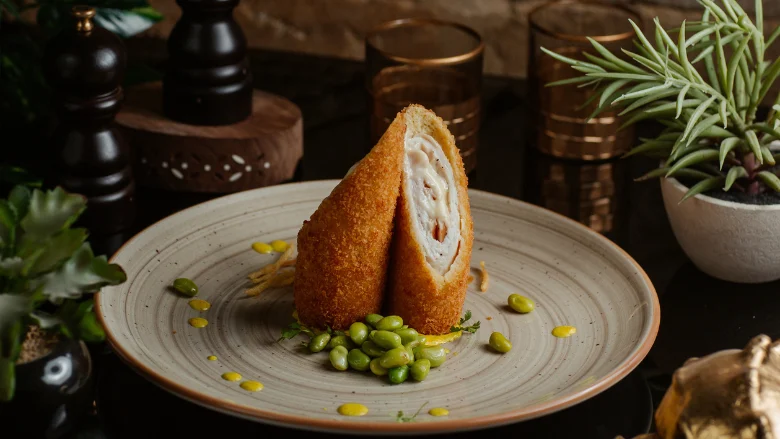
By [Your Name/Journalistic Desk]
In an escalating conflict over federal food safety policy, Consumer Reports (CR) has formally demanded that the U.S. Department of Agriculture’s Food Safety and Inspection Service (USDA-FSIS) provide the scientific data underpinning its sudden pivot regarding Salmonella testing. The advocacy organization’s June 11 letter to USDA Under Secretary for Food Safety Dr. Mindy Brashears marks a significant escalation in the debate over the regulation of not-ready-to-eat (NRTE), breaded, and stuffed chicken products—a category long associated with severe foodborne illness outbreaks.
At the heart of the dispute is the agency’s justification for delaying, and potentially abandoning, verification sampling programs that were originally intended to curb the prevalence of Salmonella at the threshold of 1 colony-forming unit per gram (CFU/g). CR alleges that the agency is hiding behind opaque claims of "inaccurate testing methods" to avoid enforcing the very standards it once touted as scientifically sound.
The Chronology of a Regulatory Retreat
To understand the current impasse, one must look at the rapid shifts in the USDA’s regulatory posture over the last two years. The trajectory of this policy reflects a turbulent period for federal food oversight.
- April/May 2024: The FSIS finalized a landmark determination declaring Salmonella an official adulterant in NRTE, breaded, and stuffed chicken products at levels of 1 CFU/g or higher. This move was celebrated by public health experts as a necessary intervention to stop the cycle of recurring salmonellosis outbreaks linked to these specific products.
- Early 2025: Following the inauguration of the second Trump Administration, the momentum for implementation stalled. The FSIS announced a six-month postponement of the verification sampling, citing the need for additional time to finalize procedures and guidance.
- December 2025: In a move that shocked consumer advocacy groups, the agency announced an indefinite delay of the enforcement program. The stated reason was a newfound concern regarding the reliability of available testing methods, specifically regarding the potential for false positives at low levels of contamination.
- January 2026: During a high-level public meeting on Salmonella reduction, industry experts and technology providers challenged the agency’s technical narrative. Notably, PathogenDx CEO Milan Patel publicly testified that molecular technologies already exist that are fully capable of quantifying Salmonella at the 1 CFU/g regulatory threshold with high precision.
- April 2026: The FSIS officially withdrew its broader regulatory framework for Salmonella in all raw poultry, signaling a complete retreat from its previous, more aggressive approach to foodborne pathogen management.
- June 2026: Consumer Reports issued its formal inquiry, demanding that the USDA reconcile its contradictory positions by June 29.
The Conflict of Data: What Does the Science Say?
The central technical disagreement involves the BioMérieux GENE-UP QUANT Salmonella Test Kit. Previously, the FSIS had identified this specific kit as a viable, accurate method for detecting Salmonella at the 1 CFU/g threshold. By relying on this kit, the agency had initially provided a roadmap for industry compliance.
However, the December 2025 reversal suggests that the agency’s internal assessment of this technology has soured. Brian Ronholm, Director of Food Policy at Consumer Reports, noted in his letter to Dr. Brashears that the agency is now asserting—without public evidence—that the method is prone to error.
"The agency’s claim that current testing methods are insufficient is in direct conflict with its own prior validation," Ronholm wrote. "If the FSIS has uncovered new data that invalidates the GENE-UP QUANT kit, or if it has evidence that the method produces an unacceptable rate of false positives, that information must be made public to allow for peer review and industry transparency."
The ambiguity of the FSIS position leaves food producers in a regulatory limbo. If the technology is indeed unreliable, companies are operating without a clear path to verify their own safety measures. If the technology is sound, the agency’s delay appears to be a matter of political or bureaucratic obstruction rather than scientific necessity.
Implications for Public Health and Food Safety
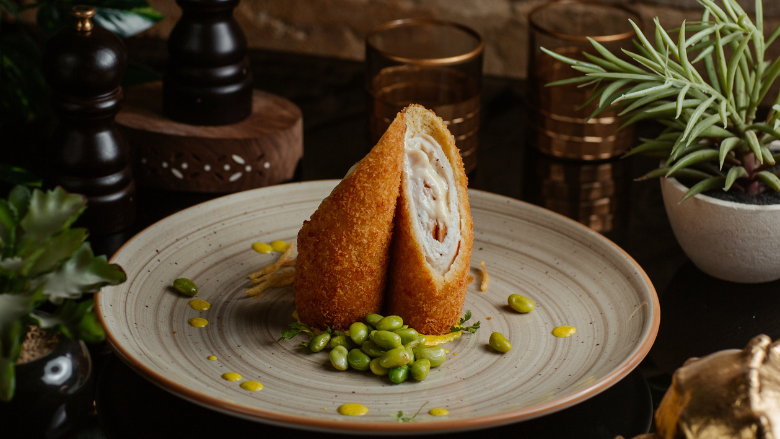
The stakes for this policy are not merely academic. Stuffed chicken products, which often appear cooked due to their breading, have been the vector for numerous outbreaks across the country. Because consumers may inadvertently undercook these products, they represent a uniquely dangerous category of food.
The withdrawal of the broader Salmonella regulatory framework, coupled with the indefinite delay on stuffed chicken enforcement, has left a vacuum in federal food safety standards. Public health advocates argue that by stalling on enforcement, the USDA is effectively prioritizing industry convenience over the prevention of preventable illnesses.
The Impact on HACCP Plans
Under the original 2024 ruling, establishments were required to reassess their Hazard Analysis and Critical Control Point (HACCP) plans. These plans are the backbone of food safety in the U.S., requiring companies to identify potential hazards and establish controls. When the agency stops providing clear regulatory standards, the efficacy of the entire HACCP system is weakened. Without a firm, enforceable standard for Salmonella, companies face little incentive to invest in more robust testing or updated pathogen-reduction technologies.
Economic and Legal Consequences
For the poultry industry, the delay provides short-term relief from stringent testing costs. However, it also creates legal uncertainty. Retailers and distributors are increasingly aware of the dangers posed by contaminated chicken. If the USDA refuses to set a standard, retailers may begin to impose their own, potentially fragmented, testing requirements on suppliers, leading to an uneven playing field that could hurt smaller producers who lack the resources to navigate conflicting requirements.
Official Responses and the Road Ahead
As of mid-June 2026, the USDA-FSIS has yet to provide a substantive response to the questions raised by Consumer Reports. The agency’s shift toward "alternative strategies" for Salmonella reduction—a vague term that has yet to be defined in regulation—has drawn fire from those who believe that mandatory, quantifiable testing is the only way to hold producers accountable.
The upcoming June 29 deadline for a response is expected to be a flashpoint in this debate. If the USDA continues to cite internal, non-public data to justify its delays, observers expect that litigation or Congressional oversight hearings may be the next logical step.
Industry experts remain divided. While some trade groups have supported the agency’s "wait-and-see" approach, claiming that premature enforcement could lead to excessive food waste and unnecessary product recalls, others in the food technology sector argue that the agency is ignoring the reality of current innovation.
"The technology is here," said one industry analyst familiar with the matter. "We can measure these levels. We have been able to measure these levels for years. The delay is not a limitation of science; it is a limitation of political will."
Conclusion: The Transparency Test
The current situation represents a critical test for the FSIS. The agency is tasked with balancing the interests of a massive, multi-billion dollar industry with its core mission: protecting public health. By failing to disclose the data behind its change in position, the USDA has invited skepticism regarding its independence and its commitment to science-based regulation.
As the June 29 deadline approaches, the food industry and the public alike are watching closely. Whether the USDA chooses to release the requested data or continues to maintain its current posture of silence, the outcome will define the future of food safety enforcement for years to come. The question remains: can a regulatory body maintain public trust while simultaneously shielding its decision-making process from the very scrutiny that ensures accountability?
For now, consumers remain the ones carrying the risk, navigating a marketplace where the regulatory standards for one of the most common kitchen staples are currently in flux, leaving them vulnerable to a pathogen that the government itself once labeled an official, dangerous adulterant.


 Ali Ikhwan
 Iffa Jayyana