
 Raul Delapena Setiawan

 Ammar Sabilarrohman
 Lina Irawan
 Suro Senen
 Muslim
For decades, the global wine community has looked toward the traditional vineyards of France, Italy, and California as the benchmarks of viticultural excellence. However, a quiet revolution has been unfolding in the East. Japanese wine, long dismissed as a local curiosity, has steadily garnered international recognition at prestigious competitions such as the Decanter World Wide Awards (DWWA) and the International Wine & Spirit Competition (IWSC).
Yet, beneath the sheen of gold medals and "Best in Show" trophies, a complex reality persists. Japan’s wine industry is overwhelmingly comprised of "mom-and-pop" operations—small-scale, family-run estates that are as much about cultural heritage as they are about commerce. As the nation eyes international markets to hedge against domestic consumption declines, the industry faces a fundamental question: Do these prestigious accolades actually move the needle for producers, or are they merely vanity metrics in a market driven by supply scarcity and intimate, hand-sold relationships?
The Anatomy of the Japanese Wine Industry: A Cottage Craft
To understand the export challenge, one must first understand the landscape. Japan is home to over 400 wineries, but according to industry observers like Hong Kong-based importer Kenneth Lee, roughly 70% of these are small, family-run enterprises. These producers are often husband-and-wife teams, preoccupied with the grueling daily realities of viticulture in a challenging climate.
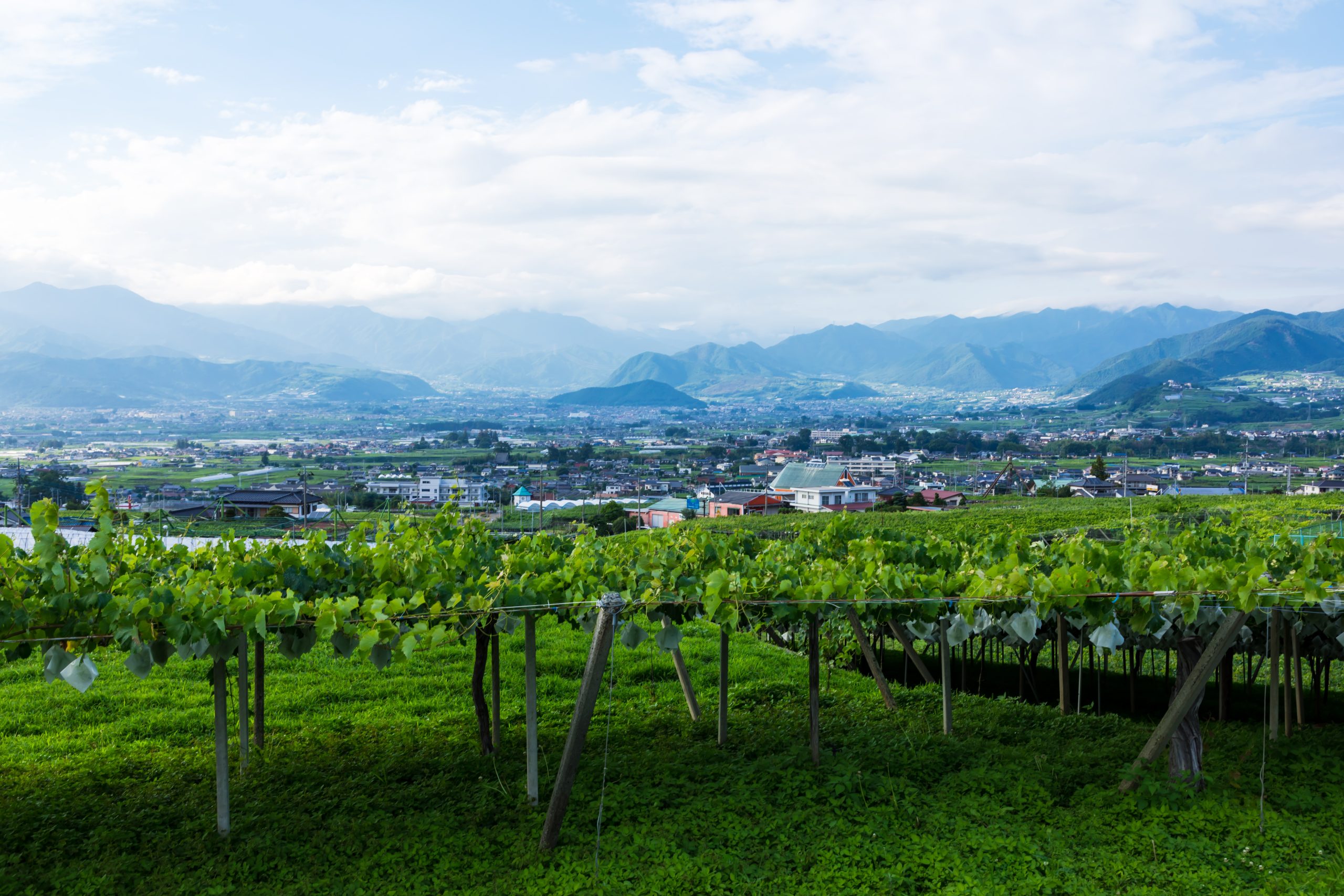
"They are too busy tending the land and managing daily operations to care about international export logistics," Lee explains. The challenges are not merely administrative; they are existential. In regions like Hokkaido, local demand for high-quality domestic wine is so voracious that only a fraction of a winery’s annual production ever leaves the prefecture, let alone reaches Tokyo, let alone makes it to an overseas market.
When a winery produces only a few thousand bottles, the cost of navigating the labyrinthine process of export—air freight, custom duties, stringent lab testing, and the submission fees for global awards—often outweighs the potential benefit. Why pursue the export market when your entire inventory is sold out locally before the harvest is even finished?
A Chronology of Global Recognition
The ascent of Japanese wine on the world stage did not happen overnight. It has been a decades-long effort to prove that the terroir of Japan—characterized by volcanic soil, high humidity, and extreme weather—could produce world-class vintages.
- The Early 2000s: Japanese producers began testing the waters at European competitions, such as the Vinalies Internationales. These early wins, particularly for Yamanashi-based wineries, acted as a proof-of-concept, signaling to the global trade that Japanese grapes like Koshu and Muscat Bailey-A were not just novelties but viable contenders.
- The 2016 G7 Ise-Shima Summit: A pivotal moment for the industry, where Château Mercian’s Omnis was served to world leaders. This shifted the narrative: Japanese wine was no longer just for tourists or domestic enthusiasts; it was a product worthy of the global diplomatic table.
- 2020: The Noma Effect: When the legendary three-Michelin-starred restaurant Noma included Hokkaido-based Takahiko’s Nana-Tsu-Mori 2017 Pinot Noir on its wine list, it created an immediate halo effect. For importers like Kenneth Lee, the allocation of that wine jumped from a meager 12 bottles to 180 over six years, demonstrating that prestige, rather than competition medals, drives collector interest.
- 2024: The DWWA Milestone: The Suntory From Farm Tomi Koshu 2022 secured the "Best in Show" title at the Decanter World Wide Awards, effectively cementing the status of the Koshu grape as a serious, internationally recognized varietal.
Supporting Data: The Paradox of Success
While the awards are plentiful, there is a clear divide in who captures them. The "winners’ circle" is rarely populated by the small, artisan producers who capture the hearts of sommeliers. Instead, the accolades are frequently dominated by larger, corporate-backed entities like Kirin Group (owners of Château Mercian), Grace Wine, and Katsunuma Jyozo.
These larger players possess the infrastructure and the marketing budgets to treat awards as a strategic pillar. Chizuko Oda of Katsunuma Jyozo notes that for her winery, these awards are not just for prestige—they are essential commercial currency. "The silver medals we won in the early 2000s were the direct catalyst for our export agreement with the Bernard Magrez Group," Oda says. "They gave us the credibility needed to enter European shelves when Japanese wine was entirely unknown."
However, the data reveals a disparity. For the small producer, an award is a badge of honor that may sit on a shelf in a tasting room. For the large producer, an award is a line item in a marketing presentation, used to secure distribution deals in London, New York, and Hong Kong.
Official Responses and Strategic Perspectives
The industry is divided on the utility of these accolades. Takunori Kusagai, who manages marketing for Château Mercian, argues that true market penetration is not about a sticker on a bottle, but about positioning.
"We believe in exposure over simple medals," Kusagai explains. "Getting our wines into top-tier restaurants and placing them at high-profile summits like the G7 is far more effective than any trophy. The biggest hurdle remains price and consumer education. When a consumer sees a Japanese wine at a premium price point, they need to understand the ‘why.’ The story of the labor, the trellising systems used to battle typhoons, and the volcanic soil—that is what sells the wine."
Conversely, importers like Kenneth Lee suggest that the "award fatigue" is real. With the proliferation of global wine competitions and the ubiquity of high-scoring critics, consumers are increasingly overwhelmed. "Awards definitely drive awareness, but I can’t say they drive sales," Lee notes. "I rely on tastings. When a customer who usually drinks fine Burgundy tastes a Japanese Pinot and realizes it matches the elegance and complexity they are used to, that is when the sale is made."
Implications: The Road Ahead
The Japanese wine industry sits at a critical juncture. With the nation’s younger demographic drinking less alcohol and the domestic market stagnating, the imperative to export is no longer optional—it is a survival mechanism.
1. The Challenge of Terroir and Production
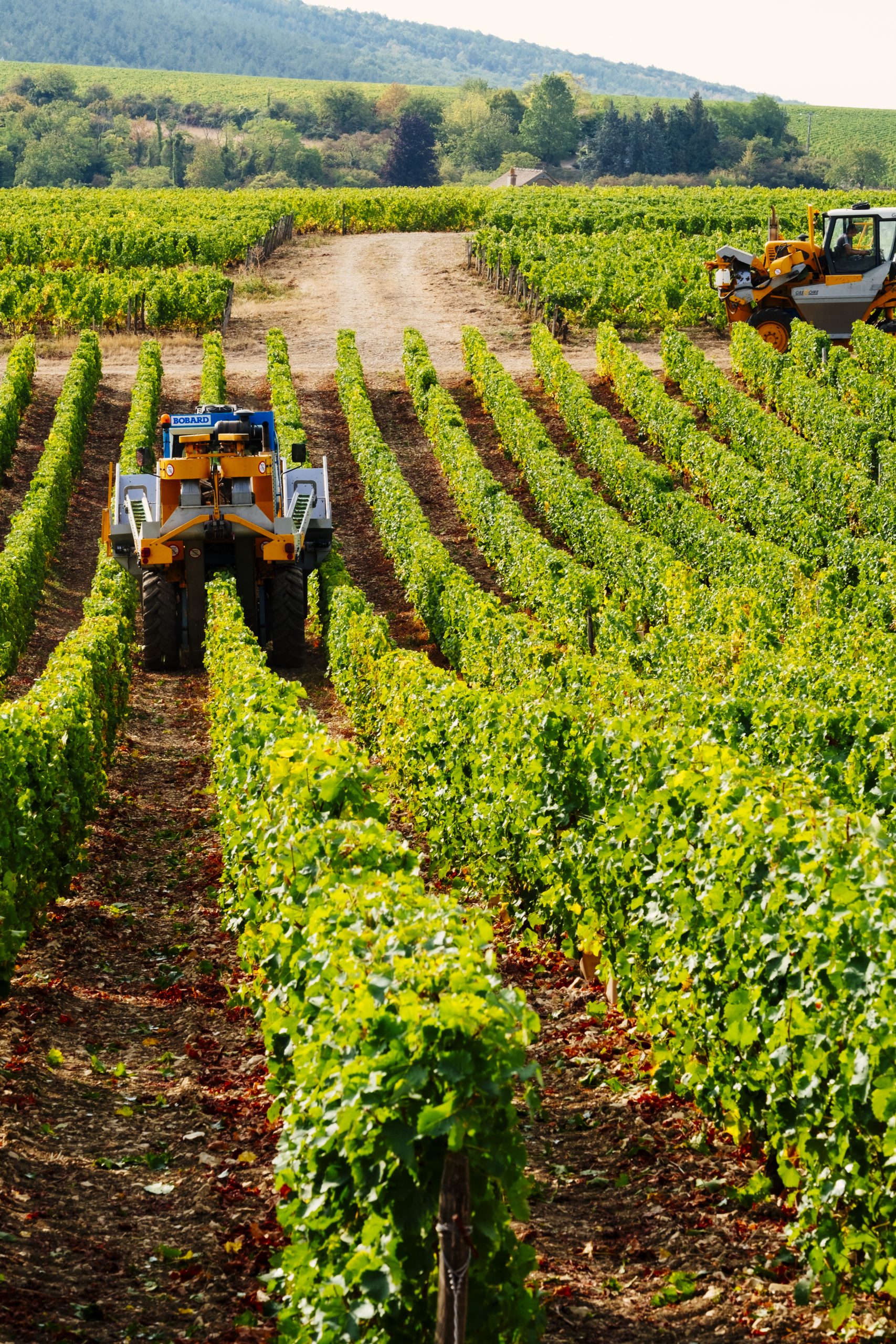
The Japanese landscape is not for the faint of heart. Volcanic eruptions, monsoons, and extreme humidity make viticulture an expensive, labor-intensive endeavor. The reliance on hand-picking and specialized trellis systems ensures that Japanese wine will never be a "commodity" product. Consequently, producers must lean into the "boutique" narrative.
2. The Shift from Quantity to Quality
As the industry matures, the focus is shifting away from the pursuit of medals toward the curation of brand stories. The success of Japanese wine in global hubs like Hong Kong shows that there is a sophisticated audience willing to pay a premium for a "talking point."
3. The Future of Distribution
The future of Japanese wine exports will likely be bifurcated. Large, established players will continue to use international competitions as a primary tool to maintain their global standing and retail presence. Small, artisanal producers, however, will likely eschew the cost of awards, instead focusing on direct relationships with high-end restaurants and specialty importers who act as ambassadors for the "Japanese craft" narrative.
Conclusion
Do awards matter? The answer depends on the scale of the producer. For a boutique winery in Hokkaido, a mention in a Michelin-starred restaurant is worth more than a dozen gold medals. For a large corporation in Yamanashi, those medals are the keys to global distribution.
Ultimately, the growth of Japanese wine exports will not be defined by the number of trophies on a mantle, but by the industry’s ability to communicate the extreme dedication required to produce wine in one of the world’s most challenging environments. As Kenneth Lee aptly puts it, the gospel of Japanese wine is spread not through points, but through the glass. In an increasingly crowded global market, the story of the hand-tended vine may well be the most powerful accolade of all.

 Nana Wu
 Asep Darmawan